The Rohingya Genocide Continues

Regina Paulose

International crimes against the Rohingya have been perpetrated for decades and continues in the status quo, even after the alarming events of August 2017 that forced 700,00+ Rohingya people to flee into Bangladesh. Since that time there has been little progress made to achieve a long term solution for the Rohingya people. Continue reading →

How High are High Officials: Analyzing Obama’s Speech on Syria

The early hours of August 21, 2013 saw a drastic turn in the Syrian conflict as a chemical weapons attack on civilians living in the agricultural belt around Damascus took place. Three days after the attack, medical charity Medecins Sans Frontieres confirmed that three hospitals it supports in Damascus had treated about 3,600 patients with “neurotoxic symptoms” on the day of the attack; 355 of these had died.[1] Ever since there’ve been mutual accusations of the use of chemical weapons by the countering parties, namely Assad’s regime and the rebels,[2] which also caused a split of views and stances on the international plane. Yet, despite the absence of the forthcoming United Nations [hereinafter UN] report on the attack,[3] the parties to the conflict and the international community are all of no doubt that the attack has taken place. 10 days after the beginning of the political turmoil within the ‘concerned’ international community President Obama issued a statement on Syria accusing the Assad’s regime of the attack on its own people and calling for a targeted military strike to deter the regime from using the chemical weapons ever again.[4]

Continue reading →

Targeted Killing: Bin Laden As a Legitimate Military Target

WRITTEN BY: DR. ELIZABETH BORG[1]


Introduction

After Israel made public a policy of ‘targeted killings’ of alleged terrorists in the Occupied Palestinian Territories[2] this term became common usage, however, it is neither defined under international law nor does it fit into any particular legal framework. According to a UN special report[3] targeted killings are premeditated acts of lethal force employed by States in times of peace or during armed conflict to eliminate specific individuals outside their custody. Moreover according to Melzer targeted killings can be defined as a use of lethal force by a subject of international law that is directed against an individually selected person who is not in custody and that is intentional (rather than negligent or reckless), premeditated (rather than merely voluntary) and deliberate.[4] Examples of targeted killings include the November 2002 killing of alleged al Qaeda leader Ali Qaed Senyan al-Harithi and five other men in Yemen, reportedly by a CIA-operated Predator drone using a Hellfire missile[5] and the January 2010 killing, in an operation allegedly carried out by 18 Israeli Mossad Intelligence agents, of Mahmoud al-Mahbouh, a Hamas leader, at a Dubai Hotel.[6]  In this case, Osama Bin Laden was individually selected and intentionally targeted and killed by the United States[7] by means of a helicopter raid after months of decision making and planning. Hence, the killing of Bin Laden can be qualified as a targeted killing.

Targeted Killings and International Law

In a speech on the Obama Administration and International Law, Harold Koh[8] maintained that ‘as a matter of international law, the United States is in an armed conflict with al-Qaeda, as well as the Taliban and associated forces, in response to the horrific 9/11 attacks, and may use force consistent with its inherent right to self-defence under international law.’[9]

Article 2(4) of the UN Charter enshrines the prohibition on the use of force[10] however Article 51 of the UN Charter provides an exception[11] of self-defence and allows recourse to force on the territory of the State which was responsible for the armed attack on the territory of the Victim State. Moreover, it has been generally accepted in today’s paradigm on the use of force that the ‘armed attack’ does not necessarily have to be attributable to a State, but can also be carried out by a non-State actor[12] although apprehensions exist as to whether a State can use force in self-defence against the territory (‘Territorial State’) where the non-State actor may be present. For example, in the Case concerning armed activities on the territory of the Congo the ICJ held that Uganda did not have the right to exercise self-defence against the DRC because:

there is no satisfactory proof of the involvement in these attacks, direct or indirect, of the Government of the DRC. The attacks did not emanate from armed bands or irregulars sent by the DRC or on behalf of the DRC, within the sense of Article 3(g) of General Assembly resolution 3314 (XXIX) on the definition of aggression, adopted on 14 December 1974. The Court is of the view that, on the evidence before it, even if this series of deplorable attacks could be regarded as cumulative in character, they still remained non-attributable to the DRC. Thus, the lack of attribution between the non-State actors and the government of the DRC served as the inhibiting factor for Uganda to exercise self-defence. [13]

Additionally the dispute of whether, prior to the use of counterforce, consent is needed from the TerritorialState arises.  As a general rule, prior consent from the TerritorialState should be a prerequisite to the use of extraterritorial force on its territory. In the light of these circumstances, a limited exception to this general rule may be allowed when there is an immediate necessity to use force to either halt or repel an armed attack.  Nonetheless, formally requesting consent might not be practical, especially if armed attacks are on-going from the territory of the TerritorialState or, more controversially, when a State wishes to invoke pre-emptive self-defence. Under the Bush administration, the US had openly maintained that the ‘inherent right to self-defence’ encompasses anticipatory self-defence according to existing principles of customary international law.[14] Traditionally, the Caroline incident[15] has been recognized as the classic formulation of the right to anticipatory self-defence.[16] The above implies that if States believe they have the right to use pre-emptive self-defence against non-State actors, there must be unequivocal evidence that the threat is imminent and that the use of force is absolutely necessary in order to halt or repel the impending armed attack.[17]

Referring to Koh’s statement claiming the US is in an armed conflict with al-Qaeda, it was argued by the US that this armed conflict in Afghanistan could spill over onto Pakistan.[18]Assuming this is the case then International Humanitarian Law[19] applies, thus one needs to determine whether this conflict is of an international or non-international character so as to identify the body of rules that applies. The ICTY[20] in the Tadić Judgment defined armed conflict [21] implying that a higher threshold of violence is required for the classification as a non-international armed conflict[22] than an international armed conflict.[23] The latter is satisfied ‘whenever there is a resort to armed force’, whilst the former requires ‘protracted armed violence’ and the membership of an ‘organized armed group’. Although Koh does not explicitly classify the conflict, he mentions Common Article 3,[24] Additional Protocol II[25] of the Geneva Conventions[26] and Hamdi v. Rumsfeld.[27] These suggest that the current US position views the conflict as NIAC.[28] Both types of conflict will now be examined, concentrating upon the principle of distinction.

International Armed Conflict

Under the principle of distinction, the parties must distinguish between combatants and civilians, military and non-military targets. Article 43(2) of Additional Protocol I[29] states that members of the armed forces of a Party to a conflict are combatants having the right to participate directly in hostilities. However, it is difficult to classify al-Qaeda members as combatants because they are not part of the armed forces of a State nor do they fulfil the four conditions laid out in Article 4(A) (2) Geneva III[30] especially since the underlying premise of terrorism involves acts which are contrary with the laws and customs of war. The implication is that a terrorist is a civilian, and can only be the object of attack ‘for such time as they take a direct part in hostilities.’[31] For example, Cassese believed that under IAC, members of terrorist groups are to be regarded as civilians.[32] This is also reflected in the ICRC Interpretive Guidance on the notion of Direct Participation in Hostilities.[33]  The ICRC Guidance states that:

In order to qualify as direct participation of hostilities, a specific act must meet the following cumulative criteria: 1. the act must be likely to adversely affect the military operation or military capacity of a party to the armed conflict or, alternatively, to inflict death, injury, or destruction on persons or objects protected against direct attack (threshold of harm), and 2. there must be a direct causal link between the act and the harm likely to result either from that act, or from a coordinated military operation of which that act constitutes an integral part (direct causation), and 3. the act must be specifically designed to directly cause the required threshold of harm in support of a party to the conflict and the detriment of another.[34]


Another controversial issue is the status of unlawful combatant in IAC. Chief Justice Barak of the Israeli Supreme Court held that terrorists and their organizations in armed conflict of international character with Israel do not fall into the category of combatants, as ‘they do not belong to the armed forces, and they do not belong to units to which international law grants status similar to that of combatants. Indeed, the terrorists and the organizations which send them to carry out attacks are unlawful combatants. They do not enjoy the status of prisoners of war. They can be tried for their participation in hostilities, judged, and punished.’[35]


Non-international armed conflict

Article 1 of Additional Protocol II states that a NIAC is a conflict between the armed forces of a High Contracting Party ‘and dissident armed forces or organized armed groups.’ Meanwhile, Article 13(2) of Additional Protocol II states that ‘the civilian population as such, as well as individual civilians, shall not be the object of attack,’ whilst Article 13(3) states that ‘civilians shall enjoy the protection […] unless and for such time as they take a direct part in hostilities.’ This protection is also emphasised by the ICRC Guidance[36] which makes a difference between ‘organised armed groups’ and dissident armed forces[37]suggesting that members of organized armed forces of a non-State Party, e.g. al-Qaeda, are only those who assume a continuous combat function. In view of this one concludes that individuals whose continuous function involves the preparation, execution, or command of acts or operations amounting to direct participation in hostilities[38] are assuming a continuous combat function and not entitled to combatant privilege.[39] Additionally, an individual recruited, trained and equipped by such a group to continuously and directly participate in hostilities on its behalf can be considered to assume a continuous combat function even before he or she first carries out a hostile act.[40]


International Human Rights Law (IHRL)

In the absence of an armed conflict, the legal regime which applies is IHRL.  Alston observes that a law enforcement or state killing is only legal if it is required to protect life (making lethal force proportionate) and there is no other means, such as capture or non-lethal incapacitation, of preventing that threat to life (making lethal force necessary).[41]  Another issue that arises is whether the International Covenant on Civil and Political Rights (1976)[42] has extraterritorial applicability. According to the Human Rights Committee, as declared in General Comment 31,[43]Article 2(1) of the ICCPR[44] should be read that each State party would have assumed its obligations under the ICCPR to ‘all persons within its territory’ and ‘all persons subject to its jurisdiction’ and ‘anyone within the power or effective control of that State.’  In view of the fact that Bin Laden was present in Pakistan where the US had no territorial control, the question is whether the US by virtue of the attack had power and effective control over him. It is hard to argue that targeting someone with the intention to capture or use lethal force against them does not amount to an exercise of power or control. The right to life can be regarded as a peremptory norm of customary international law. The right to a fair trial and the presumption of innocence are enshrined as principles in customary international law. This could imply that the United States is obligated to respect Bin Laden’s right to life and the due process of law.

Conclusion

Ultimately, it can be concluded that it is difficult to give a definitive judgment as to the legality of the use of lethal force against Bin Laden due to the lack of certainty of facts of the operation as well as a paucity of a definitive stance on targeted killings under IHL. One must also see which body of laws applies, i.e. IHL or IHRL. If the latter applies the use of lethal force must be absolutely necessary, proportional and thus the undesired last resort. The operation must be conducted in a preventive nature as opposed to punitive nature in order not to amount to an ‘arbitrary’ deprivation of life.[45] In view of the analysis made above, IHL of a NIAC applies meaning that the principle of distinction as well of self-defence must be examined in such a light.  The inherent self-defence serves as a justification for the extraterritorial use of force against a non-State actor in another State. Although Pakistan was not informed beforehand of the operation, and hence no consent was given, Pakistan’s reaction was a very cautious and it did not condemn the US’s actions.[46] This raises the question of precedent and whether cognisance of targeted killing proves the emergence of an internationally customary rule however this is not the case.[47] The legal justifications for self-defence claimed by the US, as explained in Koh’s speech,[48]  are : (i) that under IHL, Bin Laden is a legitimate target; (ii) that he was an imminent threat to the United States. Thus, Koh believes ‘there is no question that he presented a lawful target for the use of lethal force.’ In view of the above, the armed conflict is a result of counterforce to the 9/11 attack however the inherent right to self-defence suggests that force can also be used as a prevention to further attacks.  It can be inferred that because of the nature of this particular operation, the ‘porous frontier’[49] of Afghanistan[50] and Pakistan, Bin Laden being an integral part of al-Qaeda, being significantly responsible for 9/11 and other armed attacks, possibly planning further terrorist attacks, makes Bin Laden a legitimate target as a civilian with DPH as well serves as a justification for self-defence. However, this justifies the use of extraterritorial force, but not the lethal use of force against a targeted individual. The latter has to be examined in view of civilian DPH or membership in an organised armed group.  The fact that Bin Laden was widely recognised as having a leadership position within Al-Qaeda, as well as past experiences and events, fulfils the requirement for a lasting integration into an organised armed group as above-mentioned.  Melzer has argued that ‘in practice, a civilian who regularly and consistently directly participates in hostilities of a belligerent party will almost always be affiliated with an organized armed force or group and, thus, may be regarded as a de facto member assuming a continuous combat function for that force or group. As such, he is no longer considered to be a civilian and loses protection against direct attack for as long as he continues to assume such combat function.’[51] Hence, in view of the above, Bin Laden fulfils the requirement for a lasting integration into an organised armed group making him a legitimate target. However, as the ICRC Guidance suggest, the targeting of Bin Laden must adhere to the principle of proportionality and necessity.[52]  The latter suggests that even if an individual may be targeted, non-lethal means should be contemplated in circumstances where it is possible to do so. If Bin Laden has resisted the assault and died as a result of a fire fight then most probably, only lethal forces could be used there and then.  One must also keep in mind the principle of military necessity requires that the lethal force used must be of a degree and kind, not otherwise prohibited by the law of armed conflict, that is required in order to achieve the legitimate purpose of the military operation, in this case the submission of Bin Laden, with the minimum expenditure of life and resources.

In conclusion, the military operation conducted by the US was not unlawful in respect of IHL of NIAC since the extrajudicial force used in Pakistan can be justified as self-defence and Bin Laden can be considered as a legitimate military target.


[1] Graduated as a lawyer from the University of Malta in 2010, Dr. Elizabeth Borg continued her studies by pursuing a LLM in International Crime and Justice with UNICRI, a United Nations Institution in Torino. Dr. Elizabeth Borg is currently a Lawyer at the Department of Industrial and Employment Relations and can be reached at dr.elizabethborg@gmail.com or  elizabeth.borg@gov.mt

[2]Orna Ben-Naftali & Keren Michaeli, We Must Not Make a Scarecrow of the Law: A Legal Analysis of the Israeli Policy of Targeted Killings, 36 Cornell Int’l L.J. 233, 234 (2003).

[3] UN General Assembly Report of the Special Rapporteur on Extrajudicial, Summary or Arbitrary Executions, 28 May 2010

[4] Nils Melzer, Targeted Killing in International law. Oxford University Press, 2008: ‘Deliberate’ meaning that the death of the targeted person is the actual aim of the operation as opposed to deprivations of life which, although intentional and premeditated, remain the incidental result of an operation pursuing other aims.

[5] Jane Mayer, The Predator War, The New Yorker, 26 Oct. 2009; Greg Miller, C.I.A. Said to Use Outsiders to Put Bombs on Drones, LA Times, 13 Feb. 2009.

[6] Targeted Killing in Dubai: A Mossad Operation Gone Awry?, Der Spiegel, 23 Feb. 2010, http://www.spiegel.de/international/world/0,1518,679764,00.html;

Ilene Prusher, Was Mossad Behind Dubai Assassination? Israel Foreign Minister Isn’t Saying, Christian Science Monitor, 17 Feb. 2010, http://www.csmonitor.com/World/Middle-East/2010/0217/Was-Mossad-behind-Dubai-assassination-Israel-foreign-minister-isn-t-saying

[7] Hereinafter referred to as ‘US’

[8] Legal adviser to the US Department of State

[9] Harold H. Koh’s speech at the Annual Meeting of the American Society of International Law, Washington, DC, 25 March 2010 (hereinafter ‘Koh’s speech’), www.state.gov/s/l/releases/remarks/139119.htm.

[10] United Nations, Charter of the United Nations, 4 October 1945, 1 UNTS XVI, (hereinafter ‘UN Charter’), Art 2(4): ‘All Members shall refrain in their international relations from the threat or use of force against the territorial integrity or political independence of any state, or in any other manner inconsistent with the Purposes of the United Nations.’

[11]UN Charter, Art 51 ‘Nothing in the present Charter shall impair the inherent right of individual or collective self-defence if an armed attack occurs against a Member of the United Nations, until the Security Council has taken measures necessary to maintain international peace and security […].’

[12] Christian J. Tams, The Use of Force against Terrorists, 20(2) European JIL (2009), 359.

[13] Democratic Republic of the Congo v. Uganda,Judgment of 19 December 2005, ICJ Reports 2005, 168, 223, para.146.

[14] Richard K. Betts, U.S. National Security Strategy: Lenses and Landmarks, November 2004.

[15] Robert Y. Jennings, The Caroline and McLeod Cases, 32(1) American JIL (1939), 82.

[16]Letter from Daniel Webster, U.S. Secretary of State, to Henry Fox, British Minister in Washington, 24 April 1841, Secretary of State Daniel Webster called upon the British to show that the ‘Necessity of self-defence was instant, overwhelming, leaving no choice of means, and no moment for deliberation […] and that the British force, even supposing the necessity of the moment authorized them to enter the territories of the United States at all, did nothing unreasonable or excessive; since the act, justified by the necessity of self-defence, must be limited by that necessity, and kept clearly within it.’.

[17]Emanuel Gross, Thwarting Terrorist Acts by Attacking the Perpetrators or Their Commanders as an Act of Self-Defence: Human Rights versus the State’s Duty to Protect Its Citizens, 15 TempleICLJ (2001), 195.

[18] Noam Lubell, Extraterritorial Use of Force Against Non-State Actors, 2010.

[19] Hereinafter ‘IHL’

[20] The International Criminal Tribunal of the FormerRepublic of Yugoslavia

[21] ICTY Trial Chamber, Prosecutor v. Duško Tadić, Decision on the Defence Motion for Interlocutory Appeal on Jurisdiction, Oct. 2, 1995, Case No. IT-94-1-AR72, ¶ 70: The International Criminal Tribunal for the former Yugoslavia (ICTY) has held that ‘an armed conflict exists whenever there is a resort to armed force between States or protracted armed violence between governmental authorities and organized armed groups or between such groups within a State. International humanitarian law applies from the initiation of such armed conflicts and extends beyond the cessation of territorialities until a general conclusion of peace is reached; or, in the case of internal conflicts, a peaceful settlement is achieved.’

[22] Hereinafter ‘NIAC’

[23] Hereinafter ‘IAC’

[24] Geneva Convention for the Amelioration of the Condition of the Wounded and Sick in the Armed Forces in the Field, Aug. 12, 1949, 6 U.S.T. 3114, 3116-18, 75 U.N.T.S. 31, 32-34 (hereinafter ‘Geneva I’); Geneva Convention for the Amelioration of the Condition of the Wounded, Sick and Shipwrecked Members of Armed Forces at Sea, Aug. 12, 1949, 6 U.S.T. 3217, 3320-22, 75 U.N.T.S. 85, 86- 88 (hereinafter ‘Geneva II’); Geneva Convention Relative to the Treatment of

Prisoners of War, Aug. 12, 1949, 6 U.S.T. 3316, 3318-20, 75 U.N.T.S. 135, 136- 38 (hereinafter ‘Geneva III’); Geneva Convention Relative to the Protection of Civilian Persons in Time of War, Aug. 12, 1949, 6 U.S.T. 3516, 3518-20, 75 U.N.T.S. 287, 288-90 (hereinafter ‘Geneva IV’).

[25] Protocol Additional to the Geneva Conventions of 12 August 1949, and Relating to the Protection of Victims of Non-International Armed Conflicts, art. 1, 1125 U.N.T.S. 609, entered into force Dec. 7, 1978 (hereinafter ‘Additional Protocol II’).

[26] Common Article 3, Geneva Conventions, and Additional Protocol II, to which the U.S. is not a party, includes additional requirements, including that the conflict between the armed forces of the state and ‘dissident armed forces or other organized armed groups which, under responsible command, exercise such control over a part of its territory as to enable them to carry out sustained and concerted military operations and to implement this Protocol.’  (Additional Protocol II).

[27] Hamdan v. Rumsfeld, 548 U.S. 557 (2006). In Al-Aulaqi v. Obama, a D.C. district court, in dicta, interpreted Hamdan as holding that the conflict was a non-international armed conflict. See Al-Aulaqi v. Obama, 727 F.Supp.2d at 17 (asserting that Common Article 3, applied by the Supreme Court in Hamdan, would prohibit the government from using lethal

force against al-Aulaqi were he to turn himself in).

[28] In Hamdi v. Rumsfeld, supra note 19, the US Supreme Court responded to the petition by the US government that the conflict with al-Qaeda was not a conflict to which the full protections afforded to detainees under the Geneva Convention by saying that ‘[w]e need not decide on the merits of this argument because there is at least one provision of the Geneva Conventions that applies here even if the relevant conflict is not one between signatories. Article 3, often referred to as Common Article 3, because, like Article 2, it appears in all four Geneva Conventions […].’5

[29] Protocol Additional to the Geneva Conventions of 12 August 1949, and relating to the Protection of Victims of International Armed Conflicts (Protocol I), 8 June 1977. (hereinafter ‘Additional Protocol I’)

[30]The four conditions imposed by the Geneva III are (a) being under responsible command; (b) wearing a fixed distinctive sign; (c) carrying arms openly; and (d) conducting their operations in accordance with the laws and customs of war.

[31] Article 51(3) of Additional Protocol I

[32] Antonio Cassese, Expert Opinion on Whether Israel’s Targeted Killings of Palestinian Terrorists is Consonant with International Humanitarian Law

[33] Nils Melzer, Interpretive Guidance on the Notion of Direct Participation in Hostilities Under International Humanitarian Law, Recommendation 1, ICRC, May 2009, (hereinafter ‘ICRC Guidance’). Recommendation 1 states that:  ‘For the purposes of the principle of distinction in international armed conflict, all persons who are neither members of the armed forces of a party to the conflict nor participating in a levée en masse are civilians and, therefore, entitled to protection against direct attack unless and for such time as they take a direct part in territorialities.’

[34]With regard to ‘direct causation’, the ICRC Guidance, pg. 52, states that ‘there must be a sufficiently close causal relation between the act and the resulting harm’; the ‘distinction between direct and indirect participation in territorialities must be interpreted as corresponding to that between direct and indirect causation of harm’; and, pg. 53, that ‘direct causation should be understood as meaning that the harm in question must be brought about in one causal step. Therefore, individual conduct that merely builds or maintains the capacity of a party to harm its adversary, or which otherwise only indirectly causes harm, is excluded from the concept of direct participation in territorialities‘. Ultimately, ‘only where persons are specifically recruited and trained for the execution of a predetermined territorialities act can such activities be regarded as an integral part of that act, and therefore, as direct participation in hostilities.’

[35] This is consistent with the Expert Opinion produced by Cassese who said (supra note 24): No ‘intermediate status’ exists between that of combatant and the status of civilian. A civilian who takes direct part in territorialities does not forfeit his or her civilian status but may become the lawful object of attack for the duration of his or her participation in combat. The term ‘unlawful combatant’ is a shorthand expression useful for describing those civilians who take up arms without being authorized to do so by international law; it has an exclusively descriptive character. It may not be used as proving or corroborating the existence of a third category of persons: in war time a person is either a combatant or a civilian; tertium non datur.

[36] ICRC Guidance, Part I, Recommendations of the ICRC, Recommendation II states ‘For the purposes of the principle of distinction in non-international armed conflict, all persons who are not members of State armed forces or organized armed groups of a party to the conflict are civilians and, therefore entitled to protection against direct attack unless and for such time as they take a direct part in territorialities. In non-international armed conflict, organized armed groups constitute the armed forces of a non-State party to the conflict and consist only of individuals whose continuous function it is to take a direct part in hostilities (continuous combat function)’

[37] ICRC Guidance, pg. 33, :Membership for an organized arm group depends on ‘whether the continuous function assumed by an individual corresponds to that collectively exercised by the group as a whole, namely the conduct of hostilities on behalf of a non-State party to the conflict’, and as a result, ‘the decisive criterion for individual membership in an organized armed group is whether a person assumes a continuous function for the group involving his or her direct participation in hostilities.’

[38] Hereinafter ‘DPH’

[39] Additional Protocol I, Art 43.1, Combatant privilege, namely the right to directly participate in hostilities with immunity from domestic prosecution for lawful acts of war, is afforded only to members of the armed forces of parties to an international armed conflict (except medical and religious personnel), as well as to participants in a levée en masse. Although all privileged combatants have a right to directly participate in hostilities, they do not necessarily have a function requiring them to do so (e.g. cooks, administrative personnel). Conversely, individuals who assume continuous combat function outside the privileged categories of persons, as well as in non-international armed conflict, are not entitled to combatant privilege under IHL (see also ICRC Guidance Section X).

[40] ICRC Guidance pg. 34

[41] Philip Alston, The CIA and Targeted Killings Beyond Borders Philip, Public Law and Legal Theory Research Paper series , Working Paper No. 11-64 September 2011 pg. 16. See also Basic Principles on the Use of Force and Firearms by Law Enforcement Officials, adopted by the Eighth U.N. Congress on Prevention of Crime and Treatment of Offenders, Havana, Cuba, Aug. 27-Sept. 7, 1990, preamble; Code of Conduct for Law Enforcement Officials, art. 3, GA Res. 34/169, Dec. 17, 1979.

[42] Hereinafter ‘ICCPR’

[43] CCPR/C/21/Rev.1/Add.13, 26/05/2004, General Comment No. 31 [80], Nature of the General Legal Obligation Imposed on States Parties to the Covenant State Parties are required by article 2, paragraph 1, to respect and to ensure the Covenant rights to all persons who may be within their territory and to all persons subject to their jurisdiction. This means that a State party must respect and ensure the rights laid down in the Covenant to anyone within the power or effective control of that State Party, even if not situated within the territory of the State Party. This principle also applies to those within the power or effective control of the forces of a State Party acting outside its territory.

[44] ICCPR, Art. 2.1 states that: ‘Each State Party to the present Covenant undertakes to respect and ensure to all individuals within its territory and subject to its jurisdiction the rights recognized in the present Covenant.’

[45]ICCPR, Art 6.1 states that, ‘every human being has the inherent right to life. […] No one shall be arbitrarily deprived of his life.’ This represents a protection of life against interference by State Organs.’ However, the use of ‘arbitrary’ implies that this protection is not absolute.

[46] Dwyer, Devin, Osama Bin Laden Killing: Pakistan Reacts Cautiously to U.S. Raid on Its Soil. Available at: http://abcnews.go.com/Politics/osama-bin-laden-killed-pakistan-reacts-cautiously-us/story?id=13507918

[47] Customary international law arises out of State practice and in this case it is the US and Israel which mainly engage in targeted killing and they do so amidst widespread criticism. This illustrates that states do not view target killing as a peremptory norm of international law and there is no opinio juris in respect of the execution of targeted killings.

[48] Supra note 6: Koh states ‘Given bin Laden’s unquestioned leadership position within al Qaeda and his clear continuing operational role, there can be no question that he was the leader of an enemy force and a legitimate target in our armed conflict with al Qaeda. In addition, bin Laden continued to pose an imminent threat to the United States that engaged our right to use force, a threat that materials seized during the raid have only further documented. Under these circumstances, there is no question that he presented a lawful target for the use of lethal force. […] [T]he manner in which the U.S. operation was conducted—taking great pains both to distinguish between legitimate military objectives and civilians and to avoid excessive incidental injury to the latter—followed the principles of distinction and proportionality described above, and was designed specifically to preserve those principles, even if it meant putting U.S. forces in harm’s way. Finally, consistent with the laws of armed conflict and U.S. military doctrine, the U.S. forces were prepared to capture bin Laden if he had surrendered in a way that they could safely accept. The laws of armed conflict require acceptance of a genuine offer of surrender that is clearly communicated by the surrendering party and received by the opposing force, under circumstances where it is feasible for the opposing force to accept that offer of surrender.’

[49] Ved. P. Nanda, War on Terror, 2009 37 Denv. J. Int’l L. & Pol’y 513, Nanda has observed that ‘one could justify the targeted strikes by the US in Pakistan on the ground that the geographical region of conflict stretches from Afghanistan to Pakistan, that suspected al-Qaeda and Taliban terrorists and their associates often cross that porous frontier, and that Pakistan has implicitly consented to such attacks.’

[50] Note that the US military team conducting the operation on 1 May 2011-2 May 2011 has reached Pakistan from Afghanistan.

[51] Nils Melzer, Keeping the Balance Between Military Necessity and Humanity: A response to four critiques of the ICRC’s Interpretative Guidance on the Notion of Direct Participation in Hostilities.

[52] ICRC Guidance, Section IX, contains a requirement of necessity, by imposing a restraint on the use of force in direct attack: In addition to the restraints imposed by international humanitarian law on specific means and methods of warfare, and without prejudice to further restrictions that may arise under other applicable branches of international law, the kind of degree and force which is permissible against persons not entitled to protection against direct attack must not exceed what is actually necessary to accomplish a legitimate military purpose in the prevailing circumstances.

Ahoy Captain! Universal means UNIVERSAL!

By Ronald Rogo  rogo.ronald@gmail.com


                                                               “The code is the law!”

                                            Captain Teague in Pirates of the Caribbean

The fight against piracy has gained urgency in recent times, especially off the coast of the Somalia waters. Perhaps the most troubled waters in the world, the increased incidents of piracy have not only caused unnecessary deaths but increased the costs of doing business[1].  The international community has therefore been forced to seek for solutions to this vice. The United Nations Security Council, for example, has passed several resolutions on combating piracy off the coast of Somalia[2], most of which give authority to the member states to enter and use force, even within the territorial waters of Somalia, in order to combat piracy. This, in essence, was an echo of the principle of universal jurisdiction which was first enunciated in relation to acts of piracy. The principle of universal jurisdiction, essentially states that any country has the jurisdiction to try certain crimes, irrespective of the fact that there is no clear nexus between the criminal activities and the trial state[3]. The universal jurisdiction of states in relation to acts of piracy is also recognized under the United Nations Convention on the Law of the Sea of 10 December 1982 (UNCLOS). Article 105 gives any signatory state the power to “seize a pirate ship or aircraft, or a ship or aircraft taken by piracy and under the control of pirates, and arrest the persons and seize the property on board” whenever a vessel is on the high seas[4]. The rationale is that since the high seas are essentially “no man’s land” criminal activities that occur here should not go unpunished due to the lack of territorial or national jurisdiction by any state.

The issue of the universal jurisdiction of states was expounded in the Kenyan case of Republic V Chief Magistrates Court, Mombasa Ex-Parte Mohamud Mohamed Hashi & 8 Others[5]. In this case the applicants were arrested on the High Seas of the Gulf of Aden in the Indian Ocean by the German Naval Vessel, the FGS Rhineland – PFALZ, with the help a U.S. helicopter assigned to the USS – Monterey. They were then taken to Mombasa Kenya and placed in the custody of the Kenyan police. They were later charged with the offence of piracy jure gentium for attacking  the sailing vessel named MV Courier while armed with three AK 47 Rifles, one pistol Tokalev, one RPG-7 portable Rocket Launcher, one SAR 80 Rifle and one Carabire rifle and putting the lives of the crew in fear. The accused persons filed a judicial review application in the High Court of Kenya challenging their charges on the basis that the alleged offense took place in the high seas of the Gulf of Eden. The Kenyan courts, they argued, did not therefore have the jurisdiction to try them since “the offence alleged was committed outside the territorial jurisdiction of Kenya and outside the Kenyan waters…neither a Kenyan citizen or Kenya property was involved…the arrest was made by the German Navy taking part in operations in the Gulf of Aden”. The High Court accepted this argument holding inter alia, that “The High Seas are not and cannot be a place in Kenya or within the territorial waters of Kenya. In fact by definition they are strictly deemed to be outside the jurisdiction of all states in the world or on earth unless some law in the state brings it into their local jurisdiction whether Municipal Law or an International Convention etc”. The High court further held that the trial court “had no jurisdiction over the matter when the charges were preferred, and when the proceedings took place. The said court acted without jurisdiction when they took the pleas of the Applicants and heard the case up to the close of the prosecution case. The whole process was therefore null and void, ab initio. A nullity from the word go”[6]. However, the High Court of Kenya ignored the provisions of UNCLOS providing for universal jurisdiction[7]. This decision was later overturned by the Court of Appeal. The Court of Appeal held that the High Court failed “to appreciate the applicability of the doctrine of universal jurisdiction in reference to the case at hand”[8].

That said, it is important to note that Article 105 of UNCLOS provides that “the courts of the State which carried out the seizure may decide upon the penalties to be imposed, and may also determine the action to be taken with regard to the ships, aircraft or property, subject to the rights of third parties acting in good faith” (emphasis mine). In other words the State that seizes any vessel on the high seas ought to be the one that actually tries the suspected pirates[9]. This rule has largely been ignored in current practice where states in the developed world only arrest the pirates and “dump” them in countries in the developing world[10]. A few examples should suffice to illustrate the point. On February 19, 2012, four suspected Somali pirates, captured by the Danish naval troops, were taken to Kenya after being rejected by the government in Seychelles.  In March 2009, seven suspected pirates were arrested in the Gulf of Aden by the US Navy after a tanker, Polaris, sent a distress call that they were being attacked[11]. Eugene Kotnorovich estimates that “universal jurisdiction was used in prosecuting only 0.53% of clearly universally punishable piracy cases between 1998 and 2007, with the figure increasing to 2.5% between 2008 and June 2009, and reporting that Kenya accounts for all but three cases of invoking universal jurisdiction over piracy in the past 12 years, with responsibility for 79% of cases”[12] (emphasis mine).

The reasons for this misnomer are varied. However, the most common issue is the question of what to do with the pirates if they are acquitted or once they have served their sentence. Since the principle of non refoulement applies universally as a peremptory norm of international law, the states where the trials are held will be “stuck” with the pirates either on acquittal or upon serving sentence as they often cannot return them to Somalia and the trial state will be obliged to offer them asylum[13].William Langeweshice, quotes an Indian official, for example of stating: “What would happen if India convicted and imprisoned them, but after their release Indonesia refused to recognize or accept them? . . . They would become stateless people . . . Then the problem for India would be where to send them”[14]. But this problem creates greater burdens to poorer countries like Kenya and Seychelles which have an additional cost to the trial process. An already overwhelmed police and prison system is further stretched without significant financial assistance from the international community[15]. I therefore hold the view that the current practice is not sustainable. The country that arrests the suspected pirates ought to be the one that prosecutes. After all, universal jurisdiction means just that…universal!


[1] For more analysis of effects of piracy off the coastal shelf refer to previous posts on this blog on the subject.

[2] United nations Security Council Resolutions No. 1816, 1838, 1846 and 1851 of 2008, 1897 of 2009, 1918 and 1950 of 2010, 1976, 2015 and 2020 of 2011.

[3] The common nexus in relation to criminal jurisdiction relates to criminal activities that occur within the territory of a given state. However, some states also have jurisdiction over some criminal activities committed by their nationals overseas and criminal activities overseas where their nationals are victims.

[4] In Article 86 of UNCLOS, the high seas is taken to mean “all parts of the sea that are not included in the exclusive economic zone, in the territorial sea or in the internal waters of a State, or in the archipelagic waters of an archipelagic State”

[6] Ibid

[8] The full decision of the Court of Appeal can be accessed online at http://piracylaw.files.wordpress.com/2012/10/kenya-hashi-appeal-opinion.pdf. The same position was held in the case of Hassan M. Ahmed V Republic [2009] eKLR. It can be accessed online at http://kenyalaw.org/CaseSearch/view_preview1.php?link=66028601162227766885163

[9] Admittedly, the provision is a drafted in permissive rather than in a rigid way. However, it is my view that it represents the rule-of-the-thumb arrangement, only to be departed from in exceptional cases.

[10] For analysis of the number of piracy related trials held by various countries go to http://www.cbrne-terrorism-newsletter.com/resources/2011%20-%20Prosecuting%20Pirates_Challenges%20for%20the%20Prisons.pdf

[12] Eugene Kontorovich & Steven Art, An Empirical Examination of Universal Jurisdiction for Piracy (Northwestern Public Law Research Paper No. 09-26, 2010); 104 AM. J. INT‘L. L. 8-9 (forthcoming 2010), available at http://ssrn.com/abstract=1519518

[13] The principle of non refoulment is also expounded in CAT Article 3(1), ICCPR Article 7, and ECHR Article 3, which all protect individuals from being returned to a country where they are at risk of torture, inhuman or degrading treatment, or punishment.

[14] William Langewiesche, The Outlaw Sea: Chaos And Crime On The World‘S Oceans 75 (2004)

A Sea Free From Piracy – When Mare Will be Really Liberum?

Written by Lina Laurinaviciute
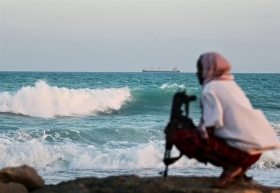
pirates

A spot of a small boat approaching a merchant vessel crossing the Red sea or a cruise ship riding to the sunny Seychelles can be a sign of a great danger and a terrible misfortune if not noticed in time. Hugo Grotius, the Dutch philosopher, more than 400 years ago in his book “Mare Liberum” (The Free Sea) declared that it was not possible to own sea.[1] However, soon it was realized that its treasures were not without a master. In the same 17th century Sir Edward Coke, an English jurist and Member of Parliament, expressed concern about the criminals – the pirates, who were characterized as the hostis humani generis (enemy of all mankind). The recent situation, especially in Somalia, reveals, that this problem still has an alarming tendency even in the 21st century.

Indeed, nowadays, the character of a pirate is far from the one romanticized by Capt. Jack Sparrow. Usually, they are local seamen looking for a quick score, highly-trained guerrillas, rouge military units, or former seafarers recruited by crime organizations. Armed with knives, machetes, assault rifles and grenade launchers, they steal out in speedboats and fishing boats in search of supertankers, cargo ships, passenger ferries, cruise ships, and yachts, attacking them at port, on the open seas, in international waters.[2] Also, the “Jolly Roger” – a famous flag of pirates, is not used by pirates themselves, but indicates a great danger in the various maps of maritime risk intelligence.

The first international efforts to define piracy were made by signing the United Nations (hereinafter – UN) Geneva Convention on the High Seas in 1958 and the following UN Convention on the Law of the Sea, signed in 1982, which stated that piracy consists of any of these acts:

(a) any illegal acts of violence or detention, or any act of depredation, committed for private ends by the crew or the passengers of a private ship or a private aircraft, and directed:

(i) on the high seas, against another ship or aircraft, or against persons or property on board such ship or aircraft;

(ii) against a ship, aircraft, persons or property in a place outside the jurisdiction of any State;

(b) any act of voluntary participation in the operation of a ship or of an aircraft with knowledge of facts making it a pirate ship or aircraft;

(c) any act of inciting or of intentionally facilitating an act described in subparagraph (a) or (b).[3]

The estimated figures of the International Maritime Bureau’s (IMB) Piracy Reporting Centre show, that worldwide in 2012, pirates have committed 278 attacks, hijacked 27 vessels, took more than 400 hostages, from which 147 are still held by Somali pirates.[4] In addition, 58 attempted attacks were reported.[5] Indeed, the drop in Somali piracy has brought global figures for piracy and armed robbery at sea down compared with 2011, when 439 worldwide piracy attacks were reported. Nonetheless, there can be no room for complacency till entire ships are hijacked and cargo crews simply vanish.[6] Mariners are warned to be cautious and to take necessary precautionary measures, especially when transiting through the coasts of Somalia, Nigeria, Benin, South East Asia and Indonesia.[7]

As mentioned before, in Somalia attacks have dropped significantly, mostly due to the increased military action on suspected skiffs, military anti-piracy operations and increase in armed guards onboard ships. However, Somali pirates still remain the greatest global threat, as the majority of the worldwide piracy attacks are attributed to them. Usually, the tactics of the Somali pirates is to attack ships in the northern, eastern and southern coast of Somalia. According to the IMB’s report of 2011, these pirates have also attacked vessels much farther off the Somali coast. They have moved deeper into the Indian Ocean, off Seychelles and the Maldives, and further south along the East African coast, off Kenya, Madagascar, and Mozambique.[8] To proceed with attacks very far out to sea, pirates normally use “mother vessels”, which are able to launch smaller boats to attack and hijack unsuspecting passing vessels.[9]

In the case of Nigeria all waters are considered to be risky. Pirates attack, hijack and rob vessels, kidnap crews along the coast, rivers, anchorages, ports and surrounding waters.[10] Piracy in the Gulf of Guinea has been over shadowed by Somali piracy in recent years and is becoming increasingly dangerous (34 incidents from January to September 2012, up from 30 last year) and has pushed westward from Benin to Togo, Ivory Coast and Ghana.[11] The recent attacks indicate a worrying development of a dangerous business in the region. Attacks in Indonesia remain a concern as well. These attacks, which are normally launched during the night, have largely taken place in the Malacca Strait, through which 30 percent of the world’s trade and half of the world’s oil shipments pass.[12]

As reported by the IMB, pirates’ attacks are often violent, planned and aimed at stealing oil, gas or other products which can be easily sold on the open market. To cover their tracks once the vessel is hijacked, they damage the communication equipment and at times even the navigation equipment. A ransom demanded for the release of the vessel and crew is also a prospective criminal deal of piracy.[13] An estimated global cost of piracy for 2010 was in the range of $7 to $12 billion, while for 2011 $7 billion were estimated only as Somali piracy’s impact on the global economy.[14] Piracy and armed robbery have great economic consequences, as they are disrupting the delivery of humanitarian aid, especially to Somalia, threatening vital sea lines of communication, economic interests and security of countries at risk, as well as international maritime security and commerce.

As a result of these challenges, many ships have begun to hire armed guards. While this tactic can be quite effective, however, there is not yet a process for regulating these guards, creating potential legal complications. The killings of pirates by security companies, as the one of 2010 when the private security contractors shot dead a Somali pirate, raises questions over who has jurisdiction over a growing army of armed guards on merchant ships flying flags from many nations.[15] A piracy expert Roger Middleton, from the British think tank Chatham House, cautions, that : ”there’s currently no regulation of private security on board ships, no guidelines about who is responsible in case of an attack, and no industrywide standards”. Therefore, the shipping industry and national governments should better coordinate their response to the threat of piracy.

The international community has taken a number of steps to tackle piracy when it emerged as a threat to international maritime security several years ago. In 2008, the UN Security Council passed a series of measures targeting Somali piracy, including Resolution 1816, which authorized states to undertake enforcement actions against piracy and armed robbery in Somalia. Following this and other UN resolutions, NATO, European Union, and United States started naval patrols operations in the Gulf of Aden.[16] This has improved security in that narrow body of water and pushed pirate activity into the broader Indian Ocean, making attacks more costly and risky for pirates, but also making it more difficult to counter attacks across such a vast area.[17]

Similarly, in 2011, Indonesia and Malaysia deployed two warships to the strait as part of a joint patrol targeting pirate attacks. The countries have also developed an “Eye in the Sky” operation with Singapore and Thailand, by which they jointly carry out air patrols.[18] However, not all navies, especially in the Gulf of Guinea have the resources to fight piracy far out at sea, so criminal gangs shift to other areas.[19]

Nonetheless, despite these efforts, it is realized that piracy cannot be solved by military means alone. The amount of ocean to patrol is too vast to protect every ship and, as risk analysis shows, pirates have responded to the increased naval presence by moving attacks farther out to sea. Piracy is most often just one symptom of the general collapse of law and order in the failed state. As a result, the attacks on shipping will continue as long as there is no central government capable of taking on the well-armed and well-paid pirate gangs.[20] Thus, tackling the root causes of piracy, supporting local communities and improving prosecution have a key importance for the rescue of the seas from pirates.

The UN Convention on the Law of the Sea makes piracy a universal crime, and subjects pirates to arrest and prosecution by any nation.[21] Taking the example of Somali’s piracy, the root of problem here has been the lack of an effective central government tied with limited economic opportunities throughout the country, where piracy became a mean of survival. In addition, Somalia is composed of a large number of clan groups, and the law is largely implemented at the local level. For many of these groups, piracy provides an economic lifeline, and so they are not willing to prosecute pirates.[22]

Indeed, pirates usually operate as a part of an organized crime network, such as JakartaGlobe in Indonesia. The warlords have intervened sending a good deal: traffickers living in Dubai or Yemen and fisherman are hired by gangs of pirates to execute criminal business. Foreign warships patrolling the area are creating some difficulties but the business is too lucrative to stop the traffickers.[23] Thus, it is clear that, if convictions of pirates in courts will not be successful, with many pirates walking away free, the threat of going to prison will not be a credible deterrent from piracy.

Furthermore, to combat piracy effectively means not only focusing on the pirates operating at sea but also changing the risk-reward equation for the ringleaders, clans providing support to pirates and agents providing intelligence from African ports. Further, it means reducing the freedom of movement pirates currently enjoy despite the private, national and international efforts. Piracy cannot also be defeated without the active cooperation of all the actors involved, including the regional governments.[24]

Pirates are well organised and resourced criminals. They rapidly adjust their tactics and manage to avoid naval patrols by operating farther offshore. Therefore, the holistic approach and the measures including military sea and land based anti-piracy action, preventive techniques used by the merchant vessels, strengthening law enforcement for the affective arrest and prosecution of pirates in the coastal countries, increasing cooperation between all counter-piracy actors and optimizing their efforts should be the priority to tackle evolving pirate trends and tactics. Equally, more significant impact should be made to eradicate the roots of piracy by building-up the capacity of the states and accelerating social and economic development. These measures in long term perspective can mitigate new developments in piracy, reduce its recent effect and contribute to the final defeat, enabling to declare that mare is liberum once more.


[1] United Nations Interregional Crime and Justice Research Institute, Freedom from Fear 3, Pirates of the XXI Century on the Treasure Hunt, April 2009, p. 31.

[2] Ibid., p 48.

[3] United Nations Convention on the Law of the Sea, 10 December 1982, Article 101.

[4] International Chamber of Commerce, Piracy & Armed Robbery News & Figures,3 December 2012,available at: http://www.icc-ccs.org/piracy-reporting-centre/piracynewsafigures, [accessed 19 December 2012].

[5] International Chamber of Commerce, IMB Reports Drop in Somali Piracy, but Warns Against Complacency, available at: http://www.icc-ccs.org/news/811-imb-reports-drop-in-somali-piracy-but-warns-against-complacency,[accessed 19 December 2012].

[6] Ibid.

[7] International Chamber of Commerce, Piracy & Armed Robbery Prone Areas and Warnings, available at: http://www.icc-ccs.org/piracy-reporting-centre/prone-areas-and-warnings, [accessed 18 December 2012].

[8] International Maritime Bureau, Global Piracy Report 2011, available at: http://www.ibm.com/investor/pdf/2011_ibm_annual.pdf, [accessed 19 December 2012].

[9] Supra note 8.

[10] Ibid.

[11] Supra note 5.

[12] Council on Foreign Relations, Combating Maritime Piracy, available at: http://www.cfr.org/france/combating-maritime-piracy/p18376,[accessed 18 December 2012].

[13] Supra note 5.

[14] One Earth Future, The Economic Cost of Maritime Piracy, Working Paper, December 2010, available at: http://www.cfr.org/france/combating-maritime-piracy/p18376, [accessed 18 December 2012].

[15] World, Private Guards Kill Somali Pirate For First Time, 24 March 2010, available at: http://www.huffingtonpost.com/2010/03/24/private-guards-kill-somal_n_511143.html, [accessed 19 December 2012].

[16] Supra note 14.

[17] Council on Foreign Relations, Smarter Measures in Fight Against Piracy, 10 December 2010, available at: http://www.cfr.org/somalia/smarter-measures-fight-against-piracy/p23611, [accessed 19 December 2012].

[18] Supra note 14.

[19] Supra note 5.

[20] Supra note 15.

[21] Supra note 14.

[22] Ibid.

[23] Supra note 1, p. 13.

[24] Supra note 17.

* Photo of Mohamed Dahir / AFP – Getty Images