
When War Reaches the Sea, Who Protects Civilian Sailors?

Dr. Garima Tiwari, Associate Professor of Law, National Law University Delhi

Himani Jha, Research Associate, National Law University Delhi

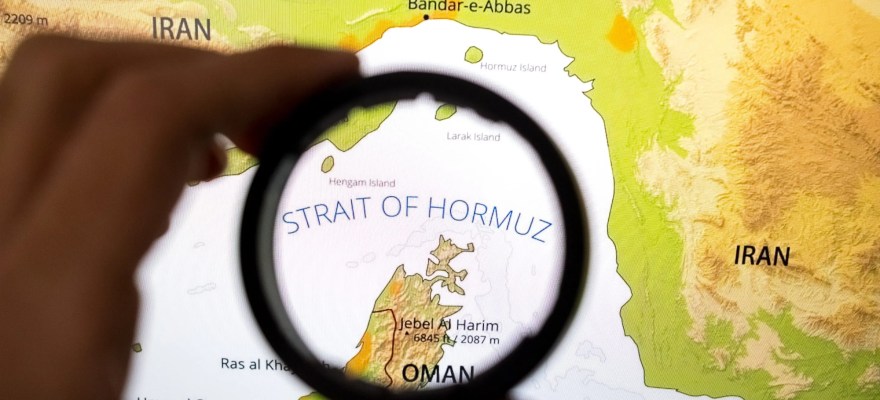
Over the past two months, a series of attacks on commercial vessels in and around the Strait of Hormuz has killed and injured Indian seafarers, forced crews to abandon ships, and repeatedly disrupted one of the world’s most important shipping routes. The vessels involved, from MT Marivex, MT Settebello and MT Jalveer to GFS Galaxy, MT Al Bahiyah and MT Mombasa, were different; so were the circumstances and also the parties alleged to be responsible. What connects them is the growing exposure of civilian seafarers to a conflict in which they have no part. Among these was the attack on MT Settebello, in which three Indian seafarers were reportedly killed in June. While U.S. officials have maintained that the vessel failed to comply with instructions issued during blockade operations, the ship’s operators dispute that account, leaving the precise circumstances of the strike unresolved. Beyond endangering seafarers, disruptions in the Strait threaten the movement of energy supplies and other essential cargo. These developments raise a broader question: what protections does international law provide to civilian mariners caught amid expanding hostilities at sea?

Continue reading

Custodial Killings: What Goes Wrong Behind Bars

Shriya Gambhir

Prisons of the modern era, is a concept which was unknown to the people in the medieval times. In those times, the prisons were used to confine the debtors, persons accused of crimes that awaited their trial, religious or political offenders, and the convicts who awaited their sentencing. In the late 18th century, the use of capital punishment began to decline, the use and purpose of prisons was significantly increased. By the onset of the 21st century, Courts extensively started using the prisons as correctional and rehabilitation institutions for the offenders. The institution of a prison has eventually become a chief means to detain and punish the serious offenders. Continue reading

Demystifying the Supreme Court’s judgment in the Ayodhya dispute

Taanya Trivedi

In a historic judgment by the Honourable Supreme Court of India (SCI), the Court put to rest a volatile dispute dating back to 1885 that has been “a flashpoint of continued conflagration,”[1] which has caused enormous loss of life and has unleashed sectarian violence across the country. Continue reading

Rape as a Crime versus Rape as a Punishment: What is going on in India?

Written By Garima Tiwari

Indian village council orders sisters to be raped and paraded naked after their brother elopes with married woman.[i]

This recent news and few other similar incidents evoke a number of sentiments. Of course, it is an illegal order with no statutory backing, yet it is an order of the “members of the society” or as are called “Kangaroo Courts” . And it raises pertinent issues about the perception of women in India within a complex web of Caste, Culture, Religion and a family –community system still very patriarchal. While the Nirbhaya Delhi Gang rape case is still sore and the Government’s “security regime” -in place, headlines of “sentencing to rape”, create a mismatch in legal and societal standards. This post loosely  puts forth ideas on how the simple formula of merely punishing the offender does not even look like a step forward in acknowledging the deep seated problem in a complex society like India. Continue reading

A Comprehensive Approach to Addressing Child Abuse in India

Authors: Sreeparna Ghosh and Jyothsna Latha Belliappa

A 2007 study conducted by the Indian government revealed that every second child has been a victim of sexual abuse in the country.[1] Given that 41% of India’s population is under 18,[2] it is essential that the Indian state and civil society take a serious and a comprehensive view of their physical and psychological safety. About two years ago landmark legislation was enacted in this regard: The Protection of Children from Sexual Offences (POCSO) Act, 2012. Continue reading