
Danger on the High Seas: Piracy in the Modern Setting and its impact on the Phillipines

Written by: Ruben Ayson[1]

Maritime piracy is a growing global issue today. Eugene Kontorovich of the Northwestern University Law School has characterized modern piracy as an “epidemic.”[2] Until two decades ago, piracy was not seen any more as a menace to international shipping. It has unfortunately come back to haunt us, this time not as the pirates of days past but equally in a very violent way, using modern means and methods to the extent that it has become today a major source of concern for crews, ship-owners, insurers, coastal communities and concerned international organizations. The new face of this historic crime exacts worldwide human and financial costs, and poses an existential challenge to the piracy laws developed throughout the centuries. As with ancient civilizations fighting for survival against the pirate scourge,[3] the proliferation of piracy today poses drastic economic and security threats to many nations.

Piracy today includes new tactics employed to carry out a crime predating recorded history. Speedboats and automatic rifles, rather than frigates and swords, recently became the pirate’s weapons of choice.[4] While looting cargo or stealing ships outright remain standard practice, Somali pirates today also kidnap sailors for ransom.[5]

The modern pirate is different from his historical counterpart in many ways. Modern pirates have adapted to the globalized world in terms technical, political, economic, and social developments. In truth, “today’s pirates are considerably more sophisticated than their counterparts of yesteryear.”[6] Today’s pirates make use of the modern technologies that are available to them. They strategically plan each attack with the help of publicly available information about their target. They “often carry satellite phones, global positioning systems, automatic weapons, [and] antitank missiles.”[7] Some pirates now hijack “mother ships,”[8] which they use as bases from which to launch attacks against other vessels up to more than 1,000 miles from shore using “rocket-propelled grenade[s], ladders and extra barrels of fuel.”[9] The use of modern methods and technology has shifted the character of piracy making them precise and effective operations rather than acts which happen by chance. Therefore, the new face of piracy requires more modern means for combating it.

The shipping industry has long been considered one of the most dangerous in the world. Recently, however, piracy has risen up in the list of menaces faced by seamen.[10] According to the January 31, 2012 figures of the worldwide piracy center of the International Maritime Bureau (IMB), Somali pirates are currently holding captive 10 vessels and 159 hostages.[11] One hundred and two incidents of piracy and armed robbery have been reported to the IMB Piracy Reporting Centre (PRC) in the first quarter of 2012.[12] Eleven vessels were hijacked with 212 crew members taken hostage and four crew killed. A further 45 vessels were boarded, with 32 attempted attacks and 14 vessels fired upon – the latter all attributed to either Somali or Nigerian pirates.[13]

These pirates have a great effect on the world economy and trade. Hundreds of seafarers have been held hostage and forced to suffer physical and mental ill-treatment.[14] The Philippine Coast Guard has said that for the last few years, there were already 5,000 ships worldwide attacked by pirates and more than 1,000 seafarers, including Filipinos, have been taken as hostages, or used as human shields against rescuing government and military forces.[15]

This is a very serious problem, and more so for a country like the Philippines. The Philippines, an archipelago, relies heavily on the shipping industry. The Maritime Industry Authority (MARINA) of the Philippines said the country has 140 ships on the international register, and about 90 percent of these ships pass through the pirate hotspots of the Indian Ocean, Gulf of Somalia and Aden.[16]

Another facet of the issue pertains to the deployment a large number of Filipino seamen in the worldwide maritime industry. Figures from the Philippine Overseas Employment Administration show that in 2010, the Philippines deployed 347,000 shipboard personnel, around 5.06 percent higher than in 2009.[17] Despite the increasing risks of piracy, there does not seem to be any shortage of Filipinos wanting to apply for a job in the maritime industry.[18] Based on the projections of the Philippine manning industry, a record number of 400,000 Filipino seafarers will have been deployed worldwide by the end of 2011 despite the crisis in Europe.[19]

This large amount of Filipino seamen deployed can be explained from an economic standpoint. Filipino seafarers, who are better paid than other overseas Filipino workers, send higher than average remittances. In 2007, seafarers sent home $2.2 billion, about 15 percent of the $14.5-billion total remittances from Filipino workers overseas. That is comparatively huge since they make up only three percent of the 8.7 million Filipinos working and living abroad.[20] MARINA said with the Filipino seafarers raking in more than US$3.8 billion in revenue for the country in 2010 and more this year, the threats of piracy need urgent interventions from stakeholders.[21]

Filipino seafarers, comprising one-third of the world’s seafarers or numbering some 300,000, are among the most exposed to risks in the shipping world.[22] With the Philippines providing a large number of seafarers in the world, their vulnerability to piracy is high.[23]A third of all the world’s seafarers are from the Philippines, so it is not surprising that there is another less welcome statistic – in the past year, more Filipinos have been taken hostage than any other nationality.[24] The statistics prove to be staggering and grim. One Filipino shipping crewmember has been taken hostage every six hours somewhere in the world, according to an official running count by the Department of Foreign Affairs (DFA) of the Philippines.[25] Every time there’s a report of a ship hijacked off the coast of Somalia, almost always there’s a Filipino involved.[26] Since 2006 470 Filipinos have died at the hands of pirates.[27]Out of some 400,000 Filipino seafarers, who make up a quarter of the world’s seagoing workforce, 769 were captured between 2006 and 2011.[28] Filipinos are not being particularly singled out by the pirates, it is just that so many people from the Philippines work in the maritime industry.[29] It is because of this that the Philippines has a great interest in ensuring the safety of its seamen and in the measures, both legal and remedial, for preventing and prosecuting piracy.

Piracy significantly affects modern day society as it causes great damage and loss to world trade and economy. Pirates have acted boldly and without fear as they take advantage of the state’s and international community’s inaction. With many of the world’s goods, especially necessities like oil and fuel, passing through sea lanes, the threat of piracy simply cannot be ignored. It persists as a modern day menace due to a number of factors, primary of which is the difficulty to catch pirates as they can easily escape detection and capture in the vast oceans of the world. Many countries, even the big naval powers, do not have the resources to constantly monitor every square mile of water. Ultimately from the practical point of view piracy will be lessened if there is greater political will to stop it and if there is better coordination and cooperation between states that are affected by it.

But that is only one aspect of the problem. Effective laws and procedures, and their strict enforcement, will go a long way in eradicating piracy. But as it is, the existing legal framework proves to be an insufficient mechanism to alleviate the problem. International laws and treaties have not been fully implemented and are too fragmented. Also, while piracy is covered by universal jurisdiction, there is a seeming lack of cases prosecuted, as states have found it to be too burdensome to proceed with cases which entail additional cost and effort on the part of those who have apprehended or are in custody of pirates.

There must be a concerted attempt on the part of states to improve the existing legal framework on piracy as well as ensure that these improved laws are enforced. The establishment of an international tribunal on piracy will be a very important stride as this will provide a proper venue where affected parties will be able to seek redress. No longer must pirates be able to roam the seas with impunity and evade the long arms of the law. They must be brought before the courts of law, and justice must be meted out against them so that they will realize that they are not above the law. And having such a tribunal will show to modern pirates that the international community is united and is serious is combating piracy.

[1] Ruben S. Ayson Jr., a lawyer from the Philippines and currently works for the government of the Republic of the Philippines as an Associate Solicitor in the Office of the Solicitor General. He can be contacted for further information at: sir.ayson@gmail.com

[2] Eugene Kontorovich, “A Guantanamo on the Sea”: The Difficulty of Prosecuting Pirates and Terrorists, 98 Cal. L. Rev. 243, 243 (2010)

[3] Pirates plagued the coasts of ancient Greece. Sandholtz & Stiles, supra note 3, at 32; Jesus, supra note 3, at 364.

[4] Joshua Michael Goodwin, Note, Universal Jurisdiction and the Pirate: Time for an Old Couple to Part, 39 Vand. J. Transnaional. L. 973, 982 (2006).

[5] Jeffrey Gettleman, Pirates Tell Their Side: They Want Only Money, N.Y. TIMES, Oct. 1, 2008, at A1, available at 2008 WLNR 18637664.

[6] Michael H. Passman, Protections Afforded to Captured Pirates Under the Law of War and International Law, 33 Tul. Mar. L. J. 1, 6 (2008).

[7] Jack A. Gottschalk et al., Jolly Roger with an uzi: The rise and threat of modern piracy 22 (U.S. Naval Institute Press, 2000).

[8] See the International Chamber of Commerce’s Commercial Crime Service website, which maintains a section on Piracy Prone Areas and Warnings, and which is available at http://www.iccccs. org/home/piracy-reporting-centre/prone-areas-and-warnings. As of April 2010, the website warned that Somalis hijack ocean going fishing vessels for piracy operations, using these as mother ships from which to launch smaller boats to attack other vessels.

[9] Joshua Michael Goodwin, Note, Universal Jurisdiction and the Pirate: Time for an Old Couple to Part, 39 Vand. J. Transnaional. L. 973, 982 (2006).

[10] Every 6 hours, pirates seize a Filipino seaman http://pcij.org/stories/every-6-hours-pirates-seize-a-filipino-seaman/, (last visited June 28, 2012)

[11] Anti-piracy group: In last 5 years, 65 seafarers died of torture, disease http://www.filipinosabroad.com/ofw-news/anti-piracy-group-5-years-65-seafarers-died-torture-disease.html, (last visited June 28, 2012)

[12]ICC- IMB Piracy and Armed Robbery Against Ships Report – First Quarter 2012

[13] Ibid.

[14] Supra, note 10.

[15]Threats of piracy beset maritime industry, Filipino seafarers http://www.filipinosabroad.com/ofw-news/threats-piracy-beset-maritime-industry-filipino-seafarers.html, (last visited June 28, 2012)

[16] supra, note 13.

[17] Record number of Pinoy seafarers deployed in 2011, http://www.filipinosabroad.com/ofw-news/record-number-pinoy-seafarers-deployed-2011.html, (last visited June 28, 2012)

[18] Somali piracy takes heavy toll on Philippine sailors, http://www.bbc.co.uk/news/world-asia-pacific-15259042, (last visited June 28, 2012)

[19] Supra, note 16.

[20] Every 6 hours, pirates seize a Filipino seaman http://pcij.org/stories/every-6-hours-pirates-seize-a-filipino-seaman/, (last visited June 28, 2012).

[21] Threats of piracy beset maritime industry, Filipino seafarers http://www.filipinosabroad.com/ofw-news/threats-piracy-beset-maritime-industry-filipino-seafarers.html, (last visited June 28, 2012).

[22] PHL can be model for maritime best management practices to deter piracy, http://www.mb.com.ph/node/300768/phl-can-be-model-maritime-be

[23] Ibid.

[24] supra, note 18.

[25] supra, note 19.

[26] supra, note 18.

[27] Anti-piracy group: In last 5 years, 65 seafarers died of torture, disease http://www.filipinosabroad.com/ofw-news/anti-piracy-group-5-years-65-seafarers-died-torture-disease.html, (last visited June 28, 2012).

[28] Ibid.

[29] Somali piracy takes heavy toll on Philippine sailors, http://www.bbc.co.uk/news/world-asia-pacific-15259042, (last visited June 28, 2012).

 

Let My People Go: Blowing the Whistle Upon African States

By Ronald Rogo   rogo.ronald@gmail.com

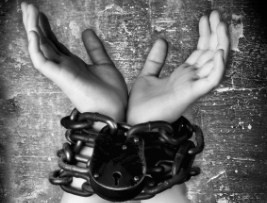
I have heard about the problem of human trafficking[1] for eons. Horrid stories about the pain of individuals held against their will within and outside their borders. The numbers are numbing: conservative estimate of 600,000-800,000 victims being trafficked annually across international borders. Many more cases are not reported, especially trafficking that occurs within the national borders.Resolutions have therefore been passed about how governments will fight the menace and ensure that future generations do not have to fight these ghosts again.

As a source market, the situation in Africa is just as dire, if not more, compared to other parts of the world. For example, according to the Global Report on Trafficking in Persons by the UNODC in some parts of Africa and the Mekong region, children are the majority (up to 100% in parts of West Africa) of the persons being trafficked. Needless to say, hundreds of thousands of Africans have been subject to sexual, physical and psychological abuse. Most Africans could identify one or two individuals who have been subjected to these inhuman conditions. For Africans, human trafficking is a chilling re-enactment of the trans-Atlantic slave trade. Only that this time the African governments are complicit, by design or default, in the entire business (others would argue that, yet again, the leaders are complicit…but that is a discussion for another day).

But let me fair. It is not entirely correct to state that nothing has been done by the African leaders. Numerous conferences have been held in the continent where the issue of human trafficking has been discussed. Glossy paged reports with policy and legal commitments have also been prepared. We have even passed laws that outlaw human trafficking[2].  In fact, even some of the highest public officials have created time out of their busy schedules to open these conferences, deliver the opening remarks and encourage the participants of the commitment of their respective governments on this issue. But that is all. After this, the documents are filed and shelved until the next donor conference when they would be dusted again and the speeches brushed up. The rigmarole. And that is exactly my problem.

While the rest of the world has developed regional instruments to tackle their specific needs on human trafficking, Africa has stagnated. In 2005, for example, the Council of Europe Convention on Action against Trafficking in Human Beings was established to assist combat human trafficking problem in the European Union. In addition, the European regional court-has established important jurisprudence in the area of human trafficking.

Africa developed the Ouagadougou Action Plan[3], where member states pledged to havea comprehensive legislative and institutional framework that covers all aspects of trafficking in human beings in line with the UN Convention” and to “Ensure the effective prosecution of those suspected of involvement in trafficking in human beings, and deterrent penalties for those found guilty of trafficking”. However, as we shall see, these noble intentions have not been met by actual progress.  In contrast, one would barely get a case that signifies the importance of human trafficking in Africa. For example, while child sex trafficking was outlawed in Kenya in 2006 there has not been any significant reported case to date[4]. Even in situations where the victims’ cases have been filed in the European capitals the source countries have often inexplicably failed to take similar actions against the perpetrators. To put it more succinctly “Law enforcement systems have fail(ed) to prevent trafficking, punish traffickers, and protect those who are trafficked. In general, the failure of law enforcement officials to ensure security, particularly in the context of conflict, means that traffickers can act extremely violently with impunity”[5].

It seems to me that since the victims of human trafficking are mostly women and children-and conversely the beneficiaries are predominantly male[6]-the problem of human trafficking does not affect the power relations. The political power brokers can therefore afford to bury their heads in the sand. For instance, one would be hard pressed to recount an instance when an individual Parliamentarian in Africa has, suo moto, raised concern about the impact of human trafficking on their citizenry. Others would state that there are bigger problems to deal with in Africa. But what, pray tell, would be more urgent than preventing the decimation of the population in the continent?

Lack of the appropriate resources is often stated as an important barrier to effective combating of human trafficking. I would agree but qualify. Africa lacks willing implementers of the policies. People who will bite the bullet and get on with the task of rescuing generations of enslaved victims. Fighting human trafficking, just like drug trafficking, requires the expertise of a skilled police force. Specialised police units with the skills of identifying and being able to expose these tight networks need to have been created. So typically, if one would have to succeed one would need lots of solid evidence and co-operation of the victim. Most African states have not yet put these in place (although,  I submit, this is more for lack of the will and determination rather than a lack of resources).

Lastly, until African governments address the inequality situation in the continent human trafficking will continue being a problem. Most of the victims are deceived by the promise of a better life across the shores. Lack of employment opportunities, capital to start businesses or an investment climate for small businesses has led to the vulnerability of millions of young people. The Ouagadougou Action Plan identified  poverty, unbalanced wealth distribution, unemployment, armed conflicts, poor law enforcement system, degraded environment, poor governance, societies under stress as well as non inclusive societies, corruption, lack of education and human rights violations including , increased demand for sex trade and sex tourism as the root causes of trafficking in human in Africa. We have the diagnosis. Now let us treat the disease. Urgently.


[1] The UN Protocol to Prevent, Suppress, and Punish Trafficking in Persons, Especially Women and Children, Supplementing the UN Convention Against Transnational Organized Crime (the Palermo Protocol) defines human trafficking as “The recruitment, transportation, transfer, harbouring or receipt of persons, by means of the threat or use of force or other forms of coercion, of abduction, of fraud, of deception, of the abuse of power or of a position of vulnerability or of the giving or receiving of payments or benefits to achieve the consent of a person having control over another person, for the purpose of exploitation. Exploitation shall include, at a minimum, the exploitation of the prostitution of others or other forms of sexual exploitation, forced labour or services, slavery or practices similar to slavery, servitude or the removal of organs.”

[2] While a step in the right direction, the type and number of laws are still wanting. Few countries in Africa have specific legislation outlawing human trafficking as a specific offence (these include Djobouti, Ethiopia, Rwanda, Tanzania, Mozambique, the Gambia, Ghana, Liberia, Mauritaina, Senegal, Sierra Leone, Egypt and Nigeria). More countries only have laws that address only one specific form of human trafficking. In the USA, however, there are four different laws to combat human trafficking- The Victims of Trafficking and Violence Protection Act of 2000, the Trafficking Victims Protection Reauthorization Act of 2003, the Trafficking Victims Protection Reauthorization Act of 2005, and the Trafficking Victims Protection Reauthorization Act of 2008. In addition, an Office to Monitor and Combat Trafficking in Persons has been established under the State Department to co-ordinate efforts to prevent and prosecute perpetrators of human trafficking.

[3] Ouagadougou Action Plan To Combat Trafficking In Human Beings, Especially Women And Children As Adopted by the Ministerial Conference On Migration And Development, Tripoli, 22-23 November 2006

[4] However, it is important to applaud the efforts of the Nigerian government which prosecuted 209 trafficking cases in 2011, resulting in 23 convictions. While the numbers are low compared to the number of victims these efforts forecast what should happen if the rest of the states were as serious about combating human trafficking.

[5] HUMAN TRAFFICKING IN EASTERN AFRICA: Research Assessment and Baseline Information in Tanzania, Kenya, Uganda, and Burundi (Report by International Organization of Migration)

[6] The ILO estimates the annual proceeds from human trafficking at 32 billion US Dollars. This, no doubt, is a profitable enterprise with interests. The report can be accessed online at http://www.ilo.org/wcmsp5/groups/public/@ed_norm/@declaration/documents/publication/wcms_090356.pdf

An Overview of the Italian Response to Child Trafficking

Written by: Noemi Fantoni [1]**

All forms of trafficking in human beings including sexual exploitation of children are universally prohibited.  In order to comply with its international obligations, Italy introduced a number of changes in its criminal legislation, so that it continued to protect the principle of the “best interest of the child.” The offence of sexual exploitation of children was introduced into the Italian Criminal Code only in 1996, by art.609-bis of the Law No. 66 which punishes violent behavior against children. Subsequent legislation was passed again in 1998 which prohibited sex tourism and juvenile prostitution.[2] It was, however, only in 2003 that Law No. 228/2003 on Measures against Trafficking Persons (also called Anti-Trafficking Law) was amended as to include a specific provision of the offence of sexual exploitation of children. This was in order to ensure compliance of the Italian legislation with the treaties and other regional and international obligations that Italy submitted to.   

So what does the Italian legislation aim to accomplish with regards to trafficking of minors? Article 18 of the Immigration Consolidation Act requires creation of a Social Assistance and Integration Programme, which took more than 2 years to bring into existence.  Currently the Programme also serves to penalize the crime of trafficking by using the trafficking definitions found in the Palermo Protocol. All the measures which form the Programme are managed by the Inter-ministerial Committee. The Programme provides several tools, such as:[3] a free Help-line (a national hotline against trafficking) and the “Voluntary Repatriation Programme” which is run by the Italian branch of the International Organisation for Migration (IOM) in collaboration with the Ministry of Interior which provides programs for temporary assistance and long term social protection.[4]

The main objectives of the free Help-line are to provide detailed information on legislation and services granted to trafficked persons in Italy and, upon request, refer them to the specialised anti- trafficking (THB) agencies. In most cases, the territorial branches of the free Help-line are managed by the same NGOs and public institutions responsible for the implementation of projects funded within the Article 18 Programme. Information is provided in the various languages spoken by the target groups and it is free and active 24 hours since January 2007. The hotline provides assistance and information not only to victim of THB for sexual exploitation but also to victims of trafficking for the purpose of labour exploitation.[5]

All local branches provide information in various languages on several issues (immigration law, social and health services, programme of social assistance and integration, etc.); provide psychological support; provide legal advice; assess if the conditions for the application of the Article 18 procedures are in place; provide information about the available accommodation solutions; and place or refer victims to the accredited Article 18 agency located in the geographical area where the victim resides.

Another instrument which has aided Italy in combatting child trafficking is the Osservatorio Nazionale Tratta,[6] an Italian online portal which offers information on various aspects of the THB phenomenon. The portal was established by Department of Equal Opportunity within the European Equal-Project Observation and Resource Centre for THB, coordinated by the Association on the Road in partnership with other NGOs and governmental bodies. The portal is the most updated secondary source on THB issues within Italy (SIRIT – Sistema Informatizzato di Raccolta Informazioni sulla Tratta), where it is possible to complete individual courses for victims accepted under social protection under Article 18 or Article 13 of the Anti-Trafficking Law but its access is restricted. It gathers national statistical data from different institutions and offers an overview of the national and international legal framework against trafficking for monitoring and analyzing this phenomenon.[7]  This is connected with the Anti-Mafia National Direction (Direzione Nazionale Anti-Mafia – DNA) and its local Districts (Direzioni Distrettuali Antimafia  – DDA) which specifically concerns itself with of all crimes in Articles 600 and 601 of the Criminal Code (slavery, servitude, trafficking).[8]

In the last decade, several awareness-raising campaigns have been run in collaboration with the General Directorate of the Italian Cooperation for Progress of the Ministry of Foreign Affairs, together with the Department of Rights and Equal Opportunities[9] and with some of the most relevant Italian NGOs. The direct participation of children in awareness-raising efforts is considered particularly relevant by the government, civil society, and NGOs fighting child trafficking.[10] Moreover, the Department for Rights and Equal Opportunities collects some key information on victims of trafficking through project reports that organisations and local authorities send to the Department every six months and on an annual basis.

In fact, the Department for Equal Opportunities every year calls upon the public for project proposals to provide and guarantee proper assistance and protection to trafficked persons. From 2000 to 2010, Department for Equal Opportunities helped to fund a total of 710 projects, in all the Italian regions (out of them 613 long term projects were financed under Article 18 and 97 short term projects under the Anti-Trafficking Law).[11]

In 2010 the Department for Equal Opportunities started to work for the implementation and set up of a National Action Plan, although it became into force only a year after.  The Plan analyzed the specific needs of trafficked/exploited children; it has a gender based approach, has cross-cutting issues to the national strategy to be developed and including minimum standards for protection and standard operating procedure for the referral of victims to the proper service providers. Nevertheless until now the Italian government has not yet appointed a National Rapporteur or equivalent mechanism. The technical board, called the Observatory and National Resource Centre on Trafficking in Human Beings, has the purpose of designing new tools and knowledge and monitoring systems on the different forms of exploitation linked to trafficking, proposing at the same time, liaison tools for different kinds of organisations working at different levels for the protection of trafficked persons and working in combating the phenomenon, for the purpose of influencing  positive policies and interventions in the sector.

Incorporating both short term and long term strategies, the Anti-Trafficking Law provides victims with three to six months of assistance while Article 18 guarantees victims shelter benefits for one year, subject to judicial review. As a matter of fact the law does not specify how often a permit can be renewed, and so it can technically be renewed until the child has reached the age of 18. Article 18[12] grants a special residence permit to foreigners, whatever their age, who are presumed to have been victims of violence or severe exploitation, whose life is at risk as a result of their desire either to escape from the control of criminal organisations or to cooperate with police and prosecutors. A residence permit may be granted without the victim reporting the traffickers, because exploitation and the associated danger for the victim are a sufficient condition for it to be obtained. Foreign child victims of trafficking receive an automatic residence permit until they reach 18 years old. The Italian legal system does not allow the deportation of foreign children below the age of 18, unless the minor constitutes a danger for public or a danger to state security.[13] A similar provision has been recently enacted for unaccompanied minors who are EU citizens.

In the end these victims receive a residence permit for education or for work, allowing them to remain in Italy.[14] The persons (including children) who are part of this Programme benefit from social services, educational provisions, and labour information in order to find a permanent job, while the Anti-Trafficking Law establishes a special aid programme granting on a temporary basis suitable accommodation and food and healthcare.

While the legislation in Italy is multidimensional (it also includes provisions for prosecutions, etc), focusing on the needs of victims and creating preventative efforts, allows for the Italian local communities to engage in combatting this crime, in addition to protecting vulnerable youth, who at times, against their own will, are far away from home.  The world has a responsibility to help those who cannot help themselves and because of their vulnerabilities are targeted so that criminals can make a profit.


[1] Noemi Fantoni is a graduate of the University of Torino (LLM) in 2012 and is currently a trainee with the European Union Parliament in Civil Liberties and Justice Unit. Noemi has worked with various NGO’s relating to child rights, most recently in Mongolia with Amici dei Bambini. She can be reached at noemi.fantoni@gmail.com for more information regarding Italian Child Trafficking laws.

** Unless otherwise noted, the author has translated the laws from Italian into English for the purposes of this post.

[2] Law No. 269, on 3rd August 1998, Norme conto lo sfruttamento della prostituzione, della pornografia, del turismo sessuale in danno di minori, quali nuove forme di riduzione di schiavitù. (http://www.normattiva.it/atto/caricaDettaglioAtto?atto.dataPubblicazioneGazzetta=1998-08-10&atto.codiceRedazionale=098G0337).

[3] Associazione On the Road, Isabella Orfano and Marco Bufo, The Italian system of assistance and integration of victims of trafficking in human beings, page. 9. (available in http://ec.europa.eu/anti-trafficking/download.action;jsessionid=GRPqPPcYfFkbL7CT7yWgyTVWNvG9gzjhwBBZkH81Rn22j7tLyXZ6!-1401219818?nodeId=e06d5560-83ce-4df1-ae98-832b58224819&fileName=The+Italian+system+of+assistance+and+integration+of+victims+of+).

[4] Idem., page.6.

[6] Web site of Osservatorio Nazionale Tratta –ONT- (www.osservatoriotratta.it).

[7]International Centre for Migration Policy Development (ICMPD), Study on the assessment of the extent of different types of Trafficking in Human Beings in EU countries, April 2010, page.184.

[8] Giuseppina Valentina D’Angelo and Isabella Orfano, European Commission, Italian Report, Law enforcement agencies and NGOs co-operation in the prevention and victim assistance of trafficking in human  beings for the purpose of sexual exploitation (THBSE), Agis Programme 2005,  COOP-TRAF JLS/2005/AGIS/156, page. 19. (available: c.europa.eu/anti-trafficking/download.action;jsessionid=5RLNPvCFWpkSvnKPpy7x9vWPFnhN51WwLLQB9r1JDGqhGpjRLh1F!511069867?nodeId=3c5774ae-4f5a-4bc8-b1c3-7abe2b7e7d32&file).

[9] Prime Minister’s Office, which is the central public authority in charge of promoting and coordinating policies and actions on anti-trafficking, with specific regard to a human rights based and victim centered approach. 

[11]European Commission, Fight Against Trafficking Human Beings, Italy. (available in: c.europa.eu/anti-trafficking/showNIPsection.action;jsessionid=2z1KPlFG8gJLTvHYG66lJ3nXh5T7w8TjmQDpPCSCn9hLLprgYVJ1!511069867?sectionId=688).

[12] The implementation of the programme, pursuit by article 18 of the Law No. 286/1998 (the Immigration Consolidation Act),  are co-financed by the State (70%) and local authorities (30%), coordinated by a special Inter-Ministerial Committee and provided by local authorities  and/or accredited non-profit organizations. The Programme is managed by the Inter-ministerial Committee for the Implementation of Art. 18 of the Law No. 286/1998 (the Immigration Consolidation Act ), the managing body of the Programme, that is composed of representatives of the Department for Rights and Equal Opportunities, the Ministry of Justice, the Ministry of Welfare and the Ministry of Interior. Idem., page. 34.

[13] Article 19, par. 2, of Italy/Decreto legislativo n. 286/1998 (25.7.1998) available at http://www.giustizia.it/cassazione/leggi/dlgs286_98.html (02.07.2008).

[14] Associazione On the Road, Isabella Orfano and Marco Bufo, The Italian system of assistance and integration of victims of trafficking in human beings. Page. 4. (available in http://ec.europa.eu/anti-trafficking/download.action;jsessionid=GRPqPPcYfFkbL7CT7yWgyTVWNvG9gzjhwBBZkH81Rn22j7tLyXZ6!-1401219818?nodeId=e06d5560-83ce-4df1-ae98-832b58224819&fileName=The+Italian+system+of+assistance+and+integration+of+victims+of+).

EU Response to the Crime of Human Trafficking

Written by Lina Laurinaviciute

“Trafficking in human beings is the slavery of our times” stresses the European Commission.[1] This position is largely reflected in the European Union (hereinafter EU) political interventions, which are usually seen in the international arena as exemplary with regard to fighting the crime of human trafficking in Europe. Indeed, the political commitment at the EU level to address this problem was established with large number of initiatives, measures and funding programmes both within the EU and external countries since the 1990s.[2]

However, the current economic situation faced by the EU countries raises business opportunities for traffickers. Human trafficking is considered to be one of the most profitable criminal activities worldwide, which estimated global annual profits are 31.6 billion U.S. dollars[3]. The warning of a dramatic increase in human trafficking put this complex issue involving criminality and law enforcement back on the political agenda of the EU and its Member States. Despite the lack of the reliable data, which makes it very problematic to develop comprehensive and effective measures to fight human trafficking, the estimated number of people trafficked to or within the EU amounts to several hundred thousand a year.[4]

Data collected by the European Commission in September 2011 shows that 76 % of registered victims of human trafficking were trafficked for sexual exploitation,14 % for forced labour, 3 % for forced begging,1 % for domestic servitude and the rest 6 % for criminal activities, removal of organs, etc. It also shows that women and girls are the main victims of this crime (79 %). Most Member States reported that majority of victims from within the EU come mainly from Romania, Bulgaria, Poland and Hungary, whereas most victims from non-EU countries are from Nigeria, Vietnam, Ukraine, Russia and China.[5]

While systematically collected and managed data on human trafficking remains essential for the efficient response to this crime, legal instruments to approach human trafficking need be harmonized within the EU Member States.

Human Trafficking is specifically prohibited by the Charter of Fundamental Rights of the European Union, which states that: “Trafficking in human beings is prohibited.”[6] A lot of attention has also been paid to the United Nations Protocol to Prevent, Suppress and Punish Trafficking in Persons, Especially Women and Children, supplementing the United Nations Convention against Transnational Organized Crime (hereinafter Palermo Protocol) and the Council of Europe Convention on Actions against Trafficking in Human Beings.[7] Indeed, in the EU human trafficking is defined uniformly according to the Palermo Protocol: “Trafficking in persons shall mean the recruitment, transportation, transfer, harbouring or receipt of persons, by means of the threat or use of force or other forms of coercion, of abduction, of fraud, of deception, of the abuse of power or of a position of vulnerability or of the giving or receiving of payments or benefits to achieve the consent of a person having control over another person, for the purpose of exploitation. Exploitation shall include, at a minimum, the exploitation of the prostitution of others or other forms of sexual exploitation, forced labour or services, slavery or practices similar to slavery, servitude or the removal of organs”.[8]

In the case of Rantsev v Cyprus and Russia the European Court of Human Rights provided a decisive human rights benchmark with clear obligations for the EU Member States to take the necessary steps to address different areas of human trafficking. These include recruitment, investigation, prosecution, protection of human rights, and providing assistance to victims. If the authorities are aware of a case of human trafficking, or that an individual risks being a victim of this crime, they are obliged to take appropriate measures.[9]

However, despite the obligations for the Member States to criminalise all possible acts that constitute human trafficking and to provide an adequate framework to protect victims of this crime, not all Member States have ratified the above mentioned legal instruments. As well, there are still legislative gaps in their transposition into domestic legislation. Therefore, “the elements determining Trafficking in Human Beings vary considerably across EU Member States.”[10]

A major step forward was the adoption of the new Directive on preventing and combating trafficking in human beings, in 2011.[11] The Directive adopts a comprehensive approach to human trafficking from a gender (as beforehand mentioned, women and children are particularly affected) and human rights perspective. It supports the harmonisation of the EU Member States’ criminal laws, possibility not to prosecute and apply penalties to victims for unlawful activities they were forced to commit by the traffickers, possibility to prosecute the EU nationals for human trafficking offences committed in another EU State or outside the EU. It also includes robust provisions on victim’s protection, including special measures for children as well as victims’ support, such as shelters, medical and psychological assistance, translation services.[12] The new Directive also requires Member States to set up a ‘National Rapporteur’ responsible for monitoring and implementation of anti-trafficking policy at national level. Whereas the European Commission has already appointed an EU Anti-trafficking Coordinator who will oversee the implementation of the EU Strategy towards the eradication of trafficking in human beings 2012-2016 (hereinafter the EU Strategy).[13]

The EU Strategy focuses on prevention, protection, prosecution, partnerships and also increasing knowledge on emerging concerns related to human trafficking.[14] This instrument reflects a number of EU initiatives in various policy areas which contribute to addressing human trafficking. For instance, the development of guidelines to improve identification of victims; the guidelines on child protection systems; the improvement of access to information for victims of their rights and support for them to exercise these rights effectively; the measures to reduce the demand for and supply of services and goods by victims of human trafficking; the development of the EU-wide guidance on future prevention measures and gender-sensitive information campaigns, as the awareness-raising campaigns already implemented in the Member States were evaluated as insufficient in their scale and impact.

These and others EU instruments determine that any approach to human trafficking must be based on the needs of victims. This also means that the measures against this crime must involve work in countries of origin, transit and destination. As an example, the case of Siliadin v. France in 2005, was the first human trafficking case considered by the European Court of Human Rights. The applicant, a female Togolese national who lived in Paris, had served as an unpaid servant for several years as minor and her passport was confiscated. In this case the Court held that it could not be considered that the applicant had been held in slavery in the traditional sense of that concept but considered that the applicant had, at the least, been subjected to forced labour.[15]

Despite a decade of efforts, the statistical figures show that a total number of cases related to human trafficking prosecuted in the EU remains low (1534 cases in 2008,1445-  in 2009, 1144 in 2010).[16] It is also clear, that human trafficking extends beyond individual Member States. Therefore the investigation and prosecution of human trafficking face additional problems. For instance, in the case Kodos v. Prosecutor General’s Office of the Republic of Lithuania (2010) the Prosecutor General’s Office sought the defendant from another Member State for the purpose of prosecution for sexual exploitation of 8 Lithuanian women in the United Kingdom.[17]

Furthermore, “the trends, patterns and working methods of traffickers are changing in all the different forms of trafficking in human beings, adapting to changing patterns of demand and supply”.[18] For example, in the Roma father casein Italy (2010), the father who sold his underage daughter for 200,000 Euros to people who were exploiting her for criminal activities (forcing her to steal) was charged with enslavement.[19]

Thus to better investigate and prosecute traffickers and further increase cross-border cooperation and centralise knowledge on human trafficking, Member States are required to establish national multidisciplinary law-enforcement units on human trafficking. Such units would function as contact points for the EU agencies, in particular Europol.[20] The national authorities of Member States and the EU agencies are also encouraged to create where relevant joint investigation teams and involve Europol and Eurojust in all cross-border trafficking cases.[21]

Further, in accordance with the new Directive for monitoring and evaluation of the implementation of measures addressing human trafficking in the EU, the European Commission will present report every two years to the European Council and the European Parliament. The first report is to be issued in 2014,[22] while the attention to the problems and possible actions by the EU agencies and Member States is brought every year on 18th October, the EU Anti-Trafficking Day.

All the EU existing and intended legal instruments and measures seem to establish a holistic system on preventing and combating human trafficking and protecting its victims. However, the effect of these efforts will depend to a large extent on the will of the Member States to implement those instruments in domestic laws in a harmonized and fair manner, cooperation of all the provided actors within and outside the EU, as well as funding opportunities for these actions.


[1]The European Commission, Communication From the Commission to the European Parliament, the Council, the European Economic and Social Committee and the Committee of the Regions, The EU Strategy towards the Eradication of Trafficking in Human Beings 2012–2016, COM(2012) 286 final, 19 June 2012, [hereinafter The EU Strategy], p. 3.

[2]TheEuropean Commission, Communication on trafficking in women for the purpose of sexual exploitation, COM(96) 567 final; European Commission, Communication on Fighting trafficking in human beings: an integrated approach and proposals for an action plan, COM(2005) 514 final; The EU Plan on best practices, standards and procedures for combating and preventing trafficking in human beings, 2005/C 311/01; European Commission, Commission working document on the Evaluation and monitoring of the implementation of the EU plan, COM(2008) 657, final.

[3] Patrick Besler, Forced Labour and Human Trafficking: Estimating the Profits, working paper, International Labour Office, 2005.

[4]The European Commission, Trafficking in human beings, available at: http://ec.europa.eu/dgs/home-affairs/what-we-do/policies/organized-crime-and-human-trafficking/trafficking-in-human-beings/index_en.htm, [accessed 5 November 2012].

[5]The EU Strategy, supra note 1, p. 2.

[6]The Charter of Fundamental Rights of the European Union, 2000/C 364/01, Article 5.

[7]United Nations, Protocol to Prevent, Suppress and Punish Trafficking in Persons, Especially Women and Children,

supplementing the United Nations Convention against Transnational Organized Crime, 2000, [hereinafter Palermo Protocol]; The Council of Europe, Convention on Action against Trafficking in Human Beings, CETS No.197, 16 May 2005.

[8]Palermo Protocol, Article 3.

[9]European Court of Human Rights, Rantsev v. Cyprus and Russia, Application No 25965/04, Judgment (final), 10 May 2010.

[10]International Centre for Migration Policy Development, Study on the Assessment of the Extent of Different Types of Trafficking in Human Beings in EU Countries, April 2010, p. 2.

[11]Directive 2011/36/EU of the European Parliament and the Council on preventing and combating trafficking in human beings and protecting its victims, L 101/1, 15 April 2011.

[13]The EU Strategy, supra note 1, p. 4.

[14]Supra note 12.

[15]European Court of Human Rights, Siliadin v. France , Application No. 73316/01 , Judgment (final), 26 October 2005.

[16]The EU Strategy, supra note 1, p. 9.

[17]Royal Courts of Justice, Kodos v. Prosecutor General’s Office of the Republic of Lithuania, Case No: CO/12374/2009, Judgment, 28 April 2010.

[18]The EU Strategy, supra note 1, p. 14.

[19]Supreme Court of Cassation, V. Criminal Section, The Roma father case, Case No. 35923, Judgment, 6 October 2010.

[20]The EU Strategy, supra note 1, p. 9.

[21]Ibid., p. 10.

[22]Ibid., p. 14.

* The poster is designed by RJDaae: http://rjdaae.deviantart.com.

Human Trafficking and Prostitution in India

Written by Garima Tiwari

“The red light district in Bombay generates at least $400 million per annum in revenue, with 100000 prostitutes serving 365 days a year, at the average rate of 6 customers per day at $2 each.”[i]

When Robert Friedman, wrote this in 1996, he must not have though that the industry was there to survive and flourish with even more vigour, crime and torture and become the largest in Asia. For ages, the commercial sex trade has been the chief destination for trafficked girls in India.[ii]Sex tourism involving underage girls still remains a highly profitable business, a billion-a-year industry in 2009, with a 30 percent increase from previous years.

India is listed in the Tier II list of the United Nations which includes countries which have failed to combat human trafficking. India continues to be a source, destination and transit country for forced labor and sex trafficking. According to a report by the Ministry for Women and Child Development, India has nearly 2.5 million prostitutes in nearly 300,000 brothels in 1,100 red-light areas across the country. 90% or more estimated as in-country and 5 to 10% to cross-border trafficking, reported mainly from Bangladesh and Nepal. The routes of trafficking do not exclude Europe and specifically to UK and United States.[iii] Around 1.2 million children are involved in prostitution in India.

The trafficking of girls from Nepal into India for forced prostitution is perhaps one of the busiest slave sex trafficking routes anywhere in the world; with estimated 5,000-10,000 Nepali women and girls trafficked to India each year.[iv] An estimated 100,000-200,000 Nepali trafficked persons are in India. [v] In addition to being a destination, India is also a transit country for Nepalese and Bangladeshi women trafficked to Pakistan, Western Asia, and the Middle East and for women trafficked from the Russian Federation to Thailand. [vi] Asia –Pacific therefore, has seen ‘feminization of migration’-with more population movement being that of women. The feminization of migration gives rise to specific problematic forms of migration, such as the commercialized migration of women and girls as domestic workers and caregivers, often resulting in the trafficking of women for labor and sexual exploitation.[vii]

Much of the attention on human trafficking focuses on those who are trafficked across national borders every year, and, in many cases, forced to work as prostitutes or virtual slaves. But those numbers don’t include victims trafficked within India — a country so large and diverse that victims taken hundreds of miles away where a different language is spoken have little chance of finding their way home. There are increasing reports of females from northeastern states and Odisha subjected to servile marriages in states with low female-to-male child sex ratios, including Haryana and Punjab. Maoist armed groups known as the Naxalites forcibly recruited children into their ranks. Establishments of sex trafficking are moving from more traditional locations – such as brothels – to locations that are harder to find, and are also shifting from urban areas to rural areas, where there is less detection.[viii] Not to hide, the rise of HIV/AIDS patients and vulnerable groups. Anyone who has watched ‘Slumdog Millionaire’ the Oscar-winning movie would have seen tiny speck of this dark side of India.

This remains, despite the fact that India has a fairly wide framework of laws enacted by the Parliament as well as some State legislatures, apart from the Constitutional provisions.[ix]Poor implementation along with low conviction rates, and serious corruption adds to the problem. But all is not lost, efforts from social activists, educated citizenry and international support towards combating this modern slavery, has started showing some impact.

(A Birds eye view of the problem and efforts can be seen in the video created by the UNODC Regional Office for South Asia at: http://www.youtube.com/watch?v=9yJWvphsa3A)


[i] Robert I. Friedman, “India’s Shame: Sexual Slavery and Political Corruption leading to an AIDS catastrophe, The Nation, 8th April 1996

[ii] P. M. Nair, Sankar Sen, Trafficking In Women And Children In India( Orient Blackswan) 2005

[iii] India, Trafficking in Persons Report 2008. U.S. Department of State (June 4, 2008)

[iv] Koirala A, Banskota HK, Khadka BR: Cross border interception – A strategy of prevention of trafficking women from Nepal. Int Conf AIDS :15. 2004, Jul 11–16

[v] Mukherji KK, Muherjee S. (2007): Girls and women in prostitution in India Department of Women and Child Development, New Delhi, India

[vi] Joffres, C., Mills, E., Joffres, M., Khanna, T., Walia, H., & Grund, D. (2008). Sexual slavery without borders: trafficking for commercial sexual exploitation in India. International Journal for Equity in Health, 7, Pg.1–11.

[vii] The Female Face of Migration, Background Paper available at http://www.caritas.org/includes/pdf/backgroundmigration.pdf

[viii] Trafficking in Persons Report 2012, at http://www.state.gov/j/tip/rls/tiprpt/2012/index.htm

[ix] Article 23 – Article 39 of the Constitution of India The inherent provisions of these articles has been incorporated under suppression immoral Traffic in Women and Girls Act of 1956(SITA) and Traffic in persons (prevention)Act 1986(PITA)an amendment to (SITA). There are 25 provisions relevant to fight trafficking Indian Penal Code, 1860!