Why it may be time for Truth and Reconciliation for the STL and Lebanon

WRITTEN BY: SEVANE TADEVOSSIAN[1]

In this post I explore the question of whether the Special Tribunal for Lebanon (STL) could benefit from the establishment of a Lebanese Truth and Reconciliation Commission (TRC). The establishment of a TRC may be particular useful with regards to its (1) legitimacy, (2) outreach, and (3) rule of law.  To understand the very mixed and complex cultural background where a new tribunal is trying to settle in, it is crucial to have an understanding of the specificity of Lebanon. Indeed, the country has suffered a violent civil war which started in 1975 and lasted more than ten years. Lebanon was occupied by Syria starting in 1982, and Syrian troops were finally withdrawn in 2006, following UN Resolution 1559. However, Syria kept powerful influences in Lebanon through the Hezbollah, a Shia party.[2] There is a multitude of religious groups linked to political parties in Lebanon, the main ones being the Sunni Muslims, the Shia Muslims, the Maronite Christians, the Greek Orthodox, the Druze, and so forth.[3] It is in such a fragile and diverse context that the Special Tribunal for Lebanon (STL) is trying to bring justice and stability to the country.

On 14 February 2005, a suicide car bomb killed the former Lebanese Prime Minister Rafiq Hariri and 22 others persons. In response, the United Nations (UN) Security Council (SC) created on 7 April 2005 the International Independent Investigation Commission (UNIIIC) to investigate this terrorist attack. Following these investigations, the UN, in cooperation with the Lebanese government, decided to sign an agreement (the Agreement[4]) to create a Special Tribunal for Lebanon. The latter has a mandate to indict the perpetrators of the 14 February 2005 attack, as well as the perpetrators of eventual subsequent attacks as long as they would be linked to the first attack and would resemble it in terms of its methods and motives. Unfortunately, political killings are very common in Lebanon, thus increasing expectations that the STL finally will help with the peace restoration within the country.

The Special Tribunal for Lebanon is the last tribunal to have entered the world of international criminal justice. It differs from other similar instances due to its uniqueness, both because of its structure and its mode of functioning. However, the existence of the STL is hotly disputed because of its partial inactivity five years after its entry into force, and especially because of its very poor reception by the Lebanese population.

Legitimacy

One of the main issues of the STL is the debate on why it was established, i.e. questions regarding its legitimacy, as some critics have justifiably stated that the STL is the incarnation of selective justice in the sense that it is only created to find truth and justice for a Prime Minister. Where the STL’s legitimacy, and de facto credibility, is most exposed within the Lebanese population itself and this fact contributes to hindering national reconciliation. Undeniably, the STL divides the population into two camps: for and against the STL.[5] Sunnis and Christians, who form the “March 14 movement,” support the STL, placing high hopes in it to fight against impunity and finally see an end to political assassinations in Lebanon.[6] For both the Sunnis and the Christians, the STL has a symbolic value. On the contrary, the “March 8 coalition,” consisting of the Shia parties Amal and Hezbollah, vehemently oppose the existence of the STL because they suspect it of being an instrument of foreign political powers.[7] Thus, the STL is facing many challenges to its general acceptance by the Lebanese population, particularly owing to the local perceptions from a historical and political context tinged with a long recent civil war.[8] Its legitimacy is flawed, as notes Sheikh Mohamed Hussein Fadlallah:

“How can this tribunal achieve legal results and establish judicial rights when it is rejected by a large segment of the Lebanese population and by Syria? How can its resolution be implemented without creating tension? When we see that the states pushing most for this tribunal are the US, the UK and France, the big question is whether their aim is really to bring the truth or to introduce their interests in the region through it?”[9]

Therefore, I believe it is fundamental for the STL to clearly face the fears and allegations of its critics, first, in order to be able to carry out its mandate thoroughly, and second (if not above all), to calm the tensions it has created within the Lebanese population. Indeed, I think that beyond its mandate, is it also the STL’s duty to bring peace to Lebanon as the mandate of the STL is basically an order to establish justice and peace, albeit limited to the Hariri case but implicitly to the rest of the country as well, knowing the implications of the Hariri case.[10] Besides, the Security Council (SC) established the STL at Lebanon’s request. Therefore, it means that the Lebanese government is searching for specific goals within the convention signed with the SC. Indeed, the SC granted the Lebanese government’s wishes by agreeing to a convention, but the true desire of the government was not only tied to the Hariri case: it was a national plan to find justice. And there is no need to look too deeply into the matter to come to the conclusion that it was made with a view to bring violence and impunity to a halt in order to finally achieve peace and security (the involvement of the SC under Chapter VII of the Charter makes it even more obvious).

At the end, the true issue comes down to ownership. Only the feeling of ownership of the STL by the Lebanese population will establish its much desired acceptance, legitimacy, and credibility. As one scholar stated, “the question of ownership of the tribunal is the decisive question. First and foremost, such a tribunal has value only to the degree in which societies see it as an essential component to clarify past crimes and to rebuild trust in the institutions and improve the rule of law. This being said, the work of a criminal tribunal – even when it is highly successful – is a long process. Nuremberg trials have been perceived from 1946 to the mid-sixties at being a tribunal of victors. It has taken a generation in order that the legacy of the Nuremberg trials became part of the German ethos. To believe that the Hariri Tribunal will be a quick fix to create a common narrative among Lebanese would be a major mistake.”[11]

It tastes bitter to admit that these comments made in 2007 turned out to be true and continues to be so to this day.

Outreach

Outreach is widely connected to legitimacy. Indeed, without a good outreach policy, no explanation can be given concerning legitimacy or further concerns, thus keeping the STL misunderstood. But from this misunderstanding also stems the lack of credibility, the possibility of political manipulations, and so forth. Therefore, it is completely in the STL’s interest to develop outreach towards the Lebanese population, and to be at service for any questions or concerns the Lebanese might have, as at the end of the day, the STL was established to bring justice, peace and stability to the country. And no peace and stability can be maintained in Lebanon if its own population has serious reservations and legitimate doubts about the most important symbol of justice in the country. Even if the STL has developed a strong social media network and its representatives have tried to integrate an international response to its issues, it seems like all these efforts are not enough to justify and convince the Lebanese population on its results, and most importantly on its future existence. Lebanon can get inspired by the process in Sierra Leone where their TRC launched a “sensitization phase” of its program and work in 2002. Again, there is plenty of room for improvement of the STL’s outreach.

Legal culture against impunity: gaining respect for the rule of law

The STL could benefit a great deal from a Lebanese TRC. If a tribunal, i.e. the STL in our case, is the place where the rule of law is to be respected and implemented, it may not have an impact outside of the tribunal. Indeed, resulting from the meager outreach work of the STL, the lessons learned and the principles and values defended in the tribunal may not always be available for the other legal practitioners, let alone the population. It would be very useful and helpful for the Lebanese to set up an institution that would aide them on the workings of the STL, in terms of both its strengths and weaknesses: learn from its mistakes, construct from its successes. In my opinion, the Lebanese rule of law as well as Lebanese themselves would have a lot to gain from such a mechanism: a place where information and updates would be shared, and legal strategies could be discussed; a place where the STL jurists could exchange views with Lebanese jurists, the nationals learning from the internationals, and vice-versa. Indeed, it is not only up to the international jurists to train the local jurists, but maybe to even greater benefit the domestic Lebanese jurists could explain to the internationalized branch of the STL (the STL being a “hybrid” tribunal, i.e. a mix of local and international staff) the local legal culture and norms.

But in case of such an institution never seeing the light of day… could it be possible that local jurists as well as the Lebanese population both simultaneously and mutually strengthen respect for the rule of law via a TRC? If so, this would be a revival of the Lebanese will to fight against injustice. A TRC could be the perfect place where the STL would extend its work outside the persons concerned by its mandate, hence my belief that a TRC could be an interesting tool for the STL and the Lebanese situation as a whole.

The Special Court for Sierra Leone and its TRC

The TRC in Sierra Leone was established on July 7 1999, after the signing of the Lomé Peace Agreement (1999). The TRC “has been established through an act of Parliament by the government of Sierra Leone, [but it] will be an independent body. The commission was later enacted in 2000 by the President and Parliament.”[12] The TRC in Sierra Leone has two main goals: to investigate the violations, and to restore human dignity to the victims. Its specific mandate is the following: “to create an impartial historical record of violations and abuses of human rights and international humanitarian law related to the armed conflict in Sierra Leone, from the beginning of the conflict in 1991 to the signing of the Lomé Peace Agreement; to address impunity, to respond to the needs of victims, to promote healing and reconciliation and to prevent a repetition of the violations and abuses suffered.”[13]

Vargas states that “it is clear that the TRC is not a judicial body; however, since there is a Special Court for bringing to justice those who were the most responsible of violations during the war, the TRC can focus then in a catharsis to promote reconciliation and reduce conflict over the past and not necessarily in finding who the guilty are. The TRC is a fact finding body but with the additional responsibility of setting up a follow-up process to put the country together once more.”[14]

The Moroccan TRC

The Moroccan TRC, called the Instance Equité et Réconciliation (IER), was created on 7 January 2004 by King Mohamed VI to investigate human rights violations such as disappearances and arbitrary detentions that took place between 1956 and 1999 in Morocco. Besides bringing justice to the victims of these violations, part of its mandate is to produce a report on these violations and to suggest various forms of compensations and reparations to the victims. King Mohamed VI further asked the IER to formulate recommendations to help Morocco in preventing the repetition of such crimes.[15] However, some criticism was leveled since grave human rights violations such as torture were not in the TRC mandate. Such criticism is what the STL is currently experiencing on its selective mandate.[16]

Building Bridges Between Mechanisms

Building bridges by making links between mechanisms that have worked and the possibility of creating a TRC is where such a realization might be judged as realistic or not. It could be achieved by relying on concrete measures, tying theory to practice with some guidelines to follow and guarding against repeating mistakes using previous experiences.

Sierra Leone did not refrain from establishing a TRC despite the existence of a special court. Even if it meant that more money was to be spent in the judicial field and that some sectors would lack funding, the government chose to implement a second institution for the quest of truth and justice. No doubt, Sierra Leone was acutely aware that the prolonged division within the population and the feeling of fear, frustration and injustice would bring nothing positive to its future. For Sierra Leone, the resolution of the conflict had no cost. In the end, it is after all a matter of priorities, of which choices to make. I think that Sierra Leone did choose correctly. Lebanon should, for its own sake, take inspiration from Sierra Leone and not be stopped by the existence of the STL. Indeed, judicial apparel was established in Lebanon. However, when it comes to its efficiency, criticisms are being made. Hence the urgency to find some solutions and suggest a complement to its work.

Then, why not base the Lebanese example on the Sierra Leone case? After all, they both have special courts and Sierra Leone still established a TRC despite the existence of a tribunal similar to the STL. Vargas claims that both institutions, i.e. the SCSL and the TRC,   “were created to address, in their own particular way, the same events, and are functioning at the same time. At the end, what it is meant is to answer if this transition process can lead to both: peace and justice.”[17] In addition, Lebanon can get inspired by the process in Sierra Leone where the TRC launched a “sensitization phase” of its program and work in 2002. Again, there is plenty of room for improvement of the STL’s outreach.

Each situation is unique and different. Therefore, I think that it is essential to first identify the challenges and issues, and then proceed with the best solutions fitting this and only this situation. The application of an ICT everywhere is not the answer, and the Lebanese example is the proof. It is important to include the work of not only psychologists, but sociologists and political scientists (in order to understand the sensitive issues in the region) to have a holistic approach and a vision as a whole. Indeed, if only jurists are involved in a process as huge as peace-building and reconciliation, no wonder the system is not working, as law and justice represent a part of the process. Maybe the most vivid example of such a mistake was in Iraq.[18]

CONCLUSION

There are quite a few unsolved issues with regards to the STL in Lebanon. Impunity and justice are still ongoing every day that passes by in which nothing is done to put a halt to them. It seems that Lebanon itself is unable to cure its own wounds, but this country managed to put its ego to one side and bluntly reached out to the international community for help. Thus, it is now the international community’s duty to provide relief in solidarity to the Lebanese population. The Lebanese population plays such a central role in the weight given to any political decision that this is why focus has to be made on the outreach of the STL. The STL needs the population’s support in order to fully complete its mandate. Therefore, its acceptance by the Lebanese is key.

Also, it is essential to keep in mind that the consequences of this tribunal are not limited merely to the legal field, but also apply to every aspect of Lebanese life. Indeed, if there is so much controversy around the STL, it is not because jurists are debating it all over the world. It is because its symbol has repercussions and meaning for everyone, not only in Lebanon, but also beyond Lebanese borders. It instills fear because it is the living proof that justice can be enforced by the SC in any situation, even for only one death. And then looms another fear: what kind of justice is that? Such darkness and misunderstanding generate violent reactions and understandable concerns. It is now up to the STL to face these fears, and I propose that it does so through its outreach and, why not, through a coordinated TRC? However, a TRC may not be the most appropriate option, and therefore further analysis of other forms of mechanisms is needed. No matter what form that mechanism would take, the key word is ownership, as without it any type of institution will fail in its task to make the population connect with the tribunal.

There is something more to be done in Lebanon. For the reasons exposed throughout this research paper, I think the establishment of a TRC that would complement and support the STL’s work is a viable idea. Hence, this eventuality could be explored by experts of transitional justice. To anticipate the Lebanese expectations and reactions, a referendum among the population could serve as a barometer of the reception of such an idea. Now is the time to put into full action the machinery of justice and to put all the chances on the tribunal’s side for the STL to work efficiently. As the former Prosecutor of the ICC Luis Moreno Ocampo states, “silence has never helped or protected victims. Silence only helps the criminals.”[19] Therefore, it is about time that the STL’s silence on the suffering of the Lebanese population ceases, and that finally a mechanism such as a TRC echoes the unheard victims’ voices.


[1] The author is a graduate of the UNICRI 2012, LLM program in International Crime and Justice. You can email the author for more information: sevane.tadevossian@gmail.com

[2] Corm, Georges, “Le Liban contemporain, Histoire et société”, p.302

[3] Corm, Georges, “Le Liban contemporain, Histoire et société”, p.27

[4] The Agreement between the UN and the government of Lebanon for the establishment of the Special Tribunal for Lebanon (in the « Annex » section of this paper)

[5] See interview with Fatima Sara, Elias Mirza and O. and Iloubnan.com, « Le Tribunal Spécial, un instrument pour susciter les tensions à l’intérieur du Liban », posted on http://www.iloubnan.info/politique/interview/id/48016/titre/Le-Tribunal-sp%C3%A9cial,-un-instrument-pour-susciter-les-tensions-%C3%A0-l-int%C3%A9rieur-du-Liban

[6] See interview with O. and Wierda, M., Nassar, H., Maalouf, L., “Early Reflections on Local Perceptions, Legitimacy and Legacy of the Special Tribunal for Lebanon” in Journal of International Criminal Justice, pp.1066

[8] See Corm, Georges, « Le Liban contemporain, Histoire et société » et « L’Europe et l’Orient, De la balkanisation à la libanisation, Histoire d’une modernité inaccomplie »

[9] Wierda, M., Nassar, H., Maalouf, L., “Early Reflections on Local Perceptions, Legitimacy and Legacy of the Special Tribunal for Lebanon” in Journal of International Criminal Justice, pp.1074

[10] See “Extracts” §2

[11] Hazan, Pierre, “Truth-Seeking and Justice in Lebanon and its Repercussion on the Conflict” in Expert Paper “Workshop 9 – Justice Mechanisms and the Question of Legitimacy: Concepts and Challenges”, p.5

[12] Vargas Juarez, Raúl, “The relationship between the Special Court and the Truth and Reconciliation Commission in Sierra Leone : issues of transitional justice”, p.23; see also Romano, Cesare P.R., Nollkaemper André, Kleffner Jann K., “Internationalized criminal courts and tribunals : Sierra Leone, East Timor, Kosovo, and Cambodia”

[13] Truth and Reconciliation Act (2000), section 2 (b)

[14] Vargas Juarez, Raúl, “The relationship between the Special Court and the Truth and Reconciliation Commission in Sierra Leone : issues of transitional justice”, p.25

[15] Human Rights Watch, “La commission marocaine de vérité : Le devoir de mémoire honoré à une époque incertaine”, p.2

[16] See section  « A mandate of selective justice » of this research paper, p.9

[17] Vargas Juarez, Raúl, “The relationship between the Special Court and the Truth and Reconciliation Commission in Sierra Leone : issues of transitional justice”, p.2

[18] Hazan, Pierre, « La paix contre la justice ? », p.124

[19] DVD “The Reckoning, the Battle for the International Criminal Court” de Pamela Yates (2009)

The ICC: Protection for the Rohingya?

Written by: Regina Paulose

In November 2012, the Office of the Prosecutor (OTP) of the ICC released its Report on Preliminary Examination Activities 2012, which examines situations in various countries for acts which could potentially amount to crimes against humanity and/or war crimes. Some of the countries mentioned in this report are North Korea, Columbia, and Afghanistan.[1] While one could question some of the cases the OTP is currently investigating,[2] this author takes the position that there are other atrocious human rights situations which need the immediate attention of the ICC.  In particular, the OTP should begin to make efforts to investigate and address the continued persecution and abuse of the Rohingya population in Burma.[3]

The Status Quo Conflict and Response

According to some scholars, the Rohingya’s origins are not entirely clear.[4] Setting aside this debate, the Rohingya mainly reside in Burma on the western side. The Rohingya are a Muslim minority in Burma where the majority of the population is Buddhist. It is estimated that there are currently 800,000 to 1 million Rohingya living in Burma. Since the 1970’s the regime in Burma has been trying to drive out or restrict the Rohingya.[5] This sentiment was put into law in 1982 when it created a Citizenship Law, which mandates that a person must prove their Burmese ancestry dating back to 1823 in order to have freedom of movement and access to other basic rights such as education in the country.[6] (Recall: Armenian Genocide and Nazi Germany). This law is one of the prime reasons why the Rohingya have become “stateless.”

The Rohingya have been the target of violence and recent clashes, which has left “dozens dead and tens of thousands internally displaced.”[7] One does not have to look further than the last 8 months to truly see how the regime continues to treat the Rohingya. In June 2012, an outbreak in communal violence between the Buddhist and Muslim Rakhine and the Rohingya lead to massive sweeps resulting in detention of Rohingya men and boys. (Recall the massacre at Srebrenica). Reports indicated that these groups were subject to ill treatment and were held “incommunicado.”[8] In October 2012, satellite images showed that homes of the Rohingya were being destroyed by security forces. The security forces then overwhelmed and cornered the Rohingya to drive them out of the area. This destruction is on top of the gruesome reports of beheading and killing of women and children.[9] (Recall: Rwanda).  The violence has continued in spurts, but is clearly directed at the Rohingya and motivated purely by hatred.

Faced with no other alternatives and with no access to justice in their country, the Rohingya have begun to flee only to be met with rejection from other countries. On the first day of 2013, some members of the Rohingya group were intercepted by Thai authorities and were deported back to Burma.[10] The Thai Navy is under orders to send them away from Thailand. Bangladesh has also expressed that it is not willing to accept Rohingya into their country.

Some countries however are reaching out to the Rohingya. For instance, Malaysia does accept the Rohingya as refugees. Iran recently sent humanitarian aid in order to help and has called upon the UN to take action.[11] Regionally, ASEAN offered to conduct “talks” but that was “rejected.” The regime explained that it sees the escalating violence as an “internal problem.”[12]

After a close examination of these events, the U.S. Presidential visit in November 2012, made the waters murky. President Obama felt that Burma was “moving in a better direction” and that there were “flickers of progress.” During the visit the President met with an advocate of the Rohingya population. While President Obama stated that his visit was not an endorsement of the current government, simple questions arise as to what the U.S. would be willing to do (or not do) to prevent this sectarian violence from escalating.[13] Not surprisingly, after the visit, Thein Sein made 2013 human rights news, when his regime admitted to using air raids against the Kachin rebels who are battling the government for control over certain territories.[14]

Rohingya Refugees

The ICC and its potential involvement

There are two interesting points of discussion that this scenario creates. The first is how the Office of The Prosecutor (OTP) would be able to meet jurisdictional requirements if it were to seriously consider prosecution. The controversial propio motu powers of the Prosecutor would allow her to investigate this situation. Articles 13, 15, and 53 of the Rome Statute require temporal jurisdiction, territorial or personal jurisdiction, and material jurisdiction. In addition, there are requirements in the Statute concerning admissibility. Burma is not a state party to the Rome Statute. The real challenge with this case would be with meeting the territorial or personal jurisdiction elements. Of course the easiest way to meet this requirement would be if the UN Security Council (UNSC) would be willing to refer the case as it did with Bashir of  Sudan.  As stated above, the U.S. Presidential visit does not make clear at this time what the U.S. position would be, especially considering the U.S. also eased sanctions, perhaps as a symbol of new relations, on the regime in November.

Another interesting point of discussion also concerns the potential charges. This author believes that this is a strong case for various charges under crimes against humanity against the Government. Another added dimension to this is that there are also civilians who target the Rohingya and seek to remove them from Burma. Since the posting of this article in January, there has been a recent increase in violence between Buddhist monks, civilians, and the Rohingya.  As previously noted, the regime has continuously called the situation with the Rohingya an “internal problem.”  The situation with the Rohingya can be distinguished from the conflict with the Kachin rebel/soldiers who are fighting for territory and independence.

Some other kind of action is now necessary besides dialogue and commentary from high level UN officials. Our cries of “never again” have become hollow.  The purpose of the ICC should be to facilitate deterrence in addition to punish perpetrators of grave crimes. The international community waits for these situations to become so grave that every action becomes too late. We cannot say we are students of history, when we continually are faced with the same situations over again and repeat the same mistakes. Our ability to ignore tragedy has come at the expense of hundreds of thousands of lives.

Interested in reading more or the full length analysis? Check out: A Road Well Traveled: Religion, Just War, and the Rome Statute, 2(2) A38JIL (2013) 178.

http://www.athirtyeight.com/2013/06/volume-2-issue-2.html


[1] A copy of this report can be found at ICC Coalition website which keeps an excellent record of documents pertaining to the ICC and the OTP: http://www.iccnow.org/?mod=browserdoc&type=14&year=2012

[2] This author questions some of the potential charging decisions being made by the ICC – for instance – the case involving North Korea and South Korea, is a clear act of aggression, but is under examination as a war crime. The death toll in this case is 22 people. The OTP is spending resources in Colombia, to assess whether the government is prosecuting the FARC properly. The author concurs that these cases are worthy of ICC attention, but questions why the ICC wont deal with situations that are ongoing which need immediate intervention. (Besides financial reasons).

[3] The great name debate: the U.S. recognizes the official name of the country as Burma.  Myanmar is the name was introduced by the former military regime, 23 years ago, and is preferred by the current regime. President Obama reportedly did refer to the country as Myanmar out of diplomatic courtesy when meeting with Thein Sein, President  in November 2012. See http://www.cnn.com/2012/11/19/politics/obama-asia-trip/index.html

[4] For a comprehensive report on the Rohingya situation, see Human Rights Watch, “The Government Could Have Stopped This” a report released July 31, 2012 and available at http://www.hrw.org/reports/2012/07/31/government-could-have-stopped . Khaled Ahmed, “Who are the Rohingya?” The Express Tribune, July 31, 2012, available at: http://tribune.com.pk/story/415447/who-are-the-rohingya/

[5] Gianluca Mezzofiore, “Myanmar Rohingya Muslims: The Hidden Genocide” August 22, 2012, available at: http://www.ibtimes.co.uk/articles/376189/20120822/burma-myanmar-rohingya-muslims-ethnic-cleansing.htm

[7] UN News Centre, “Independent UN expert calls on Myanmar to carry out latest human rights pledges.” November 20, 2012, available at: http://www.un.org/apps/news/story.asp?NewsID=43550

[8] Amnesty International, “Myanmar: Abuses against Rohingya erode human rights progress.” July 19, 2012, available at: http://www.amnesty.org/en/news/myanmar-rohingya-abuses-show-human-rights-progress-backtracking-2012-07-19

[9] Human Rights Watch, “Burma: Satellite Images Show Widespread Attacks on Rohingya” November 17, 2012 available at: http://www.hrw.org/news/2012/11/17/burma-satellite-images-show-widespread-attacks-rohingya

[10] Human Rights Watch, “Thailand: Don’t Deport Rohingya ‘Boat People’” January 2, 2013, available at: http://www.hrw.org/node/112247

[11] Ahlul Bayt News Agency, “Iran to Send 30 tons of Humanitarian Aid to Myanmar’s Rohingyas” January 5, 2013, available at: http://abna.ir/data.asp?lang=3&Id=378800

[12] ALJAZEERA, “Myanmar rejects talks on ethnic violence” October 31, 2012, available at: http://www.aljazeera.com/news/asia-pacific/2012/10/2012103161130375846.html

[13] Although I thoroughly question the impact of sanctions and their utility, some sanctions were eased on Burma in the days leading up to the Presidential visit.

[14] See Thomas Fuller, “Myanmar Military Admits to Airstrikes on Kachin Rebels” New York Times, January 2, 2013, available at: http://www.nytimes.com/2013/01/03/world/asia/myanmar-military-admits-air-raids-on-kachin-rebels.html?smid=tw-nytimesworld&seid=auto&_r=1&. See also Associated Press, “Myanmar’s Kachin rebels accuse government of artillery attack on headquarter city” January 6, 2013, available at: http://www.washingtonpost.com/world/asia_pacific/apnewsbreak-myanmars-kachin-rebels-accuse-government-of-artillery-attack-on-headquarter-city/2013/01/06/dc668006-57fa-11e2-b8b2-0d18a64c8dfa_story.htm

A Note On The ICJ Judgement In NICARAGUA v COLOMBIA and its relevance to International Crime and Criminal Law

Written by: Professor Steven Haines[1]

On 19 November 2012 in The Hague, the International Court of Justice (ICJ) handed down its Judgement in the case between Nicaragua and Colombia concerning the two States’ dispute over territory and maritime jurisdiction in the south-western region of the Caribbean.[2] The following day, Claire O’Neill McCleskey posted an article on the InSightCrime website in which she raised the possibility that the Court’s decision would have negative consequences in relation to the combating of serious crime in the region.[3]   What was it about the case that prompted this immediate reaction – and was that reaction justified?  Indeed, are there any international criminal law consequences of the Judgement?  The aim of this note is to provide a brief account of the case, its background and the manner in which the Court dealt with it, and to follow that up with some comment on whether or not there are likely to be significant consequences in relation to international crime and criminal law.

Background to the Case

The case was initiated by Nicaragua in December 2001.  Seventy-three years earlier, the 1928 Barcenas-Esguerra Treaty had dealt with issues of sovereignty of islands in the region and for some time after that there was no obvious dispute between the two States.  There were certainly no maritime boundary issues because, in 1928, the only cause for such would have been a dispute over overlapping claims to three nautical mile territorial seas; the islands were so far offshore (over 100 nautical miles) that this was simply not an issue – or regarded as potentially so.

On the basis of its interpretation of the 1928 treaty, Colombia exercised sovereignty over several islands that were in very much closer proximity to the Nicaraguan coast than they were to Colombia’s.  Three island groups in particular – San Andres, Providencia and Santa Catalina – were habitable islands that were expressly dealt with in the 1928 treaty.  Today they are important tourist destinations in the region.  San Andres (pop: 70,000) is just over 100 nautical miles from the Nicaraguan coast, while Providencia (pop: 5,000) and Santa Catalina are about 50 nautical miles to the north east of San Andres and about 125 nautical miles from the Nicaraguan coast.  All three islands are in the region of 380 nautical miles from the Colombian coast.  Two other physical features located to the north of San Andres, Providencia and Santa Catalina – Quitasueňo and Serrana – are very low lying, uninhabited banks or cays that were not expressly covered by the provisions of the 1928 treaty but which Colombia has always since then regarded as its territory.  There was, though, some doubt as to the extent to which Quitasueno remained dry at high tide, a factor that the Court was required to consider.  If it remained above sea level at high tide, it would be classed as an island and would generate a territorial sea – although almost certainly not an EEZ, as to do so it would need to be able to sustain human habitation or economic life under Article 121(3) of the 1982 United Nations Convention on the Law of the Sea (1982 UNCLOS).  If it was submerged at high tide it would not qualify for island status, would not be appropriable as sovereign territory, and could not, therefore, generate a territorial sea or any other jurisdictional zone.

At the time the 1928 treaty was negotiated, the potential for substantial resource exploitation in the waters between the two States had not been a consideration and had not influenced the terms of the treaty. The islands claimed by Colombia generated a three mile territorial sea but Colombian sovereignty over them had relatively little geo-political, legal or, indeed, economic, impact on the region.  As the resources of the continental shelf emerged as a significant factor shaping the law of the sea in the second half of the twentieth century, however, the terms of the 1928 treaty increasingly came to be seen by Nicaragua as disadvantageous. Colombian sovereignty over the islands would have substantial impact as newly extended coastal state jurisdiction was established.  The location of the islands had the potential greatly to restrict the extent of Nicaraguan continental shelf and exclusive economic claims while at the same time giving Colombia a disproportionately large area of jurisdiction.  Nicaragua came to regard the situation as inequitable in the new era of extended jurisdiction and maritime resource exploitation, especially given the fact that the islands at the heart of the dispute were three times as distant from the Colombian mainland as they were from the Nicaraguan.  The latter began to challenge Colombian sovereignty of the islands. The result was that the claims of both States to continental shelf and exclusive economic jurisdiction overlapped significantly and the dispute intensified as the potential for economic exploitation increased.

In very general terms, this is the historical background to the dispute (more detail can be found in the Court’s Judgement and in the papers presented by both sides during the case.) Nicaragua took the case to the ICJ confident that the Court would award it sovereignty over key islands.  It then expected the Court to define a maritime boundary using Nicaraguan sovereignty of the islands to establish its continental shelf and exclusive economic zone (EEZ) in substantial areas previously claimed by Colombia.  Colombia, on the other hand, while reluctant to place the dispute with the Court, was anticipating a rejection of Nicaraguan claims for sovereignty over the islands, which it assumed would leave the Colombian claimed continental shelf and EEZ largely intact.

The Progress of the Case and the Court’s Judgement

The Court took seventeen days short of eleven years to reach its Judgement. One might ask why it took so long.  The answer lies in a combination of procedural requirements, the need for the Court initially to consider its own jurisdiction before moving on to the merits of the dispute itself, and technical complexities.

Following Nicaragua’s filing of its Application in 2001, there followed the usual promulgation by the Court of deadlines for the submission of the Nicaraguan Memorial and the Colombian Counter-Memorial; these were set for April and June 2003 respectively.  In July 2003, however, Colombia raised preliminary objections as to the Court’s jurisdiction and the proceedings on the merits were duly suspended.  Public hearings on the preliminary objections were held in June 2007 and the Court handed down its judgement on these in December that year.  With one important exception (see below), it concluded that it did have jurisdiction to adjudicate on the dispute.

Colombia was then given a new deadline of 11 November 2008 to submit its Counter-Memorial on the merits.  This was met and there followed a further round of deadlines for a Nicaraguan Reply (18 September 2009) and a Colombian Rejoinder (18 June 2010).  Public hearings on the merits were eventually held between 23 April and 4 May 2012, with the Judgement handed down six months later.

Maritime boundary disputes are frequently complicated by technical factors and this was certainly true in this case, in which hydrographic evidence concerning maritime features and tidal effects was submitted to the Court by both parties. Their representatives in the proceedings included both legal counsel and scientific and technical advisers, and each party challenged the other’s scientific and technical methodologies in the process.  The principal technical issues in focus in relation to the question of sovereignty were to do with whether or not certain physical features qualified as islands or cays, or were merely raised banks that only dried at some point below high tide. The precise physical characteristics of the features and of the tides that affected them were important in determining whether or not it was possible for either State to claim them as territory and whether they would then, as a consequence, generate extensions of coastal state jurisdiction (territorial jurisdiction, exclusive economic jurisdiction, or jurisdiction over the continental shelf).  Following the determination of sovereignty, further technical details were to do with the construction of the single maritime boundary delimiting the two States’ continental shelves and EEZs.

While the time taken to reach the Judgement following Nicaragua’s initiation of the case may appear unduly excessive to those unfamiliar with the ICJ’s proceedings, it was by no means unusual, and the technical issues were also complex.  The time was necessary for all of the details of the case to be thoroughly researched and presented and then analysed by the Court.

Nicaragua submitted the dispute to the ICJ to achieve two objectives: first, a ruling that it has sovereignty of various islands and cays located between Nicaragua and Colombia; and, second, the delimitation by the Court of the maritime boundary between the two States.  One can see that Nicaragua wished to be granted sovereignty of certain islands in order to maximise the extent of its continental shelf and exclusive economic zone – the islands having a potentially significant influence on the extent of the resource zones that would be partially generated by them.

While the case was reasonably complex at the technical level, we need only briefly state its outcome.  The result was somewhat unexpected from the point of view of both parties.  To start with, the Court had concluded in its Judgement on Colombia’s Preliminary Objections that it had no jurisdiction to consider Nicaragua’s claim to the islands of San Andres, Providencia and Santa Catalina because sovereignty had been determined in Colombia’s favour by the 1928 treaty.  In effect, it was ruling in favour of Colombian claims to sovereignty over the islands.  It also confirmed Colombian sovereignty over various other islands, including Quitesueno and Serrana.  What it then went on to do was acknowledge the need, for reasons of equity, to grant no significance to Quitesueno and Serrana in relation to delimitation of the continental shelf or EEZ.  While Colombia has the right to a 12 nautical mile territorial sea around these islands, it has no prospect of relying on them to generate either a continental shelf or an EEZ. The islands were effectively left as Colombian territorial enclaves within the Nicaraguan continental shelf and EEZ.  While welcoming the Court’s decision over sovereignty, Colombia effectively lost the case in the final analysis because of the extensive sea area (approximately 30,000 square miles of ocean) it lost as a result of the ruling.

The Impact of the Case on International Crime and Criminal Law

It must be said that on first reflecting on this case, it appears to have no substantial relevance to international criminal law at all.  As already explained, it was to do with rival maritime claims that, while producing tension, had not previously resulted in the parties to the dispute resorting to force.  One narrow definition of ‘international criminal law’ is that implied in the Statute of the International Criminal Court (ICC), which has jurisdiction over genocide, war crimes, crimes against humanity and aggression. Unless war were to break out between the two States, it is virtually impossible to imagine circumstances in which the case would have relevance to ICC-based criminal law.

Both Nicaragua and Colombia have accepted the Court’s Judgement, although the latter feels aggrieved by it.  Apart from initially challenging the ICJ’s jurisdiction, Colombia has subsequently been highly critical of its ruling.  Colombian president, Juan Manuel Santos, declared on 28 November that the Judgement was ‘unjust and erroneous’ and announced that his government would ‘no longer recognise the World Court in border disputes’.[4] He went on to say, however, that Colombia’s ‘emphatic rejection’ of the resultant maritime boundary would not result in any extra-legal action; it will only rely on international legal processes to challenge it.  It must be said that it is difficult to imagine what legal processes Colombia now intends to resort to.  The ICJ’s Judgement is final and there is no avenue for appeal against a Court Judgement, which is legally binding on the parties.  Despite post-Judgement rhetoric, Colombia has so far not acted irresponsibly in relation to it and remains within the law.  On current assessment, its disappointment with the Judgement seems unlikely to cause the dispute to rumble on, and certainly not to the extent that force will be deployed (which would raise questions concerning aggression and the application of the law of armed conflict/international humanitarian law).  We can reasonably hope that the dispute has been resolved peacefully and that both parties will respect that.

We can also reasonably rule out the possibility of this case having any relevance to ICC-based international criminal law.  If, however, we adopt a broader definition of what constitutes ‘international crime’ there is at least a suggestion that the Judgement has consequences.  A broader definition arguably includes all serious crimes having a significant international dimension.  Given the international nature of the oceans, crimes committed at sea will almost invariably have potentially significant international dimensions.

One group of crimes with profound international consequences is to do with the manufacture, sale and trafficking of illicit narcotics.  These activities are a seriously worrying feature in the Central American/Caribbean region, with Colombia itself a major source of illicit narcotics, with cartels like the Medellin, Cali and Norte del Valle extensively engaged in the production and export of drugs into North America, using maritime routes through the region.  It was the narcotics problem in the region that prompted McCleskey to post her article and to ask whether the Court’s ruling would be ‘Good news for drug traffickers’.  Her interjection was perhaps a little surprising, but it clearly demands some consideration, at the very least.

Unfortunate Consequences for Law Enforcement?

The thrust of McCleskey’s article was that the substantial reduction in the extent of Colombia’s maritime jurisdiction and consequential increase in Nicaragua’s, combined with the latter’s relatively weak navy, would undermine efforts to combat the narcotics trafficking activities of drugs cartels operating out of Colombian territory and using the waters off Nicaragua to traffic narcotics from Colombia to the United States (see map below).  A key consideration is that a number of criminal groups operating out of Colombia have recently been using sea routes through the San Andres islands.  This activity has been targeted by the Colombian navy but, McCleskey suggests, Colombia’s loss of jurisdiction over waters very close to the islands will undermine these efforts.  To quote from her article:

‘……the withdrawal of the Colombian Navy, from what are now Nicaraguan waters, may benefit drug traffickers operating in the region, among them the Revolutionary Armed Forces of Colombia (FARC) and the Urabenos, due to the comparative weakness of the Nicaraguan Navy. Colombia…..has a large, modernized navy, while Nicaragua’s navy is small and relatively low-tech.’

intersight

Source: www.InSightCrime.org

According to The Economist newspaper, in an article published on 8 December 2012, ‘Nicaragua celebrated (the Judgement) by dispatching ships to patrol its new waters. “By now [the navy has] established sovereignty in that whole territory,” said Daniel Ortega, its president’.  This comment was from an article that also included the map below.[5]  That map, as well as the title of The Economist article, makes reference to Colombian (and ‘former Colombian’) ‘territorial waters’.  When coupled with the quote from Daniel Ortega, in which he refers to the Nicaraguan navy having established ‘sovereignty in that whole territory’ judged by the ICJ to be within Nicaragua’s continental shelf and EEZ, an uninformed reader may gain the wholly erroneous impression that the waters in question now have the status of Nicaraguan territory.  The same impression is gained from a reading of McCleskey’s article on the possibility of the Court’s ruling advantaging Colombian drug cartels and those trafficking their wares.  The two articles reinforce each other’s fundamental misunderstanding of the juridical status of the waters subject to the ICJ’s Judgement.

The Economist

Source: The Economist, 8 Dec 12

The impression that may be gained from the two articles and the manner in which they have been presented is that law enforcement activities targeting drugs traffickers in the region will be significantly affected by the Colombian navy’s inability now to operate in those waters affected by the dispute before the ICJ.  This, to put if very simply and starkly, is just plain nonsense.  The authors of these two articles seem to lack an adequate level of understanding of the juridical nature of the waters in question.  The legal or juridical status of the waters is as continental shelf or EEZ.  These are both resource zones whose legal significance is restricted to activities of an economic nature.

There is absolutely nothing in the law of the sea preventing the Colombian navy operating throughout this region up to, but admittedly not within, the outer limit of the Nicaraguan territorial sea (which is a mere 12 nautical miles from the Nicaraguan coast).    Maritime law enforcement operations are not affected by the range of rights and obligations contained in the 1982 UNCLOS, the instrument that is the formal source of both continental shelf and exclusive economic jurisdictions.  The existence of neither continental shelf nor exclusive economic jurisdictions results in rights or obligations that significantly curtail naval operational activities.  Navies do have to operate taking into account the rights of those vessels engaged in legitimate resource exploitation activities, within both jurisdictions, but the chances of navies’ obligations in this respect resulting in any serious undermining of their ability to conduct drug interdiction operations are virtually nil.  The relevant parts of 1982 UNCLOS are also now widely recognised as forming a part of the customary international law of the sea and are, therefore, binding on all States – even those that are not themselves party to the convention.  Colombia has the right to deploy its navy up to the limits of the Nicaraguan 12 nautical mile territorial sea and, in order to give meaning to that right, Nicaragua is under a correlative obligation not to prevent it doing so.  The waters above the continental shelf and forming the EEZ are, for non-economic purposes, to be regarded still as having the status of the high seas.

Closing Remarks

One of the most worrying issues within the law of the sea at present is the potential for coastal States to assume rights and to impose obligations on others that are no part of the consensus arrangements that were codified in 1982 UNCLOS.  That convention was a package deal that balanced the extension and enhancement of coastal state jurisdiction with the freedom to use the high seas for navigation and other legitimate activities.  The suggestion that navies should remove themselves from other States’ areas of continental shelf jurisdiction or EEZs serves profoundly to undermine that balance and the pattern of rights and correlative obligations that define zones of maritime jurisdiction.  Statements, such as that made by President Ortega to the effect that the Nicaraguan navy had secured the new ‘territory’ granted to Nicaragua by the ICJ, are arguably irresponsible political rhetoric; they are arguably also deserving of some measure of challenge from other States.  When respectable internationally renowned publications like The Economist fail to use the correct terminology when describing issues of this nature, there is also a need for their errors to be highlighted; if they are not they may add to the gradual spread of erroneous assumptions about vital rights and obligations at sea.

This ICJ Judgement should in no substantial manner adversely affect the way in which the Colombian navy goes about its lawful business interdicting illicit narcotics traffickers in the waters of the south-western Caribbean.  Indeed, there may even be some hope of enhanced cooperation in the region now that this dispute is legally settled.  Both Colombia and Nicaragua have clear national interest in putting an end to this traffic through their waters – and the United States also has a major interest in supporting them both.  Perhaps now that the territorial and maritime boundary dispute is resolved, a responsible diplomatic approach by the US to bring the two parties together in a spirit of cooperation will see drug interdiction improved in these waters.  In resolving the dispute, the ICJ has probably done much to stabilise and normalise relations between Nicaragua and Colombia.  In the long term, far from benefiting the drugs cartels, this Judgement may well serve to create the conditions for a further curtailing of their activities.


[1]  Professor at University of Greenwich, United Kingdom

[2]   Territorial and Maritime Dispute (Nicaragua v Colombia), Judgement, 19 November 2012.

[4]   See article by Associated Press ‘Colombia’s president: We will no longer recognize World Court in border disputes’ at www.todaycolombia,co/2012/11/29

[5]    ‘An islet for a sea: Colombia smarts from a loss of territorial waters’, The Economist, 8 December 2012.

Somewhat Short of a Universal Jurisdiction

Universal Jurisdiction

Article 105 of the United Nations Convention on the Law of the Sea of 1982[1] allows any State either on the high seas, or in any other place outside the jurisdiction of any State, to seize a pirate ship or aircraft, or a ship or aircraft taken by piracy and under the control of pirates, and arrest the persons and seize the property on board as to decide upon the penalties to be imposed, and to determine the action to be taken with regard to the ships, aircraft or property, subject to the rights of third parties acting in good faith.[2] This rule which has been codified only in the XX century is called ‘universal jurisdiction’ or the ‘universality principle’.[3]

However, as of today despite the universal acceptance of this rule as one of the oldest international customs[4] the issue of the practical implementation of the universal jurisdiction of states based on the aforementioned principle is extremely serious. In the absence of clear legal regulations governing its use, universal jurisdiction not only reduces the effectiveness of international struggle against piracy but in many cases is a limiting factor.

The universality principle is a unique legal phenomenon: in contrast to other types of international jurisdiction, universal jurisdiction is not based on the idea of sovereignty or acquiescence of a state, rather it strives to overcome them. Therefore, universal jurisdiction is often defined as one that might be exercised by a state against the will of others who possess either territorial or other forms of jurisdiction. The universal jurisdiction doctrine stems from the fact that some crimes are so dangerous both for each and every state and international legal order in general that their perpetrators should not enjoy impunity by resorting to the principle of respect for state sovereignty and inviolability of borders.[5]

Up-to-date, the vast majority of scholars are of the view that piracy is the only crime whose universal jurisdiction enjoys customary status. However, despite the fact that universal jurisdiction over piracy has existed for years there has been an extremely small number of judicial cases on piracy initiated by resort to this principle. Unfortunately, the fact that many states still do not allow their courts to exercise universal jurisdiction over pirates only worsens the situation.[6]

Moreover, any state which has such a jurisdiction may voluntarily abandon it in favor of another state.[7] Given such a situation, a fair state abandoning its jurisdiction would assume that the requiring state has a jurisdictional priority, whereas an unfair state would consider the feasibility of its actions on bringing the perpetrators to justice instead of being guided by the aim of protecting its citizens or fulfilling its international obligations. In any case the result will be the same: criminals might remain at large and continue their criminal craft.

The principle of universality is enshrined in miscellaneous international acts which theoretically should facilitate its implementation. However, in practice, the existing legal regulations are not sufficient as either to construct the mechanism of appropriate actions or to clarify the meaning of the principle. In this regard the work of the International Law Commission[8] on the synthesis of current practices and the development of common criteria for its contemporary use is deemed to be of an extreme importance.

Yet, the paradoxical situation related to the criminal jurisdiction still remains. Whereas some criminal offences entail the will of several states to exercise their jurisdiction over it, piracy as a crime of serious concern to international legal order does not enjoy the same privilege whilst states refuse to exercise jurisdiction referring to the existence of a right rather than an obligation. Thus, by avoiding proper action states actually shift the burden of punishing those responsible for piracy to states whose vessels or citizens will become victims of this crime the next time it happens. As a result, the principle which was conceived as a guarantee of the inevitability of punishment in practice turns into an instrument enabling states to avoid their international and domestic obligations.

Written by Jan Guardian


[1]       UN General Assembly, Convention on the Law of the Sea, 10 December 1982 [online][accessed 29 December 2012].

[2]       Ibid., art. 105.

[3]       For more information on universal jurisdiction, see: E. Kontorovich, A Positive Theory of Universal Jurisdiction. George Mason Law & Economics Research Paper No. 04-25, Arlington, VA: GeorgeMasonUniversity, 2004.

[4]       W. B. Cowles, Universality of Jurisdiction over War Crimes. 33 (2) California Law Review 189 (1945).

[5]       Mary Robinson, ‘Foreword’, The Princeton Principles on Universal Jurisdiction, PrincetonUniversity Press, Princeton, 2001, p. 16.

[6]       E. Kontorovich, The Piracy Analogy: Modern Universal Jurisdiction’s Hollow Foundation, 45(1) Harvard International Law Journal 183 (2004).

[7]       See e.g.: A-G Israel v Eichmann , Supreme Court Judgment of 29 May 1962, (1968) 36 International Law Reports 291, para. 12(d).

[8]       UN General Assembly, Principle of ‘Universal Jurisdiction’ Again Divides Assembly’s Legal Committee. GA/L/3415, Sixty-sixth General Assembly, Sixth Committee, 12 October 2011 [online][accessed 29 December 2012].

Ahoy Captain! Universal means UNIVERSAL!

By Ronald Rogo  rogo.ronald@gmail.com


                                                               “The code is the law!”

                                            Captain Teague in Pirates of the Caribbean

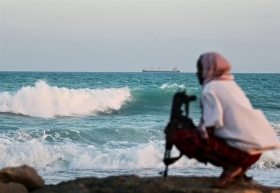
The fight against piracy has gained urgency in recent times, especially off the coast of the Somalia waters. Perhaps the most troubled waters in the world, the increased incidents of piracy have not only caused unnecessary deaths but increased the costs of doing business[1].  The international community has therefore been forced to seek for solutions to this vice. The United Nations Security Council, for example, has passed several resolutions on combating piracy off the coast of Somalia[2], most of which give authority to the member states to enter and use force, even within the territorial waters of Somalia, in order to combat piracy. This, in essence, was an echo of the principle of universal jurisdiction which was first enunciated in relation to acts of piracy. The principle of universal jurisdiction, essentially states that any country has the jurisdiction to try certain crimes, irrespective of the fact that there is no clear nexus between the criminal activities and the trial state[3]. The universal jurisdiction of states in relation to acts of piracy is also recognized under the United Nations Convention on the Law of the Sea of 10 December 1982 (UNCLOS). Article 105 gives any signatory state the power to “seize a pirate ship or aircraft, or a ship or aircraft taken by piracy and under the control of pirates, and arrest the persons and seize the property on board” whenever a vessel is on the high seas[4]. The rationale is that since the high seas are essentially “no man’s land” criminal activities that occur here should not go unpunished due to the lack of territorial or national jurisdiction by any state.

The issue of the universal jurisdiction of states was expounded in the Kenyan case of Republic V Chief Magistrates Court, Mombasa Ex-Parte Mohamud Mohamed Hashi & 8 Others[5]. In this case the applicants were arrested on the High Seas of the Gulf of Aden in the Indian Ocean by the German Naval Vessel, the FGS Rhineland – PFALZ, with the help a U.S. helicopter assigned to the USS – Monterey. They were then taken to Mombasa Kenya and placed in the custody of the Kenyan police. They were later charged with the offence of piracy jure gentium for attacking  the sailing vessel named MV Courier while armed with three AK 47 Rifles, one pistol Tokalev, one RPG-7 portable Rocket Launcher, one SAR 80 Rifle and one Carabire rifle and putting the lives of the crew in fear. The accused persons filed a judicial review application in the High Court of Kenya challenging their charges on the basis that the alleged offense took place in the high seas of the Gulf of Eden. The Kenyan courts, they argued, did not therefore have the jurisdiction to try them since “the offence alleged was committed outside the territorial jurisdiction of Kenya and outside the Kenyan waters…neither a Kenyan citizen or Kenya property was involved…the arrest was made by the German Navy taking part in operations in the Gulf of Aden”. The High Court accepted this argument holding inter alia, that “The High Seas are not and cannot be a place in Kenya or within the territorial waters of Kenya. In fact by definition they are strictly deemed to be outside the jurisdiction of all states in the world or on earth unless some law in the state brings it into their local jurisdiction whether Municipal Law or an International Convention etc”. The High court further held that the trial court “had no jurisdiction over the matter when the charges were preferred, and when the proceedings took place. The said court acted without jurisdiction when they took the pleas of the Applicants and heard the case up to the close of the prosecution case. The whole process was therefore null and void, ab initio. A nullity from the word go”[6]. However, the High Court of Kenya ignored the provisions of UNCLOS providing for universal jurisdiction[7]. This decision was later overturned by the Court of Appeal. The Court of Appeal held that the High Court failed “to appreciate the applicability of the doctrine of universal jurisdiction in reference to the case at hand”[8].

That said, it is important to note that Article 105 of UNCLOS provides that “the courts of the State which carried out the seizure may decide upon the penalties to be imposed, and may also determine the action to be taken with regard to the ships, aircraft or property, subject to the rights of third parties acting in good faith” (emphasis mine). In other words the State that seizes any vessel on the high seas ought to be the one that actually tries the suspected pirates[9]. This rule has largely been ignored in current practice where states in the developed world only arrest the pirates and “dump” them in countries in the developing world[10]. A few examples should suffice to illustrate the point. On February 19, 2012, four suspected Somali pirates, captured by the Danish naval troops, were taken to Kenya after being rejected by the government in Seychelles.  In March 2009, seven suspected pirates were arrested in the Gulf of Aden by the US Navy after a tanker, Polaris, sent a distress call that they were being attacked[11]. Eugene Kotnorovich estimates that “universal jurisdiction was used in prosecuting only 0.53% of clearly universally punishable piracy cases between 1998 and 2007, with the figure increasing to 2.5% between 2008 and June 2009, and reporting that Kenya accounts for all but three cases of invoking universal jurisdiction over piracy in the past 12 years, with responsibility for 79% of cases[12] (emphasis mine).

The reasons for this misnomer are varied. However, the most common issue is the question of what to do with the pirates if they are acquitted or once they have served their sentence. Since the principle of non refoulement applies universally as a peremptory norm of international law, the states where the trials are held will be “stuck” with the pirates either on acquittal or upon serving sentence as they often cannot return them to Somalia and the trial state will be obliged to offer them asylum[13].William Langeweshice, quotes an Indian official, for example of stating: “What would happen if India convicted and imprisoned them, but after their release Indonesia refused to recognize or accept them? . . . They would become stateless people . . . Then the problem for India would be where to send them”[14]. But this problem creates greater burdens to poorer countries like Kenya and Seychelles which have an additional cost to the trial process. An already overwhelmed police and prison system is further stretched without significant financial assistance from the international community[15]. I therefore hold the view that the current practice is not sustainable. The country that arrests the suspected pirates ought to be the one that prosecutes. After all, universal jurisdiction means just that…universal!


[1] For more analysis of effects of piracy off the coastal shelf refer to previous posts on this blog on the subject.

[2] United nations Security Council Resolutions No. 1816, 1838, 1846 and 1851 of 2008, 1897 of 2009, 1918 and 1950 of 2010, 1976, 2015 and 2020 of 2011.

[3] The common nexus in relation to criminal jurisdiction relates to criminal activities that occur within the territory of a given state. However, some states also have jurisdiction over some criminal activities committed by their nationals overseas and criminal activities overseas where their nationals are victims.

[4] In Article 86 of UNCLOS, the high seas is taken to mean “all parts of the sea that are not included in the exclusive economic zone, in the territorial sea or in the internal waters of a State, or in the archipelagic waters of an archipelagic State”

[6] Ibid

[8] The full decision of the Court of Appeal can be accessed online at http://piracylaw.files.wordpress.com/2012/10/kenya-hashi-appeal-opinion.pdf. The same position was held in the case of Hassan M. Ahmed V Republic [2009] eKLR. It can be accessed online at http://kenyalaw.org/CaseSearch/view_preview1.php?link=66028601162227766885163

[9] Admittedly, the provision is a drafted in permissive rather than in a rigid way. However, it is my view that it represents the rule-of-the-thumb arrangement, only to be departed from in exceptional cases.

[10] For analysis of the number of piracy related trials held by various countries go to http://www.cbrne-terrorism-newsletter.com/resources/2011%20-%20Prosecuting%20Pirates_Challenges%20for%20the%20Prisons.pdf

[12] Eugene Kontorovich & Steven Art, An Empirical Examination of Universal Jurisdiction for Piracy (Northwestern Public Law Research Paper No. 09-26, 2010); 104 AM. J. INT‘L. L. 8-9 (forthcoming 2010), available at http://ssrn.com/abstract=1519518

[13] The principle of non refoulment is also expounded in CAT Article 3(1), ICCPR Article 7, and ECHR Article 3, which all protect individuals from being returned to a country where they are at risk of torture, inhuman or degrading treatment, or punishment.

[14] William Langewiesche, The Outlaw Sea: Chaos And Crime On The World‘S Oceans 75 (2004)