Humanity Hanging on a Cross of Iron: the Arms Trade Treaty Towards Reducing Human Suffering

Written by Lina Laurinaviciute


Setting the Scene
The famous Doctor Who once made a splendid remark on the issue of weapons: “You want weapons? […] Books are the best weapon in the world. […] Arm yourself!”[1] Unfortunately, in a real world, the wide availability of different kind weapons and ammunition has led to human suffering, political repression, crime and terror among civilian populations. The flows of arms in all parts of the world can be sourced through diversion from State stockpiles and other legal circuits, recycling from previous conflicts in the concerned State or in the neighbouring countries, State-sponsored supplies to proxies, strategic caches of arms stored in anticipation of conflict, illegal manufacturing and other means.[2]

Irresponsible transfers of conventional weapons[3] destabilize security in a region, enable the violation of the United Nations Security Council (hereinafter – UNSC) arms embargoes and contribute to human rights abuses. Consequently, in countries experiencing conflict and high levels of violence investment is discouraged and hence development is disrupted.[4] It is evident that, the widespread availability of weapons tends to prolong conflicts, facilitate violations of international humanitarian law (also known as law of war or law of armed conflict), and put civilians at high risk of death or injury from weapons-related violence even after armed conflicts have ended.[5]

On 2 April 2013, the UN General Assembly has witnessed an event, to which the Secretary-General Ban Ki-moon referred as “a victory for the world’s people.”[6] The UN Member-states voted by 154 votes to three, with 23 abstentions (including Russia and China, which are among the world’s biggest exporters[7]), to control a trade worth between $170 million and $320 million per year.[8] As a consequence, the poorly regulated arms trade has devastating, multifaceted effects. These include fueling violence and armed conflict, hindering efforts to promote socioeconomic development and creating a permanent atmosphere of fear and instability in conflict settings.[9]

Therefore, the Article 2 of the newly adopted Arms Trade Treaty (hereinafter – ATT) sets its scope to regulate the international trade in conventional arms, from small arms to battle tanks. Namely it is applied to: battle tanks; armoured combat vehicles; large-calibre artillery systems; combat aircraft; attack helicopters; warships; missiles and missile launchers; and small arms and light weapons.

The treaty prohibits states from exporting conventional weapons in violation of arms embargoes, or weapons that would be used for acts of genocide, crimes against humanity, war crimes or terrorism. It also requires states to prevent conventional weapons reaching the black market. Thus it is expected that it will put a stop to destabilizing arms flows from its signatories to conflict regions. It will prevent human rights abusers and violators of the law of war from being supplied with arms. And it will help keep warlords, pirates, and gangs from acquiring these deadly tools.[10]

Indeed, the majority of modern day intra-State conflicts have been fought mainly with small arms and light weapons. However, recent events in Libya and Syria underscore the continued misuse of heavier conventional weapons – including tanks, heavy artillery, helicopters and aircraft – against civilians. Although it is often difficult to anticipate that a government will eventually use its weaponry against civilian populations, it is expected that the ATT will compel exporters to exercise enhanced diligence in analysing early warning signs that may help them assess the risk that transferred weapons would be used to commit grave human rights violations.[11]

Indeed, the use of explosive weapons in populated areas, including man-portable or vehicle-mounted grenades, rocket-propelled grenade launchers, missiles and mortars, can have indiscriminate and devastating impact on civilians, particularly children.[12] For instance, in Yemen, 71 percent of the child conflict casualties in 2009 were a direct result of shelling of civilian areas by all parties to the conflict.[13]

Moreover, the high availability of small arms and the presence of armed violence create threats to humanitarian personnel and can force humanitarian organizations to evacuate their staff from high-risk areas or suspend their programmes, thus depriving affected people of badly needed assistance.[14] For example, in Pakistan, humanitarian actors indicate ongoing hostilities as the most significant impediment to access.[15] Also, the Lord’s Resistance Army since 2009 has carried out armed attacks, including against refugee settlements, in South Sudan, Central African Republic and in the Democratic Republic of Congo during which scores of civilians were killed, thousands of civilians were forced to flee, serious disruptions to the distribution of humanitarian assistance was evident as well.[16]

Beyond fueling armed conflicts, the availability of firearms due to the poorly regulated arms transfers is a major factor sustaining organized crime and terrorism in all regions. The recent events in Libya, for example, presented an opportunity for various criminal and terrorist groups to procure firearms and ammunitions from looted government stockpiles. While Somali pirates reportedly received about US$170 million in ransom in 2011 for hijacked vessels and crews. It is important to mention, that piracy and armed robbery against ships affect the freedom of shipping and the safety of vital shipping lanes, carrying around 90 percent of the world trade.[17]

There is also a specific relationship between firearm availability and high levels of homicide. It is estimated that 42 percent of the overall global homicides are committed with firearms. This percentage is considerably higher in regions where homicides are often associated with the illicit activities of organized criminal groups. In some regions, misuse and illicit trafficking of firearms and their ammunition is often associated with other crimes, in particular drug trafficking. In these situations, the ability of security institutions, such as the police and the military, to enforce the law is greatly diminished in the face of the power of well-armed organized crime groups with ready access to arms in the black market, thus undermining the social fabric of entire communities.[18]

In this regard, Africa, Latin America and the Caribbean are the three most affected regions in the world by both arms trafficking and small arms misuse, and share similar challenges fighting against the illicit arms circulation. Interestingly, “the studies on seized arms reveal the use of a variety of arms in street and organized crime. For example, handguns are the preferred weapon used in the commission of most street crime, while military-style arms are used by organized criminals, such as by the drug cartels in Mexico and in the favelas in Brazil.”[19]

The problem of a poorly regulated arms trade was well noted by the UN, which stated that: “the absence of a global framework regulating the international trade in all conventional arms has obscured transparency, comparability and accountability.”[20] However, it took almost a decade to agree on principles to control the flow of such arms.

The Birth of the Treaty

Unlike trade in chemical, biological and nuclear weapons, trade in conventional weapons was not regulated in a comprehensive treaty at the international level.[21] The initiative on the current principles of the ATT have been started by Dr. Oscar Arias who in 1995, led a group of fellow Nobel Peace Prize Laureates in announcing their support for the international regulation of the trade in conventional arms. Of the many advocacy initiatives undertaken in support of the ATT, the “Million Faces Petition” of the Control Arms campaign gained the greatest international attention. The Petition, which comprised individual portraits as expressions of support, was formally submitted to UN Secretary General Kofi Annan in June 2006.[22]

After some months, the process within the UN system began with General Assembly Resolution 61/89 of December 2006 entitled “Towards an arms trade treaty: establishing common international standards for the import, export and transfer of conventional arms”.[23] In this resolution, the General Assembly requested countries to submit their views on the feasibility, scope and draft parameters for a comprehensive, legally binding instrument on the import, export and transfer of conventional arms. Following those views, the General Assembly adopted a second resolution on an ATT (Resolution 63/240) in 2008. In this resolution the UN General Assembly decided to establish an open ended working group, which would be open to all states, to further consider the possible elements of the future agreement on the arms trade.[24]

A year after, in 2009, the UN General Assembly adopted Resolution 64/48 in which UN member states decided to convene a UN conference on an Arms Trade Treaty in 2012 with the scope “to elaborate a legally binding instrument on the highest possible common international standards for the transfer of conventional arms”[25]. Importantly, under the US administration of President Barack Obama, the US changed its position and after voting against the ATT in 2006 and 2008, it finally supported this process. Undoubtedly, this support was conditional on success of the future negotiations as well as for the agreement being reached in consensus.[26]

After years of advocacy for a worldwide ATT and four intensive weeks of diplomatic bargaining, in July 2012 the UN convened a conference to negotiate a legally binding arms trade treaty. Unfortunately, the final negotiation round did not result in an agreement to which all 193 countries of the UN could commit. At the end of the negotiations, the US blocked an agreement by declaring that it needed more time to reach a consensus. Russia, North Korea, Cuba and Venezuela supported this position. It was mutually agreed, however, that: “Arms export controls can only be effective if implemented at the global level, in a coherent and consistent manner”[27] as the “poorly regulated trade in conventional arms and ammunition fuels conflict, poverty and human rights abuses all over the world”[28]. Therefore, it was decided to continue negotiations at the next years (2013) conference with a view to concluding the ATT. Finally, the treaty was adopted in April, 2013.

A Glance Inside the Treaty

The preamble of the treaty recognizes “that civilians, particularly women and children, account for the vast majority of those affected by armed conflict and armed violence”[29] and “the challenges faced by victims of armed conflict and their need for an adequate care, rehabilitation and social and economic inclusion.”[30] The treaty also recalls that States Parties to the treaty are determined to act in accordance with the duty to ensure respect to IHL.”[31] One of the purposes of the treaty is to reduce human suffering by establishing the highest possible common international standards for regulating or improving the regulation of the international trade in conventional arms.[32] To reach these goals, the treaty sets forth the principles of sovereignty and non-intervention, transparency and universality.

As mentioned before, the Article 2 of the treaty sets out the scope of conventional arms to which the treaty shall apply. It explicitly refers to the seven major categories of conventional arms already included in the UN Register of Conventional Arms, plus small arms[33] and light weapons[34]. Ammunition, munitions, and parts and components for these conventional arms are also covered in Articles 3 and 4.

Article 2 also includes activities to which the treaty shall apply: These are “activities of the international trade” that comprise export, import, transit, trans-shipment, and brokering. Particularly, it aims to prevent and suppress illicit production, trafficking and illicit brokering of conventional arms.

However, the ATT “does not aim to impede or interfere with the lawful ownership and use of weapons.”[35] According to the ATT, Governments remain primarily responsible for keeping to the rule of law. However, before approving the transfers of weapons or ammunition, States Parties to the ATT are required to assess the risk that transferred arms would be used by national armed and security forces, private security companies or other armed State or non-State actors to foment regional instability, to commit grave violations of international humanitarian law and human rights law (e.g. genocide, crimes against humanity, war crimes) or to engage in other forms of politically or criminally motivated armed violence (e.g. terrorism; transnational organised crime, corruption). The common standards should also help States to assess the risk that transferred arms will end up in areas proscribed by UNSC embargoes.[36]

Moreover, States Parties must establish and maintain a national control system, including a national control list of weapons and items covered. They must also maintain national records of export authorizations or actual exports, and report on their implementation of the treaty as well as authorized or actual exports and imports of conventional arms (but not ammunition or parts and components).[37]

The treaty will open for signature on June 3, 2013 at UN headquarters in New York. It will enter into force 90 days following the 50th ratification, acceptance, or approval with the Depositary.[38] Despite the poor monitoring mechanism (the Conference of States parties has a function to review implementation, and consider amendments and issues relating to the treaty interpretation) “the text now has to be implemented in good faith so as to positively affect the lives, health and well-being of millions of people around the world. If properly implemented, it will prevent arms transfers when there is a manifest risk that war crimes or serious violations of human rights will be committed.”[39]

Prospects of the Treaty

Without adequate regulation of international arms transfers based on high common standards to guide national decisions on these transfers, it is easier for arms to be diverted to the illicit market for use in armed conflict, criminal activities and violence, including organized crime groups.[40] With every transfer it authorizes, a government deciding on exporting weapons must realize the profound international responsibility of that decision. And conversely, an importing government must ensure that it will use these weapons only to provide the safety and security for its people and that it has the capacity to safeguard all weapons within its possession throughout their life cycle.[41]

Undoubtedly, the ATT is a significant milestone on the way towards the goal to reduce the flows of the illicit arms and to reduce human suffering. However, this treaty lacks specific indicators as well as specific provisions about arms transfer towards non-State Actors. Furthermore, the obligation of reporting and the monitoring system suggested by the ATT is hardly sufficient for its successful implementation. The treaty also does not pay enough attention to the criminalization of illicit conducts.

Unfortunately, each weakness in the treaty as well as resistance of states on reaching the substantial agreements on the arms trade has a huge cost of human life and dignity. Those suffering the most from the adverse effects of the arms trade are men, women, girls and boys trapped in situations of armed violence and conflict, often in conditions of poverty, deprivation and extreme inequality, where they are all too frequently on the receiving end of the misuse of arms by State armed and security forces, non-State armed groups and criminal gangs.[42] As President Dwight D. Eisenhower well mentioned: “Every gun that is made, every warship launched, every rocket fired signifies in the final sense, a theft from those who hunger and are not fed, those who are cold and are not clothed. This world in arms is not spending money alone. It is spending the sweat of its laborers, the genius of its scientists, the hopes of its children. […] Under the clouds of war, it is humanity hanging on a cross of iron.”[43]


[1] Doctor Who, “Tooth and Claw”, Russell T. Davies.

[2] UNODA Occasional Papers, The Impact of the Poorly Regulated Arms Transfers on the Work of the United Nations, United Nations Coordinating Action on Small Arms (CASA), 2013, p. 3.

[3] A conventional weapon can be defined as a weapon that is neither a nuclear, biological nor a chemical weapon (i.e. not a weapon of mass destruction).

[4] UNODA, About the Arms Trade, available at: <http://www.un.org/disarmament/convarms/ArmsTrade/>, (Last visited on 27 May, 2013).

[5] ICRC, Arms Trade Treaty: A historic step towards reducing human suffering, available at: <http://www.icrc.org/eng/resources/documents/news-release/2013/02-04-weapons-arms-trade-treaty.htm>, (Last visited on 27 May, 2013).

[6] See supra note 4.

[7] The biggest arm suppliers: US, Russia, China, Ukraine, Germany, France, UK, Italy, Netherlands, Spain. See also: BBC, UN passes historic arms trade treaty by huge majority, available at: <http://www.bbc.co.uk/news/world-us-canada-21998394>, (Last visited on 27 May, 2013).

[8] The Globalization of Crime: A Transnational Organized Crime Threat Assessment, United Nations publication, Sales No. E.10.IV.6, 2010.

[9] See supra note 2, p. 1.

[10] See supra note 4.

[11] See supra note 2, p.6.

[12] Ibid., p. 24.

[13] Save the Children, Devastating Impact: Explosive weapons and children, 2011, p. 5.

[14] See supra note 2, p.19.

[15] Ibid., p. 12.

[16] UNHCR News, 14 May 2010.

[17] See supra note 2, p. 23.

[18] Ibid., p. 20.

[19] Ibid., p. 16.

[20] Ibid., p. 2.

[21] Holtom, P. and Wezeman, S. T., Towards an arms trade treaty?, SIPRI Yearbook 2007: Armaments, Disarmament and International Security, Oxford, 2007.

[22] Control Arms Campaign, Million Faces Petition, available at: <http://www.controlarms.org/million_faces/index.php>, (Last visited on 28 May, 2013).

[23] Bailey L., The Foreign Policy Centre Briefing Towards an Arms Trade Treaty, available at: <http://fpc.org.uk/fsblob/1232.pdf>, (Last visited on 28 May, 2013).

[24] The EU Non-Proliferation Consortium, The European Union’s Involvement in Negotiating an Arms Trade Treaty, No. 23 December 2012, p. 3.

[25] UN General Assembly Resolution 64/48, 12 January 2010.

[26] See supra note 24, p. 3.

[27] Ibid. p. 2.

[28] Ibid.

[29] UN General Assembly, The Arms Trade Treaty, A/CONF.217/2013/L.3, Preamble.

[30] Ibid.

[31] Ibid.

[32] See supra note 5.

[33] Revolvers and self-loading pistols, rifles and carbines, assault rifles, sub-machine guns and light machine guns. See also: UN, General and Complete Disarmament: Small Arms, Report of the Panel of Governmental Experts on Small Arms, available at: <http://www.un.org/Depts/ddar/Firstcom/SGreport52/a52298.html>, (Last visited on 27 May, 2013).

[34] Heavy machine guns, hand-held under-barrel and mounted grenade launchers, portable anti-aircraft guns, portable anti-tank guns, recoilless rifles, portable launchers of anti-tank missile and rocket systems; portable launchers of anti-aircraft missile systems (MANPADS); and mortars of calibres of less than 100 mm. See also: UN, General and Complete Disarmament: Small Arms, Report of the Panel of Governmental Experts on Small Arms, available at: <http://www.un.org/Depts/ddar/Firstcom/SGreport52/a52298.html>, (Last visited on 27 May, 2013).

[35] See supra note 4.

[36] See supra note 2, p. 3.

[37] See supra note 24, p.13.

[38] See supra note 29, Article 22.

[39] See supra note 5.

[40] See supra note 2, p. 21.

[41] See supra note 5.

[42] See supra note 2, p. 2.

[43] The Chance for Peace speech given by U.S. President Dwight D. Eisenhower on April 16, 1953.

* Picture source: Reuters.

Children as Victims of Trafficking in India

Written by Garima Tiwari

sctnow india-child-labour_1570360i

( http://www.glogster.com and http://www.gandhiforchildren.org)

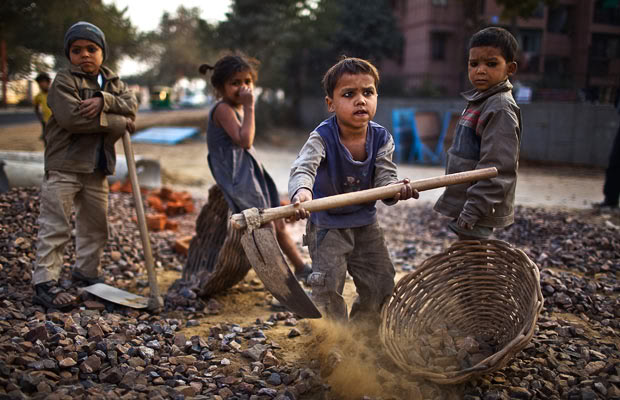
The recent case of an Indian new-born baby allegedly sold for 800,000 rupees ($ 14,750) over Facebook, opened up many questions on the prevalence and working of child trafficking racket in the country. The boy, born in a hospital in Ludhiana in the northern state of Punjab, was sold twice before the deal on the social networking site. The infant’s grandfather allegedly first snatched the child from his own daughter, telling her he had been stillborn, to sell him to a nurse for 45,000 rupees. The nurse, in turn, reportedly sold the baby for 300,000 rupees to a hospital lab assistant. The infant was then allegedly put up for sale on Facebook by the lab assistant, and a businessman from New Delhi is accused of offering 800,000 rupees for him after seeing photographs. The police raided the businessman’s house and recovered the child. They also arrested five people including the grandfather and another man accused of facilitating the deals. Tens of thousands of children in India are thought to be trafficked every year, some for adoption but also many for bonded labour, begging or sexual exploitation.[i] That is hardly the experience of most parents. Since 2007, when the exposure of a serial killer in Nithari, on the outskirts of New Delhi, revealed that local police had ignored parents’ pleas that their children had disappeared, evidence has piled up showing that officials continue to disregard complaints of missing children.[ii]

Many, many such incidents are repeatedly reported with multitude of reasons for trafficking and sad implications. Take for example, Smita a sixteen year old girl was taken from her village in Jharkhand, India and subjected to various forms of sexual abuse and exploitation at the hand of her employers including rape. When rescued her parents refused to take her back since she had been tainted by rape. Falling sex ratios in Haryana and Punjab has led to a need for trafficking of brides from villages in Orissa, Jharkhand, Bihar, Assam and West Bengal, who have been sold off by the parents. Jyoti, age fourteen, was sold and married to a 40-year old man for Rs 15,000 in order to produce a mail heir[iii]

This post highlights the need for urgent action by the authorities to fight child trafficking in India. A huge number of children from a place called Tarai in Nepal are trafficked to India everyday and they fall victims to child labor. Approximately 90,000 children went missing in India in 2011 alone. Nearly half of these cases remain unsolved. Thus, while there is movement of children through procurement and sale from one country to another, with India being both a supplier as well as a “consumer”, there is internal “movement” of children within the country itself – one town to another, one district to another and one state to another. It is undertaken in an organised manner, by organised syndicates or by individuals, and sometimes informal groups. Relatives and parents are part of this as well.[iv] Children as young as 5 years are sold to traffickers by their parents who are in need of money and brought to India.  These children are trafficked to various parts of India like Delhi, Mumbai and Kolkata and are made to work in cloth factories, have to stitch bags and perform various hazardous and odd jobs. [v] In 2012 about 250 Nepali children were rescued from the India-Nepal border. There are number of unregistered orphanages in Nepal which are trafficking children to different parts of the world and Indian human rights activists speculate that there are thousands of Nepali children who work in India. In March 2013, 38 tribal children, including 32 minors were rescued who were being taken by train for bonded labor. [vi]Their parents were given an advance amount of Rs 1,000 for a bonded labour of 40 days for the children, to work at the under construction site of railway tracks in Nagpur in India. The agents involved in trafficking usually give these minor girls the look of a married woman so that they are not easily caught. The boys were to be paid a daily wage of Rs 160 and girls Rs 150.

The chart below shows some of the methods of trafficking:

ct

Chart taken from the Manual For Social Workers : Dealing with child victims of trafficking and commercial sex exploitation[vii]

The Indian Constitution under Article 23 specifically prohibits human trafficking, asserting that all citizens have the right to be protected from exploitation. Article 36 of the Convention on the Rights of the Child provides for protection of children from exploitation and physical and psychological recovery and article 39 of the CRC provides for the social reintegration of child victims of exploitation. In India, various laws like Juvenile Justice (Care and Protection) Act of 2000 (JJA), Immoral Traffic (Prevention) Act of 1956 (ITPA) amended in 1986, and the like, are providing support, care, and protection to these children in various State Homes across the country.

In June 2011, India ratified the United Nations Protocol to Prevent, Suppress and Punish Trafficking in Persons, Especially Women and Children, which supplemented the 2000 UN Convention Against Transnational Organised Crime. India’s response to the problem of trafficking has been considerably influenced by its Trafficking in Person (TIP )Report rankings. The definition of trafficking under the UN TIP Protocol is the “recruitment, transportation, transfer, harbouring or receipt of persons” by using “force[,] . . . coercion, abduction, fraud, [and] deception” to control and exploit another person, including, but not limited to, sex exploitation.Between 2001 and 2003, India figured in Tier Two of the TIP Report before being demoted to the Tier Two Watch List. It was only in May 2011 when India ratified the UN Protocol that it made its way once again into the Tier Two List. India’s response to the trafficking problem in terms of abolishing trafficking isn’t unique in the sub-continent. Indeed, the 2002 SAARC Convention on Preventing and Combating Trafficking in Women and Children defines trafficking as sex trafficking following a 1949 UN Convention, rather than the 2000 UN Protocol.[viii]

While India has ratified the UN Convention for the Suppression of the Trafficking in Persons, without reservation, and enacted ITPA in response showing its intention to fight trafficking, Section 7 of the said act which penalizes those who prostitute in or near public places, and Section 8, which penalizes the solicitation of sex, both of which have in practice justified the police’s arrest and imprisonment of trafficked women who have been forced into prostitution and who have no knowledge or control over the brothel’s proximity to public places. Amending the law to exclude Sections 7 and 8 would decriminalize the activities of trafficking victims who are forced to solicit for sex. In 2006, a bill to amend the ITPA was proposed by India’s Ministry of Women and Child Development, which would decriminalize prostitution and instead would penalize prostitutes’ clients. The law currently contains provisions that penalize brothel owners, managers, and traffickers. The Ministry of Home Affairs also set up specialized police units in major Indian cities in 2011 with the sole task of investigating sex trafficking cases and arresting traffickers and brothel owners and managers. These police officers were specially trained and sensitized to understand how trafficking rings operate. However, the police lack the resources to investigate and make arrests on every trafficking case. [ix] Even after arrest the judicial process is so slow that while one is being put under trial, the whole trafficking ring keeps flourishing.

The recent Criminal Law Amendment Act, 2013 recognises trafficking as an offence in the Section 370 of the Indian Penal Code . This is on the similar lines as the Palermo Protocol, also ratified by India in May 2011, following a Supreme Court judgement defining trafficking in a public interest litigation (PIL) field by Bachpan Bachao Andolan in 2011. The bill targets the entire process that leads to trafficking of a person and also makes the employment of a trafficked person and subsequent sexual exploitation a specific offence under Section 370 A.[x] While the old section 370 of Indian Penal Code dealt with only buying or disposing of any person as a slave the new section will take in its purview buying or disposing of any person for various kinds of exploitation including slavery. This provision includes organ trade as well. As the explanation further clarifies “exploitation” would also include prostitution. This is in addition to the ITP Act, 1956. The new section also ensures that persons involved at each and every stage of trafficking chain are brought within the criminal justice system.Also by specifically including that if a person is brought with his/her consent, where such consent is obtained through force, coercion, fraud, deception or under abuse of power, the same will amount to trafficking, the law has been substantially strengthened. This will cover all situations where girls who happen to be major are duped with promises of marriage and willingly accompany the traffickers who exploit them in various ways. While earlier no specific offence was made out for the mere bringing of the girl in question now that too is criminalized.  It has also been specifically added in the provision that consent of the victim is immaterial for the determination of the offence.The new section also differentiates the instances of trafficking major persons from minor persons. This differentiation is brought about by providing separate penalty for each with higher minimum sentence for trafficking minor persons.In addition the section also provides for enhanced punishment for repeated offender as well as where the offender traffics more than one person at the same time. By providing that trafficking in minor persons on a repeated conviction will attract imprisonment for life (meaning the remaining natural life) the law has been substantially changed.[xi] This will surely act as a big deterrent. Involvement of a public servant including a police officer shall entitle him to life imprisonment which shall mean the remaining natural life.[xii] Addition of the section 370 A further adds strength to trafficking related law by criminalizing employment of a trafficked (major/minor) person. A person who has even reason to believe or apprehension that the minor/major person employed by them has been trafficked will make them criminally liable. This places a huge responsibility on the employers who were till now, let off easily under the not so strict provisions of the child labour laws and juvenile related laws.  Here also a higher minimum prison term is prescribed where a minor person is involved. Also important is the fact that irrespective of age of the person employed, simply employing a trafficked person is an offence. This provision will go a long way in ensuring that people verify the antecedents of the placement agencies as also get the police verification of the persons employed. This will also aide in curbing the huge demand for labour who are victims of unsafe migration.[xiii]

The enactment of the law on paper with no real training and support to the functionaries would be futile and therefore, what is needed now is “actual”, “planned” and “effective” implementation. Involving the community participation in the whole implementation process would create a greater impact. The procedures and technicalities should not reduce the ambitious legislations to empty words, because at stake here are the children- the future of the nation.

(For those who want to get a deeper understand of the brutality of the child trafficking rackets I recommend the movie recently screened at the Cannes Film Festival on May 22 titled: “Oass- The Dew Drop”, which is inspired by a real-life story of abduction of an 11-year-old Nepalese girl who is sold to a brothel in Delhi by her aunt. (http://www.youtube.com/user/OassTheFilm))


[i] Police Rescue Indian baby allegedly sold on facebook, April 24, 2013 available at http://www.thehindubusinessline.com/news/police-rescue-indian-baby-allegedly-sold-on-facebook/article4650168.ece

[ii] Jason Overdorf, Indian Chilld Trafficking on the Rise, May 5, 2013 available at http://www.salon.com/2013/05/05/child_trafficking_in_india_on_the_rise_partner/

[iv] Child Trafficking in India available at http://www.haqcrc.org/publications/child-trafficking-india

[v] Darker Side of India: Child Trafficking on the Rise,27th March 2013, available at  http://www.siliconindia.com/news/general/Darker-Side-of-India-Child-Trafficking-on-the-Rise-nid-144134-cid-1.html

[vi] Rashmi Drolia,Child Trafficking: 38 Children Rescued from Railway Station, 15th March 2013,available at  http://articles.timesofindia.indiatimes.com/2013-03-15/raipur/37744973_1_railway-station-tribal-children-needy-children

[viii] Prabha Kotiswaran, India has to rethink human trafficking, The Hindu Business Line, march 27th 2012, available at http://www.thehindubusinessline.com/opinion/india-has-to-rethink-human-trafficking/article3251458.ece

[ix] Anusree Garg, Anti Trafficking Legislation Inadequately Combatting Sex Trafficking in India, March 2013, The Human Rights Brief, available at The Human Rights Brief, http://hrbrief.org/2013/03/anti-trafficking-legislation-inadequately-combating-sex-trafficking-in-india/

[x] India Prohibits All forms of Trafficking, March 21st, 2013, Bachpan Bachao Andolan available at http://www.bba.org.in/news/210313.php

[xiii] Ibid

Victims Rights in Sexual Assault cases

Written by: Regina Paulose

The Verma Report

In the last couple of months, women’s and children’s rights have catapulted to the forefront of the international community due to tragic situations involving sexual assault. The most notable of these was the New Delhi gang rape in December 2012. This is not the first time these situations have happened. Why these situations have garnered this much media attention as opposed to similar situations that occur daily is an anomaly. However, the extensive spotlight has created a space for needed global discourse and critique of the current framework regarding victims’ rights.

One would be amiss to think that this problem is unique to India. In fact, in the research that was surveyed for this brief article, a vast amount of information indicates this is nothing short of a global endemic.

The December 2012 gang rape in New Delhi has forever changed the way women and children’s rights will be discussed in India. The tragic and grotesque situation, mobilized the people of India to protest inadequate laws that allow women and children to fall prey to those with an unforgivable appetite for sexual propensities. As a result the Government formed, under the leadership of Justice Verma,[1] the Committee on the Amendment to Criminal Law in India, which issued a report (Verma Report) in response to the huge public outcry. The Commission took responses from over 80 groups in addition to surveying laws from different countries.  The Commission’s conclusion after 200 + pages was simple.

Breathe life into your hollow laws and hollow words.

Although the report contains recommendations that the Indian legislature should adopt to address problems relating to sexual assault, it contains, what this author believes, to be a global framework that every country should consider in reevaluating and formulating laws that seek to protect victims from sexual assault.

The New Framework and its Four Pillars

Brutality/violence against women and children is a “deficiency [that] has to be overcome by leaders in society aided by systemic changes in education and social behavior.”[2] The report outlines what is broken down into four pillars which make up a new framework.  These pillars are not discussed in any particular order of preference.  Each pillar represents an area that will need to be improved alongside the other pillars[3] to allow shifts such as the one envisioned in the Verma Report.  Additionally, these four pillars are not discussed in minute detail, but serve as a launching point for more discussion which needs to involve holistic approaches.

Improvement of judiciary and government mindset

The judiciary, the guardian of the rule of law, should be continually up to date on the intricacies relating to sexual assault topics. The judiciary needs to change outdated conceptions that it may have of sexual assault victims.  These cases are victim dependent (99% of the time) and poor actions on the part of judges or a hostile courtroom can prevent a victim from participating in proceedings. In 2011, in Manitoba Canada, a Judge was scrutinized for his “archaic” statements when he analyzed the night of a sexual assault and said that “sex was in the air” and that the defendant was a “clumsy Don Juan.”[4]  In places such as the United States and Canada, judicial remarks such as these can be reviewed by an independent council or a bar association, which could result in punitive measures. However, punitive measures do not necessarily lead to a change in attitudes when these cases are presented.

It is important to address these attitudes that start from the judiciary and work its way through lawyers and juries. “Social attitudes are a thread running through the criminal justice system in response to rape.”[5] “Rape myths” as it is sometimes referred to “can directly or indirectly serve to excuse perpetrators and blame victims, and psychologists have found that they may also increase the likelihood that individuals will commit rape.”[6] There are also those who are of the opinion that the “rape myth” is “overstated” and challenge it on three grounds (1) some attitudes are based on opinions and facts (2) not all myths are about rape but rather how people negotiate sex and (3) there is little evidence that rape myths are widespread.[7]  Regardless of one’s position on the prevalence of rape myths, it still stands to reason that those who have the most power in interpreting laws and protecting victims should be knowledgeable in this area. These judicial players have an obligation not to perpetuate attitudes that continue to harm women and children. A victim should not make a decision to report or proceed with a case based on whether or not she will be believed by the attorneys, judge, or the jury.

Government attitudes towards sexual violence also need to change. It is evident that many government actors need to be educated on issues such as rape and women’s rights, in addition to utilizing their power to enforce laws. It would also be of use for legislatures and government players to review laws that have large gaps that allow women and children to fall prey to predatory acts.

Education/Retraining and Accountability of Law Enforcement

Law enforcement people are considered “arbiters of honor.”[8] This pillar has three components. The first component involves proper education and training on the root causes of sexual violence. Law enforcement needs to properly respond and not be apathetic, which can create a large change in how these situations are addressed.  This re-education and training unfortunately can present an uphill challenge as it also requires replacing existing beliefs in some communities. For example, law enforcement should be vigilant against “honor crimes” which are prevalent in different parts of the world. “Honor killings” or “honor based violence” are deeply rooted (origins stem from the Bible) and it is estimated that 5,000 honor based killings happen a year internationally.[9] Another example is eliminating the concept of shame. In sexual assault situations, the question should be about “bodily integrity” which translates into “integrity of the community.”[10]  This kind of shift in the mentality of law enforcement would allow more victims to come forward.

The second component involves the actual enforcement of the laws. In Kenya, where a large amount of sexual assault laws protecting women exist, women’s groups have challenged the enforcement of these laws based on the fact that police have done little to effect the law thus resulting in sex discrimination. A claim was submitted to the Kenya High Court as of October 2012 on this basis.[11] In Honduras it has been reported that there exists an “”apparent inability” of the government to effectively enforce legislation on the matter because of the lack of proper training for law enforcement personnel.”[12] In China, “when a victim has reported a sexual assault to police, seeking justice, hoping for the violator to be punished by the law, if the violator is powerful or backed by someone important, the victim will be pressured to solve the problem quietly, mostly to save face for the violator and related parties.”[13]

The third component has to do with creating laws or enforcing laws which hold law enforcement (including military) accountable. There are unfortunately many situations around the world in which law enforcement are perpetrators of this crime.  In Mexico, two police officers allegedly raped an Italian tourist while she was leaving a club at night. The officers also demanded money from the victims.[14] This was on the heels of another occurrence in Mexico where a similar situation occurred. It is also important to note that rape occurs with high frequency in conflict situations. As examined in different reports:

“mass rape in war has been documented in various countries, including Cambodia, Liberia, Peru, Bosnia, Sierra Leone, Rwanda, the Democratic Republic of Congo, Somalia and Uganda. A European Community fact-finding team estimated that more than 20,000 Muslim women were raped during the war in Bosnia. At least 250,000, perhaps as many as 500,000 women were systematically raped during the 1994 genocide in Rwanda, according to reports from the World Bank and UNIFEM. Most recently in Darfur, Western Sudan, displaced people have described a pattern of systematic and unlawful attacks against civilians by a government-sponsored Arab militia and the Sudanese military forces.”[15]

Prosecution of such crimes needs to occur and immunity should never be granted to personnel engaging in torture. For example, in Burma, no law exists which mandates the investigation of crimes by military troops because they are granted full immunity and are outside the jurisdiction of civilian courts. Minority groups have alleged that acts of sexual violence have occurred by the military, yet due to immunity, they walk free.[16]

Enforcement of State Obligations under International/Domestic Law

States have international obligations under the UN Declaration of Human Rights, the ICCPR, the ICESCR, and CEDAW to protect women and children. However, the world is not unified on various conventions and their provisions despite all the rhetoric. For example with the CEDAW, many countries had expressed that they would not include certain provisions (specifically contested are Article 2- equality of women and Article 16 – legal, cultural, and political rights for women).[17]  It should be noted that scholars do suggest based on various studies that treaty ratification does not necessarily equate to a better record of human rights performance.[18] In the bigger picture however, having such legislation implemented or modeled on a domestic level is important. In March 2013, US President Obama signed in to law the Violence Against Women’s Reauthorization Act (VAWA) which affords various protections for women.[19] One of the landmark items was the passage of provisions which protect Native American women from gaps in the law, which prior to VAWA did not allow them to prosecute perpetrators on reservations. This should be hailed as a major step forward in light of the fact that “federal prosecutors decline[d] to prosecute 67 percent of sexual abuse cases” on reservations and that “more than 80 percent of sex crimes on reservations are committed by non-Indian men, who [were] immune from prosecution by tribal courts.”[20]

Obligations of the State to provide for women and children

There is no question that the “state has a fundamental duty to protect women from gross/horrible violations of human rights.”[21] Women and children need to be protected from malnutrition, should be given access to means of economic empowerment, and should be safe from trafficking and domestic violence. These tools allow women to have a chance at being equals in society.  In India, the rhetoric of equality for women dates back to 1939.[22] Many probably assume that lesser developed countries are in desperate need of women’s rights laws. However, the 2012 World Economic Forum Global Gender Gap Report indicates that countries such as the Philippines, outranked the USA for protecting women’s rights.[23] In another survey conducted by TrustLaw, which ranked the G20 nations (but only ranked 19 of the 20), the survey found that Canada was more “egalitarian” than its counterparts and ranked China at #14 and India at #19.[24]  These indicators only serve to emphasize that “gender equality furthers the cause of child survival and development for all of society, so the importance of women’s rights and gender equality should not be underestimated.”[25]

Next Steps

Although the Verma report (a must read) is more detailed and more researched than this short article, there comes a time when law and rhetoric should create a perfect storm for action on sexual violence against women and children. It should be an embarrassment to any civilized society that sexual predators and rapists roam free without punishment. As studies continue to indicate, society will pay an ultimate price if women are not considered equal and action is not taken against this kind of violence. From a brief glance at each of these pillars, it is obvious that every single country in the world has a lot of work to do.


[1] Justice Verma passed away on April 22. Justice Verma was well known for his integrity and judicial activism. Read more on his death here: http://www.bbc.co.uk/news/world-asia-india-22260180.  The full report can be found here:  http://www.thehindu.com/multimedia/archive/01340/Justice_Verma_Comm_1340438a.pdf

[2] Verma Report, p. 22 para 5

[3] I do not address every single problem that is associated with sexual assault in my post. This article in its limited capacity only seeks to address the large points made in the Verma Report to allow the reader an opportunity to continue the discussion.

[4] CTV News, Judicial Council reviews Sexual Assault Remarks, February 25, 2011, available at: http://www.ctvnews.ca/judicial-council-reviews-judge-s-sex-assault-remark-1.611990

[5] Charnelle van der Bijl and Philip N. S. Rumney, Attitudes, Rape and Law Reform in South Africa, The Journal of Criminal Law, 414-429, (2009).

[6] Dr. Brienes, “She asked for it: the Impact of Rape Myths” Psychology Today,  November 5, 2012, available at: http://www.psychologytoday.com/blog/in-love-and-war/201211/she-asked-it-the-impact-rape-myths

[7] Helene Reece, “Too much blame placed on popular prejudices against rape victims for low conviction rates”  LSE March 25, 2013, available at: http://www2.lse.ac.uk/newsAndMedia/news/archives/2013/03/Too-much-blame-placed-on-popular-prejudices-against-rape-victims-for-low-conviction-rates.aspx

[8] Verma Report, p. 93 para 37

[9] See Honour Based Violence Awareness Network: http://hbv-awareness.com/

[10] Verma Report, p. 93 para 38

[11] Liz Ford, How Kenyan Girls are using the law to fight back against rape, The guardian, December 4, 2012, available at: http://www.guardian.co.uk/global-development/poverty-matters/2012/dec/04/kenyan-girls-law-fight-rape

[12] Immigration and Refugee Board of Canada, Honduras: Update to HND32564.E of 15 October 1999 on violence against women, including social, government and police attitudes; whether state protection and redress available to victims of sexual violence is effective and sufficient; the general attitudes of such victims regarding the responsiveness of the state and the corresponding reporting rates; women’s organizations that assist victims of sexual violence, 18 October 2002, HND40207.E, available at: http://www.refworld.org/docid/3f7d4da111.html [accessed 3 May 2013]

[13] Zen Jingyan, “Sexual Assault victims suffer twice in China” Huff Post World, November 3, 2011, available at: http://www.huffingtonpost.com/zeng-jinyan/sexual-assault-china_b_1073693.html

[14] Rafael Romo, “Police Officers in Mexico suspected in alleged rape” CNN February 22, 2013, available at: http://edition.cnn.com/2013/02/21/world/americas/mexico-rape-police

[15] IRIN, “Our bodies – their battle ground: gender based violence in conflict zones” September 1, 2004, available at: http://www.irinnews.org/InDepthMain.aspx?InDepthId=20&ReportId=62817

[16] The International Campaign to Stop Rape and Gender Violence in Conflict, Stop Rape in Burma, accessed on April 26, 2013, available at: http://www.stoprapeinconflict.org/burma

[17] Specific objections from each country can be found here: http://www.un.org/womenwatch/daw/cedaw/reservations-country.htm

[18] See Eric Neumayer, Do International Human Rights Treaties Improve Respect for Human Rights?, LSE Research Online, (2006) available at: http://eprints.lse.ac.uk/612/1/JournalofConflictResolution_49(6).pdf

[19] Jodi Gillette and Charlie Galbrath, “President Signs 2013 VAWA Act – Empowering Tribes to Protect Native Women” The White House blog, March 7, 2013 available at: http://www.whitehouse.gov/blog/2013/03/07/president-signs-2013-vawa-empowering-tribes-protect-native-women

[20] Louise Erdrich, “Rape on the Reservation” International Herald Tribune, February 26, 2013, available at: http://www.nytimes.com/2013/02/27/opinion/native-americans-and-the-violence-against-women-act.html

[21] Verma Report, para 18

[22] Verma Report, Chapter 1, para 25

[23] Emma Clarke, 10 Countries with Very Surprising Womens Rights Rankings, Policymic, available at: http://www.policymic.com/articles/11804/10-countries-with-very-surprising-women-s-rights-rankings

[24] Katrin Bennhold, “The Best Countries to be a Woman – and the Worst” International Herald Tribune, June 13, 2012, available at: http://rendezvous.blogs.nytimes.com/2012/06/13/the-best-countries-to-be-a-woman-and-the-worst/

[25] Anup Shah, “Womens Rights,” Global Issues, March 14, 2010, available at: http://www.globalissues.org/article/166/womens-rights. The author of this article delves into the various areas and the impact that lagging womens rights will have on each. He also focuses on topics such as the “feminization of poverty” which indicate that women suffer the most economically which has a snowball effect on society.  

Extraordinary Rendition and the ICC

Contemporary international practices in fighting crimes and, especially, those related to the exercise of the jurisdiction over a suspected criminal envisage a possibility of implementation of a set of mechanisms used for his search and subsequent committal for a trial which inter alia may include extradition and other interstate procedures.[1] However, these practices show that extradition as a form of international cooperation is referred to by the states more frequently than the others, whereas the procedure of surrender is exercised solely on the basis of the mutual will of the sovereign states concerned subject to the application of the requesting state, consent of the surrendering state and the latter’s compliance with the principle aut dedere aut judicare in cases of committal of serious international crimes by the suspect.[2]

On the other hand, even when the aforementioned application has been made by the requesting state, the surrendering states are sometimes unable to detect the location of the suspect. In such cases states may search for the suspects proprio motu and resort to transnational abduction from the territory of another state. Moreover, these actions are often undertaken notwithstanding the existence of an extradition treaty which provides for the use of regular legal procedures ensuring prosecution or execution of punishment.[3]

In this respect, while such a resort to irregular means of surrender of the fugitive has almost unilaterally been defined by scholars as ‘extraordinary rendition’,[4] there is still a continuous debate on whether a court should exercise its jurisdiction over such a person and what the necessary prerequisites and possible consequences are.[5] This issue has somewhat been pleaded in few domestic and international proceedings across the globe and is enshrined in the famous doctrine male captus bene detentus,[6] which provides for the possibility of the expansion of extraterritorial jurisdiction of the state, abduction of the fugitive and the exercise of the jurisdiction by the court notwithstanding the circumstances of a person’s arrest.

Nonetheless, given the growing number of such instances, yet, little and controversial reflection of the matter in national and international law this dilemma has become even more worrying with the establishment of the International Criminal Court (hereinafter ICC) in 1998, whose Statute does not contain any provisions in respect to the issue at stake.[7]

One should bear in mind that rendition as means of eliminating secure zones for criminals and, in particular, terrorists, should not at the same time undermine international legal order which is based on the principles of state sovereignty and non-interference which prohibit any illegal intrusion in the surrender of the suspect as well as the exercise of forcible actions in the territory of another state without latter’s knowledge and consent. Moreover, when there is a serious violation of the rights of the suspect regardless of whether it occurs due to the actions of states, individuals or international institutions, there arises a legal impediment which may trigger the unwillingness of the judicial body to exercise its jurisdiction for the sake of integrity and stability of international legal order and human rights as its integral part.

Unfortunately, the Rome Statute of the ICC does not contain any provision in respect to extraordinary rendition as such. Arguably, the only applicable provisions concern the legality of arrest of the accused and certain human rights. Article 59(1), for example, imposes an obligation on State Parties to apprehend suspects upon the request from the Court.[8] This, however, is to be done “in accordance with the law of that state,” while according to Article 59(2) the arresting state must also have a “competent judicial authority” determining, “in accordance with the law of that State, that:…(b) the person has been arrested in accordance with the proper process; and (c) the person’s rights have been respected.”[9]

Some scholars argue that the aforementioned Article does not entail the right of the accused to have the lawfulness of his arrest or detention reviewed by a domestic court, nonetheless, bearing in mind that it may follow from human rights conventions to which the requested State is a party.[10] As regards the human rights of the accused, Article 55(1) of the Rome Statute envisages that no one shall be subjected to arbitrary arrest or detention.[11] Article 21(3), in turn, provides that the law shall be interpreted and applied by the Court in a way consistent with internationally recognized human rights.

However, the Rome Statute is silent as to the right of the requested state to decline the surrender on the grounds of an illegal arrest. This, in turn, leads to believe that the obligation of the requested state to surrender the suspect to the ICC is supreme over any national law that might allow the domestic court to decline such a surrender when the suspect has been subjected to illegal arrest or detention. Therefore, it is up to the ICC as to consider the violation of human rights of the suspect, and, as provided by Article 85(1) to arbiter compensation to anyone who has been the victim of an unlawful arrest or detention.[12] However, the Rome Statute and the Rules of Procedure and Evidence do not provide a definite answer to the issue of whether and when the Court should exercise its jurisdiction in cases of extraordinary rendition.

The uncertainty in this respect was about to change on 14 December 2006, when the Appeals Chamber had to reconsider the application lodged by Thomas Lubanga Dyilo.[13] Mr. Dyilo challenged the Court’s ability to exercise jurisdiction over him under Article 19(2) of the Rome Statute before the Pre-Trial chamber. In his application Mr. Dyilo alleged that he had been subjected to mistreatment when he was detained in the Democratic Republic of the Congo prior to his surrender to the ICC which the Prosecutor had been complicit in. He alleged that it constituted the abuse of process and applied for the dismissal of the case.

Referring to Nikolić and Barayagwiza the Pre-Trial Chamber stated that it could potentially dismiss the case as a remedy for abuse of process and on the protection of the fundamental rights of the accused in Article 21(3). However, the Chamber had to decline the application due to the lack of evidence in support of complicity and mistreatment. This has been reconsidered by the Appeals Chamber whose findings varied drastically. The Chamber stated, that the issue was not that of jurisdiction, but rather “a procedural step not envisaged by the Rules of Procedure and Evidence or the Regulations of the Court invoking a power possessed by the Court to remedy breaches of the process in the interests of justice.”[14] Further on, the Chamber reviewed the doctrine of abuse of process and stated that since the concept is not really known to civilian systems, the doctrine “is not generally recognized as an indispensable power of a court of law, an inseverable attribute of judicial power,” and therefore was not among any inherent powers the ICC had.[15] Nonetheless, the Chamber stated that the human rights standards imposed by Article 21(3) imply the Court’s power to stay proceedings if the treatment of the accused interferes with the right to a fair trial.[16] In particular the Court confirmed that there must be a human rights-based remedy available to the accused under Article 21(3) of the Rome Statute, however, declining to characterize it as a “jurisdictional” power.

The aforementioned approach seems balanced and justified. Nevertheless, if the ICC decides to change it, there will certainly be cases where prosecuting universally condemned offences will by itself create threats to international peace and security. Notably, the ICC operates in a highly-charged political atmosphere and even a minor disregard of illegality might provoke a political conflict, which will worsen the situation and damage the legitimacy and credibility of the ICC.[17] Therefore, it is highly advisable that these practices have no future before the Court.

Written by Jan Guardian


[1]      See Aparna Sridhar, The International Criminal Tribunal for the Former Yugoslavia’s Response to the Problem of Transnational Abduction, 42 Stan. J. Int’l L. 343 (2006) [hereinafter Sridhar, ICTY Response], at 343-344.

[2]      Ozlem Ulgen, The ICTY and Irregular Rendition of Suspects, 2 Law & Prac. Int’l Cts. & Tribunals 441 (2003), at 441.

[3]      See e.g., United States v. Alvarez-Machain, 504 U.S. 655 (1992).

[4]      Laura Barnett, Extraordinary Rendition: International Law and the Prohibition of Torture, (rev. July 17, 2008) [online][accessed 1 May 2013].

[5]      Frederick Alexander Mann, Reflections on the Prosecution of Persons Abducted in Breach of International Law, in International Law at a Time of Perplexity. Essays in Honour of Shabtai Rosenne (Yoram Dinstein ed., 1988), at 414.

[6]      Douglas Kash, Abducting Terrorists Under PDD-39: Much Ado About Nothing New, 13 Am. U. Int’l L. Rev. 139 (1997) [hereinafter Kash, Abducting Terrorists], at 141.

[7]      UN General Assembly, Rome Statute of the International Criminal Court (last amended January 2002), 17 July 1998, A/CONF. 183/9 [hereinafter Rome Statute][online][accessed 1 May 2013].

[8]       Ibid., Article 59(1).

[9]       Ibid., Article 59(2).

[10]        B. Swart, Arrest Proceedings in the Custodial State, in the Rome Statute of the International Criminal Court, Vol. II (A. Cassese, P. Gaeta and J.R.W.D. Jones, eds , 2002), at 1252.

[11]     Rome Statute, supra note 7, Article 55(1).

[12]     S. Zappala, Compensation to an Arrested or Convicted Person, in A. Cassesse, P. Gaeta and J.R.W.D. Jones (eds.), The Rome Statute of the International Criminal Court: A Commentary (Oxford-New York: Oxford University Press, 2002) 1577, at 1580.

[13]     Situation in the Democratic Republic of the Congo in the Case of The Prosecutor v. Thomas Lubanga Dyilo (Judgment on the Appeal of Mr. Thomas Lubanga Dyilo against the Decision on the Defence Challenge to the Jurisdiction of the Court pursuant to article 19(2) of the Statute of 3 October 2006), Case No. ICC-01/04-01/06 (OA4), 14 December 2006 [online][accessed 1 May 2013].

[14]     Ibid., para. 24.

[15]     Ibid., para. 35.

[16]     Ibid., para. 37.

[17]     John Rosenthal, A Lawless Global Court: How the ICC Undermines the UN System, Policy Review, February – March 2004, at 29.

Reflections on Victims Participation in the Lubanga Judgment

By: Goldah Nekesa Matete*

On 14 March 2012, Thomas Lubanga Dyilo (“Lubanga”) was convicted of committing, as co-perpetrator, war crimes consisting of enlisting and conscripting of children under the age of 15 years into the Force patriotique pour la libération du Congo [Patriotic Force for the Liberation of Congo] (FPLC), and using them to participate actively in hostilities in the context of an armed conflict not of an international character from 1 September 2002 to 13 August 2003 punishable under article 8(2)(e)(vii) of the Rome Statute (”Statute”).[1] Trial Chamber 1 (“Trial Chamber”) of the International Criminal Court (“ICC) rendered the unanimous judgement with two judges issuing separate dissenting opinions on some issues.

Article 68 of the Statute makes provision for the protection of the victims and witnesses, and their participation in the proceedings, at the ICC. The Statute effectively grants the victims the locus standi to take an active part in the proceedings as individual legal persons.

In the Lubanga trial there were a total of 129 victim participants authorised by the Chamber, 34 of which were female and 95 were male.[2] The Chamber divided the victim participants into two groups, each one represented by a Common Legal Representative.[3] In addition the Chamber authorised the Office of Public Counsel for Victims (OPCV)[4] to represent four more victims.[5]The 129 victims participated in the proceedings by introducing evidence, questioning witnesses, and advancing written and oral submissions.[6]

Following the victims’ application for participation in the proceedings, the Trial Chamber issued a decision (Judge Blattman separately and partially dissenting)[7] allowing them to participate in the proceedings even though some did not have official documents of identification.[8]This decision was appealed before the Appeals Chamber, mainly concerning the issue of victims producing formal identification before being authorised to participate in the proceedings. The Appeals Chamber partially reversed the decision, holding that the applicants could prove their identity by way of a range of official and non-official documents, based on the situation in DRC Congo and potential difficulties in obtaining and producing official copies of identity.[9] The Appeals Chamber further held that:

(i) a victim is someone who experienced personal harm, individually or collectively with others, directly or indirectly, in a variety of different ways such as physical or mental injury, emotional suffering or economic loss;[10](ii)  participation by the victims must be in accordance to the provisions of Rule 89(1)[11] of the Rules; (iii) the applicants must demonstrate a link between the harm they suffered and the crimes faced by the accused;(iv) the applicants should demonstrate in written application that they are victims of these offences,[12] and that their personal interests were  affected.[13]

The Appeals Chamber also gave the victims’ the rights: to consult the record of the proceedings, including the index subject to confidentiality restrictions; to receive notification of all public filings and those confidential filings which concern them; to request the Chamber to use its broad powers to call all the materials it considers relevant for the determination of the truth; to participate in public hearing;  to file written submissions, and a right for anonymous victims to participate in the proceedings.[14]

The Chamber granted all 129 applicants the right to participate in the proceeding. All the applicants claimed to have suffered harm, either as a result of, the crime of enlisting and conscripting children under the age of 15 into the FPLC, or their use to participate actively in the hostilities, and others as a result of sexual violence,[15]torture and other forms of inhuman treatment which are not subject of the charges against Lubanga.[16]

Most of the victims were former child soldiers, although some are parents, or relatives of former child soldiers, and one is a school.[17] Some children were also granted rights to participate directly without an adult or legal guardian representing them.[18]Most of the victims in this case were provided with protective measures, in particular, anonymity, because of their vulnerable position living in areas of ongoing conflict.[19]Out of the total 129 victims, only 23 have been disclosed to the parties in the proceedings.[20] The Chamber also granted some victims dual status of victim and witness,[21]ruling that dual status persons do not accrue rights above and beyond those who are solely victims or witnesses.[22] The four victims represented by the OPVC were dual status victims; three gave evidence as witnesses during the trial on behalf of the School.[23] These three witnesses were provided in-court protective measures that included voice and face distortion and pseudonyms.


PARTICIPATION

The Rules of Procedure and Evidence (“Rules”) of the ICC provide for a definition of victims as ‘natural persons who have suffered harm as a result of the commission of any crime within the jurisdiction of the Court.”[24]Victims may include organizations or institutions that have sustained direct harm to any of their property which is dedicated to religion, education, art or science or charitable purposes and to their historic monuments, hospitals and other places and objects for humanitarian purposes.”[25]

The definition provided by the Statute restricts the of ‘victims’ to only those that have suffered harm as a result of the crimes charged; there must be a causal connection between the alleged crimes and the harmful results.[26]However the Chamber in its judgement relied on principle 8 of the “Basic Principles and Guidelines on the Right to a Remedy and Reparation for Victims of Gross Violations of International Human Rights Law and Serious Violations of International Humanitarian Lawas adopted and proclaimed by the General Assembly Resolution 60/147, to propoundabroad definition of the meaning of “victim.” The adopted definition reads as follows: “[s]omeone who experienced personal harm, individually or collectively with others, directly or indirectly, in a variety of different ways such as physical or mental injury or emotional suffering or economic loss.” Inthe same vein, the Chamber gave rights to former child soldiers, parents, a school, relatives and legal guardians.[27]It is instructive to note that the Chamber treated the child soldiers as victims and not participants in the crime at this point, and persons who suffered under the hands of the victims were not considered victims within the set out definition of the Trial Chamber.[28]

This chosen definition broadens the characterization of victims to include those who were not directly harmed but suffered the damage as third parties. It has been argued elsewhere[29] that this is a correct approach in light of the huge collateral impact of international crimes on third persons and their immense emotional and psychological suffering. However, such a broad approach requires a comprehensive strategy to limit the number of indirect victim participants. Some scholars like Stefanie Bock suggest that indirect victim participants should in addition demonstrate the personal relationship between themselves and the direct victim, as well as provide evidence demonstrating the extend of emotional or physical harm they have suffered.[30]

It appears that the prosecution focused on the definition provided for in the Rules in charging Lubanga, hence the focus on the crime of enlisting and conscription of child soldiers, and entirely leaving out sexual offences crimes, which had a great number of victims who suffered as a consequence of the crime of enlisting and conscription of children under the age of 15 into FPLC.[31] It is indeed worth noting that the Chamber exercised its discretionary powers in allowing persons to participate in the proceedings as victims, and even then, it failed to confine itself to the strict definition of victims resulting in the broad range of person who participated as victim participants.[32]

During the Confirmation of Charges hearing, the Pre-Trial Chamber in assessing the application for victim participation did so, on a prima facie basis in consideration of the provisions provided in the Rules,[33] and not on the known legal threshold of “beyond reasonable doubt”which requires a high standard of proof. This is because, at the time of confirmation of charges hearing, it is not clear whether the alleged crimes have actually been committed by the accused or not, since the standard applied to refer a case to the Trial Chamber is on a prima facie basis.[34]

Some of the witnesses (witness P-0007, P-0008, P-0011 and P-0298) who were granted permission to participate in the proceedings,[35] as the information at that time, was sufficient to establish on a prima facie basis that they were victims,[36] lost their right to participate in the proceedings when the majority of the judges sitting on the case came to the conclusion that they were not reliable and they did not give accurate information to the Chamber.[37] Similarly the Chamber withdrew the right of P-0298 to participate in the proceedings while he had initially been permitted to as an indirect victim based on the information that his son had been recruited as a child soldier.[38] The Chamber withdrew his right to participate in the proceedings after hearing evidence that his son had in fact not been recruited as a child soldier. The Chamber, in my view, failed to correctly distinguish the roles played by dual status victim witnesses, thereby, incorrectly withdrawing the right to participate in the proceedings of these victims by assessing their victim status on a “beyond reasonable doubt” standard.

Rightly so, the Chamber’s decision to grant a person rights to participate in the proceedings at the Pre Trial phase should not be final. If the Chamber in its further investigation concludes that its prima facie assessment was incorrect, it should discharge and or appropriately amend any earlier order as to the participation, to the extent necessary.[39] This approach strikes a balance between unnecessarily restricting victims’ admission to the proceedings and the defence interest not to be unduly laboured with participants who are not victims strictly speaking.[40]

However Judge Elizabeth Odio Benito was of a different opinion as regards taking away the right to participate of victims whose testimony as witnesses was contradictory. [41] She states with regards to the victim witnesses who testified, “[t]hat […] the contradictions and weaknesses of these two individuals as witnesses in the proceedings should not affect their status as victims with the right to participate in the trial proceedings.”[42] Judge Odio Benito was of the opinion that with respect to the dual status victim witnesses, and based on the fact that different standards of proof are adopted (i.e. in the case of witness testimony, the standard is beyond reasonable doubt to establish whether an accused is guilty or not whereas in the case of a victim, a prima facie standard is adopted) it is incorrect to adopt the beyond reasonable doubt standard in determining whether a victim should continue exercising their right to participate in the proceedings or not based on their testimony as witnesses.[43]She also points that it is unfair to impose upon individuals with dual status a higher threshold as regards their victim status, while all other victims participating in the proceedings have not been subject to thorough examination by the parties and the Chambers.[44]It is on this basis that she concludes that the inconsistencies in the victim witnesses’ testimony do not necessarily mean that their evidence as to being victims should not be relied upon.

In light of an examination of the Statute, Rules, Regulation, academic works and case law one can conclude that the first judgement of the ICC is not entirely satisfactory vis-a-vis the protection of the interests of victims and victim witnesses. Indeed it would seem the court failed to develop watertight jurisprudence to safeguard the rights of victims and in particular, victim child soldiers.

I submit that the first error made by the Bench sitting on this case was that it failed to critically examine and analyse most issues at the Trial stage and instead relied heavily and sometimes almost entirely on the Confirmation of Charges Decision. This led to subsequent mistakes in the final decision. For instance, protection regimes adopted for victims were not addressed again at all at the trial stage and the Trial Chamber adopted in toto the position which was taken by the Pre Trial Chamber ruling out an independent legal and factual analysis on the same.

The Chamber’s choice to disregard the sexual violence crimes merely because they were not included by the prosecution in the charges against the accused was a disservice to the victims of the crimes of which Mr. Lubanga was found guilty. I agree with Judge Odio Benito’s dissenting opinion that sexual violence and enslavement are illegal acts and are directly caused by the illegal crime of enlisting, conscription and the use of children under the age of 15 years. The ICC’s constitutive and procedural regime establishes a high standard for the protection of victims and witnesses and for the Court to give anything less than the high standards is impermissible. It would seem, from the said decision, that the court developed jurisprudence that limited its powers to punish crime and especially sexual crime that was proven beyond reasonable doubt to be committed, but where the prosecution in a most astounding error failed to include in its charges. Should the Court turn its back on clear and evident crimes committed that fall within its jurisdiction merely because the said crimes were not incorporated into the charges against an accused(s) person(s)? Certainly not. It is instructive at this stage to note that many countries around the world have criminal jurisdictions in their municipal laws that allow a court to punish lesser offences even when they were not incorporate in the charges but the same were proved during trial. The Trial Chamber could have incorporated this approach in this respect, since the Legal Representatives of Victims, severally raised the issue of sexual crimes during trial, and the Defence had a chance to provide rebuttal evidence. Should one argue that this would be prejudicial to the accused, then; an accuseds’ rights should not defeat justice and truth at any time or else it will be a sad day for justice, and especially to the victims who suffered the heinous crimes.

The Chamber is the custodian of the law and the interest of all parties involved in a trial. However, it does look like the Chamber was more aligned to protecting the rights of the accused as opposed to balancing the rights of all parties; it’s based on this that the Chamber treated victim witnesses as witnesses hence the taking away the rights of some of them to participate in the proceedings. As discussed above, I agree entirely with the sentiments put forth by Judge Benito regarding this issue and add that, fair trial should be that and nothing else, to apply different standard to a party in a trial is in itself a violation of the principle of fair trial.

One of my greatest concerns is the failure of the Chamber to offer a legal definition of active participation. The adopted ‘case by case’ approach shows that the Chamber did not simply want to engage in a conclusive discussion hence they opted to leave the definition open. This case was mainly focused on the concept of active participation, and not having a definition at the end of the judgement is unsatisfactory. The Chamber had a chance to set down a legal definition that would have gone into setting down the Courts jurisprudence on the same, but instead it opted to leave it for the future. The failure to have a definition in essence means none of the questions have been comprehensively answered, and in particular, whether child soldiers engaging in hostilities makes them active participant or not. It is understandable to protect them and categorise them under victims, but in so doing a comprehensive definition as well as an approach for future cases should have been made.

It is however very encouraging to note that the Trial Chamber sought and resolved to inculcate Victim Participation in the trial. I also applaud the Chambers for ensuring that the victims got a chance to participate actively in the Trial, and they had a chance to express their needs and interests to the Court.  A lot needs to be improved especially with respect to the numerous delays due to putting together relevant regimes for victim participation and the overall conduct of the trial. Since the law is a living instrument, then I have reason to be optimistic that jurisprudence in the afore-discussed paper shall develop towards a more appropriate system that will encourage victim participation in a more effective manner.


* Holds a Masters of Laws, (LL.M) degree in International Crime and Justice from UNICRI, a United Nations institute in Turin, Italy; a Bachelor of Laws (LL.B) from Moi University, Kenya, and a Post Graduate Diploma in Law from the Kenya School of Law. Goldah is also an Advocate of the High Court of Kenya. She currently works and resides in The Hague and can be reached at, goldah.nekesa@gmail.com

[1]Information retrievable on the International Criminal Court website at http://www.icc-cpi.int/iccdocs/PIDS/publications/LubangaENG.pdf, last visited 14 April 2013.

[2]Prosecutor v Thomas Lubanga Dyilo,Decision on Victims’ Participation, 18 January 2008, (“18 January 2008 Victims’ Participation Decision”), para. 32.

[3]Prosecutor v. Thomas Lubanga Dyilo, Trial Judgement (“Lubanga Trial Judgement’’), 14 March 2012, para. 14; Kai Ambos, ‘The first Judgement of the International Criminal Court; A Comprehensive Analysis of the Legal Issues, (2012) (“Kai Ambos”).

[4]See more information on the OPCV at:

http://www.icc-cpi.int/Menus/ICC/Structure+of+the+Court/Victims/Office+of+Public+Counsel+for+Victims/; The manual at http://www.icc-cpi.int/iccdocs/PIDS/OPCV/OPCVManualEng.pdf last visited on the 15 June 2013; Paolina Massida and Sarah pellet, “Role and Mandate of the Office of the Public Counsel for the Victims” in Carsten Stahn and Goran Sluiter (eds), The Emerging Practice of the International Criminal Court (Nijhoff, Leiden, 2009) 690; Regulation 80(2) of the Regulations of the Court;  Regulation 81 of the Regulation of the Court on the support role of the OPCV to the Legal Representatives for victims.

[5]Lubanga Trial Judgement, para. 32.

[6]This was done by the leave of the Chambers, Lubanga Trial Judgement, para.13.

[7] 18 January 2008 Victims’ Participation Decison, para. 32.

[8]18 January 2008 Victims’ Participation Decision,para. 14.

[9]Prosecutor v. Thomas Lubanga Dyilo,Judgement on the Appeals of the prosecutor and The Defence against the trial Chamber 1’s Decision on Victim Participation of 18 January 2008, ( “11 July 2008 Appeals Decision on Victim Participation”) 11 July 2008, para.

[10]Lubanga Trial Judgement, para. 14; The Trial Chamber , based on the Basic Principles and Guidelines on the Rights Law and Serious Violations of International Humanitarian Law Adopted by the United Nations General Assembly, Resolution 60/147, 16 December 2006, Principle 8.

[11] The Chamber in exercising its discretion, can reject the victims’ application to participate in the proceedings, or limit them to specific issues, or allow the application and give them rights including, to make opening and closing statements. In case where the application is rejected, a fresh application can be made following the same procedure by the victim; Rule 89(3).

[12]Lubanga Trial Judgement, para, 14.

[13]Lubanga Trial Judgement, para.14.

[14]Lubanga Trial Judgement, para. 14.

[15]30 victims (18 female and 12 male) referred to acts of sexual violence which they either suffered or witnessed; Lubanga Trial Judgement fn 54.

[16]Lubanga was only charged for the crime of enlisting and conscripting children under the age of 15. Sexual offences were not prosecuted and neither were torture and other forms of inhuman treatment charged.

[17]Lubanga Trial Judgement, para. 17.

[18]Prosecutor v. Thomas Lubanga Dyilo, Corrigendum to Decision on the applications by victims to participate in the proceedings, 13 January 2009, paras 67-72.

[19]Lubanga Trial Judgement,para. 18.

[20]Lubanga Trial Judgemtn, para. 18.

[21]18 January 2008 Victim Participation Decision, paras 132-134.

[22]Prosecutor v. Thomas Lubanga Dyilo, Decision on Certain Practicalities Regarding Individuals who have the Dual Status of Witness and Victims, 5 June 2008, para. 52.

[23]Prosecutor v. Thomas Lubanga Dyilo, Decision on the Request by Victims a/0225/06 and a/229/06 and a/270/07 to Express Their Views and Concerns in Person and to Present evidence during the Trial, 9 July 2009 (Public Document), paras 39-40; Lubanga Trial Judgement, para. 21.

[24]Rule 85(a).

[25]Rule 85(b).

[26]Kai Ambos.

[27]Prosecutor v Thomas Lubanga Dyilo, Redacted Version of Decision on “Indirect victims” ,Trial Chamber 1, 8 April 2009, para.52.

[28]Lubanga Trial Judgement , para.14.

[29]See Kai Ambos, p.2.

[30] Stefanie Bock, das Opfer Vordem International en Strafgerichtshof (Ducker &Humblot, Berlin, (2010) pp 446-      447.

[31]Lubanga Trial Judgement, para.16; See also note 15 above.

[32]Lubanga Trial Judgement, para.16.

[33]Lubanga Trial Judgement, para.15.

[34] Situation in the Democratic Republic of the Congo, Decision on the Application for the participation in the Proceedings, January 2006, paras 97-98; Prosecutor v. Thomas Lubanga Dyilo, Decision on the Confirmation of Charges, 29 January 2007, (“Lubanga Confirmation Decision”), paras 1,15.

[35]Prosecutor v. Thomas Lubanga Dyilo, Decision on the Application of victims to participate in the proceedings, 15 December 2008.(“ 15 December Decision on Victim Participation”)

[36] In accordance to, Rule 85 of the Rules.

[37]Lubanga Trial Judgement, para, 484.

[38]Prosecutor v. Thomas Lubanga Dyilo,Decision on the supplementary information relevant to the application of 21 victims, 21 July 2009, (“21 July Decision”) para.39.

[39]See for Example, Prosecutor v. Thomas Lubanga Dyilo, (“Lubanga Trial Judgement”), para485.

[40] See also Kai Ambos, p. 15.

[41]Prosecutor v. Thomas Lubanga Dyilo, Separate and Dissenting Opinion of Judge Odio Benito (hereinafter Judge Benito’s Dissenting Opinion attached to the Judgement, (“Judge Benito’s Dissent”) para.25.

[42]Judge Benito’s Dissent, paras 25-26.

[43]Judge Benito’s Dissent, para. 26.

[44]Judge Benito’s Dissent, para.35.