Beyond Military Responsibility: Corporate and Digital Complicity in the Rohingya Crisis

Deekshita Mathe

Introduction: The Multi-Layered Architecture of Atrocity

The persecution of the Rohingya in Myanmar has been widely recognised by the international community as one of the most severe human rights crises of the twenty-first century. Investigations conducted by the United Nations Independent International Fact-Finding Mission on Myanmar (FFM) documented mass killings, forced displacement, widespread sexual violence, and the systematic destruction of Rohingya villages, concluding that there were reasonable grounds to believe that acts amounting to genocide had been committed [1].

Continue reading

From Power Transition to Humanitarian Catastrophe: The SAF–RSF Conflict and Its Human Rights Implications

Hussin Alameedi

Introduction

In April 2023, Sudan’s Sudanese Armed Forces (SAF) and the paramilitary Rapid Support Forces (RSF) engaged in a war.[1] The war has devasted communities, displaced millions, and exacerbated an already dire humanitarian crisis.[2] Coupled with severe droughts and deadly floods, the effects of conflict and environmental instability are pushing communities to the brink.[3] In some parts of the country famine has already been declared, putting millions of lives at immediate risk.[4] This post explores the root of the armed conflict, the relationship between the ongoing armed conflict in Sudan and human rights violations, and the international community’s response.

Continue reading

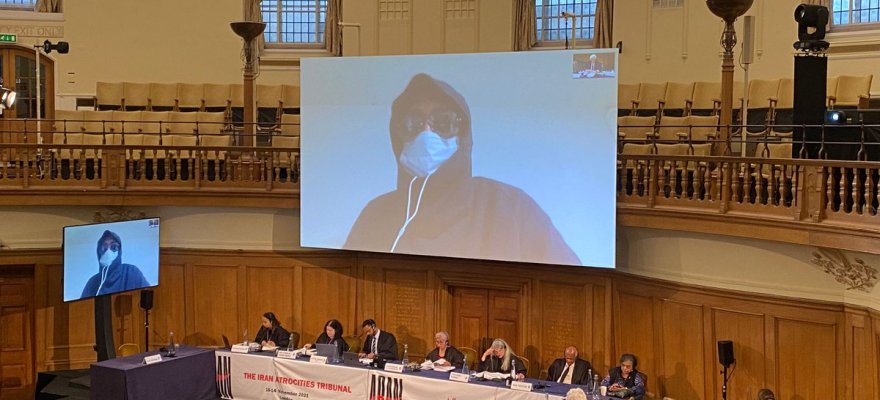
The Aban Tribunal: Targeting Impunity and Supporting Victim-Survivors

Marilena Stegbauer

When the Aban atrocity took place, nobody ever thought that a Tribunal would be held after two years to bring to justice those responsible. You are putting [them] on trial. While they are not accountable, and we have to cover our faces to testify here, I’m sure that one day, they will have to cover their faces, and our positions will change.

Witness before the Aban Tribunal

From the 10th to the 14th of November 2021, the Iran Atrocities Tribunal, also known as “Aban Tribunal,” in reference to the month in which the nationwide protests erupted, convened in London. “Aban” is the month in the Persian calendar, in which the nationwide protests erupted and partially corresponds to November and is the term widely used by victim-survivors to refer to the bloody protests that left thousands of Iranians dead, severely injured, arrested and detained, with a significant number facing torture, inhumane and/ or degrading treatment in prison. The Tribunal is the latest offspring amongst a continuous trend of International People’s Tribunals emerging over the last few years alone. Other notable People’s Tribunals focusing on gross human rights abuses include The Iran Tribunal (2012), The Uyghur Tribunal (2020-2022), The China Tribunal (2018-2020) and the ongoing People’s Tribunal on the Murder of Journalists (2021-2022).

Continue reading

Propriety of Intervention of the International Criminal Court in the Boko Haram Situation in Nigeria

Izuchukwu Temilade Nwagbara Esq

The concept of international criminal law, which became prominent after the second world war with the Nuremberg trials, purports to prosecute crimes against humanity of a large and systematic scale/nature in a furious attempt to end impunity in human relations.[1] As such, the Rome Statute of the International Criminal Court (ICC)[2]—the primary treaty in international criminal law—provides that the ICC shall have jurisdiction with respect to the crime of genocide, crimes against humanity, war crimes, and the crimes of aggression.[3] In relation to the Boko Haram[4] situation in Nigeria, crimes against humanity and war crimes are the most relevant as regards the jurisdiction of the ICC.[5] Therefore, this post examines the possibility and the propriety of a prosecution of Boko Haram members in the ICC for their actions which come under the jurisdiction of the court.

Continue reading

African National Bar Associations and the Promotion of International Criminal Justice in Africa

Author: Tosin Osasona

Bar associations and law societies are a critical component of legal institutions across the world and the same can be said of African bar associations and law societies. There are fifty-four distinct national lawyers associations in Africa, five regional lawyers association and a Pan-African Lawyers Union that serves as continental platform for lawyers’ guilds across the continent.[i] Some of these national organizations have a long history dating back to colonial period and have evolved over time reflecting the political and social cultures of their societies, so much that they have become an integral part of the legal process in public consciousness.[ii]  In fact, the legal profession in Africa has been labeled “the most dominant and the most influential profession.”[iii] Continue reading