Why India Continues to Stay Out of ICC?

Written by Garima Tiwari

ICC, Author Vincent van Zeijst


“We can understand the need for the International Criminal Court to step in when confronted by situations such as in former Yugoslavia or Rwanda, where national judicial structures had completely broken down. But the correct response to such exceptional situations is not that all nations must constantly prove the viability of their judicial structures or find these overridden by the ICC.” – Indian delegate said in his official statement delivered at the Diplomatic Conference.[i]

Years after the establishment of International Criminal Court (hereinafter “ICC”) India has no indication of becoming a State Party to the Statute. The establishment of the ICC came out of the need for an independent, permanent criminal court to deal with heinous crimes of international concern. India’s decision to remain out of ICC is not something of an aberrant stand it took. Even when the International Military Tribunal for the Far East was established after the surrender of Japan at the end of Second World War, Dr. Radhabinod Pal, Judge from India gave a Dissenting Judgment .He refused to be bound by the charges brought against the defendants by the Prosecution. Consequently, Justice Pal declared the accused Japanese leaders innocent of all charges. [ii] This dissenting judgment of Justice Radhabinod Pal at the International Military Tribunal for the Far East) is of unique importance in the history of international law as a new interpretation of contemporary (i.e. history of the pre-second World War era) history of international events.[iii] Under the Charters of the Nuremberg and Tokyo Tribunals, radical changes were made in the definitions of international laws. These tribunals made definitions of new offenses and held individuals in power responsible for perpetrating such offenses. Justice Radhabinod Pal from India, however, refused to be carried by such an innovation. Justice R.B. Pal, however, vehemently opposed the changing concepts of international law.  In his judgment, he made a critical and detailed study of the status of international law in the first half of the twentieth century and argued that international law could not be changed by mere ipse dixit (dogmatic pronouncement) of the authors of the Charter in question.[iv]

At the time of the drafting of the Rome Statute, some of the fundamental objections given by Indian delegates in their opposition to the Court relate to the perceived role of the UN Security Council and its referral power. India has therefore, not signed and raitifed the statute. As mentioned by Mr. Lahiri, the principal objections of India to the Rome Statute have been the following:  [v]

  1. Made the ICC subordinate to the UN Security Council, and thus in effect to its permanent members, and their political interference, by providing it the power to refer cases to the ICC and the power to block ICC proceedings.
  2. Provided the extraordinary power to the UN Security Council to bind non-States Parties to the ICC ; this violates a fundamental principle of the Vienna Convention on the Law of Treaties that no state can be forced to accede to a treaty or be bound by the provisions of a treaty it has not accepted.
  3. Blurred the legal distinction between normative customary law and treaty obligations, particularly in respect of the definitions of crimes against humanity and their applicability to internal conflicts, placing countries in a position of being forced to acquiesce through the Rome Statutes to provisions of international treaties they have not yet accepted.
  4. Permitted no reservations or opt-out provisions to enable countries to safeguard their interests if placed in the above situation.
  5. Inappropriately vested wide competence and powers to initiate investigations and trigger jurisdiction of the ICC in the hands of an individual prosecutor.
  6. Refused to designate of the use of nuclear weapons and terrorism among crimes within the purview of the ICC, as proposed by India.[vi]

India has ratified Geneva Conventions and has even enacted Geneva Conventions Act 1960, but in practise, India has decided to overlook Common Article 3 in its special enactments, applicability and Supreme Court rulings. Moreover, it is normally and more extensively argued that at no point has the situation in India met the threshold required for the application of Common Article 3. Thus, India has not accepted the application of Common Article 3 of the Geneva Conventions to the situations prevailing in the country.

There are reports on hundreds of mass graves in Kashmir[vii]. Torture, hostage-taking, and rape have all been prominent abuses in the Kashmir conflict. Both security forces and armed militants have used rape as a weapon: to punish, intimidate, coerce, humiliate and degrade, but no we do not meet the threshold of Common Article 3.There is widespread and frequent fighting throughout Kashmir, recourse by the government to its regular armed forces, the organization of insurgents into armed forces with military commanders responsible for the actions of those forces and capable of adhering to laws of war obligations, the military nature of operations conducted on both sides, and the size of the insurgent forces and of the government’s military forces, which makes Common Article 3 is applicable to the conflict in Kashmir[viii]-but still Indian government argues that it does not meet the threshold for application of Common Article 3. This is because India has viewed the conflicts it has been beset with as domestic affairs, if above the ‘law and order’ level but certainly below that of a non-international armed conflict. As we know the definition of Non international armed conflict not having been attempted in Common Article 3, the threshold of its applicability is pitched high by domestic states. Governments are understandably reluctant because of sovereignty considerations to concede belligerency opportunities for the non-state groups who they accuse of posing an armed challenge to the state. [ix]This reluctance is despite Common Article 3 stating that its application ‘shall not affect the legal status of the Parties to the conflict.’[x]

Another example is, Armed Forces (Special Powers) Act, 1958 [xi]( hereinafter ‘AFSPA’), passed when  the Naga movement in the North eastern States for independence had just taken off. AFSPA has just six sections. The most damning are those in the fourth and sixth sections: the former enables security forces to “fire upon or otherwise use force, even to the causing of death” where laws are being violated. The latter says no criminal prosecution will lie against any person who has taken action under this act. While article 3 prohibits killing of innocent civilians in non-international armed conflict, AFSPA under section 4(a) gives wide ranging powers to the armed forces to use force to the extent of causing death on mere suspicion. This has occasioned the application of AFSPA without resorting to the emergency provisions that would then invite its accountability externally. In last 54 years, not a single army, or paramilitary officer or soldier has been prosecuted for murder, rape, destruction of property (including the burning of villages in the 1960s in Nagaland and Mizoram). [xii]There has been regrouping of villages in both places: villagers were forced to leave their homes at gunpoint, throw their belongings onto the back of a truck and move to a common site where they were herded together with strangers and formed new villages. It is a shameful and horrific history, which India knows little about and has cared even less for. [xiii]  There are extrajudicial executions, made emphatically in the north east region, which Government normally remains silent about. Justice Jeevan Reddy committee recommended the repeal of the AFSPA in 2005 but the findings and recommendations are buried as the government has neither taken a call on them nor made them public.[xiv]

Various reports, academic views as well as conferences, have  time and again highlighted the need for India to actually accept the common article 3 in practice. The Judiciary has failed its duty in this context by overlooking ‘judicial guarantees’ as required by the article. [xv]The situation of conflict that persists in Kashmir and the North-East explains the reasons for the state’s anxiety that this manner of violence could be referred to the ICC. Always arguing that the threshold  has not reached, India continuously evades application of Common Article 3. Some help  could have been taken from Additional Protocol II,where a lower threshold in found under Article 1(2) but India has not ratified the same. Even, the inclusion of ‘armed conflict not of an international character’ in defining ‘war crimes’ in Article 8 of the Statute for an ICC met with resistance from the Indian establishment.

There is a mild fear that if India signs Rome statue it would come under the jurisdiction of ICC under Common Article 3 and crimes against humanity during non-international armed conflict. This may be said to be a major reason for staying out of ICC since Articles 7 and 8 of the Rome Statute include such crimes, and no reservations are permitted, except the opt out provision  under Article 124 of the Statute . As Mr. Lahiri notes, “having become Party to so many human rights conventions, which requires India to submit a variety of periodic reports for UN scrutiny on domestic actions to implement these obligations, it is scarcely appropriate that India should assert impunity for the commission of the most heinous crimes imaginable in the course of combating domestic insurgencies.” [xvi] India also looks for an opt-in provision whereby a state could accept the jurisdiction of the ICC by declaration (possibly for a specified period), and this might be limited to particular conduct or to conduct committed during a particular period of time. The lack of such a provision, and the inherent jurisdiction which replaced it, are perceived as representing a violation of the consent of states, and thus a threat to sovereignty. India’s resistance to accepting the inherent jurisdiction of the ICC is explained, in part, by anxieties about how investigation, prosecution and criminal proceedings in the Indian system may be judged by an international court. Further elements giving rise to India’s misgivings are the fear that the Court might be used with political motives, the power conferred on the Prosecutor to initiate investigations proprio motu and the role allotted to the Security Council.[xvii]

Maybe in the future meetings of the ICC Assembly of Parties could well consider, for example, extending the Kampala ‘opt-out’ provisions .  Discussions on inclusion of terrorism and nuclear weapons are already taking place. [xviii]  Prosecution of Indian officers , leaders and army by ICC, is an overstretch and the jurisdiction over India under the UNSC referral process is possible even if India stays out of ICC . [xix] India should immediately ensure substantive and effective participation in ICC deliberative and negotiating bodies which it is entitled to attend as an observer. [xx] Most of the objections and concerns seem to have waned over the years. Moreover, heightened activities on the ICC in India in the past year have generated greater participation and interest from diverse constituencies including parliamentarians, academia, media and various civil society groups.[xxi]

India has been subject to international dispute settlement bodies, such as the Dispute Settlement Body of the World Trade Organization and the International Court of Justice, amongst others. State sovereignty is not compromised merely because a nation-state agrees to subject itself to an international court that can exercise jurisdiction over its officials. [xxii]Several legal provisions found in the Indian Constitution and the criminal laws of India are antecedents to many of the principles found in the Rome Statute – the presumption of innocence, principle of legality, proof of guilt beyond reasonable doubt, fair trial, legal aid and the right to remain silent, amongst others.[xxiii] Thus, India might have seriously misjudged the legal, political and social repercussions of opposing the Rome Statute, and risks further erosion of credibility if it altogether repudiates the Statute, and with it, its sizable practical advantages for protecting the dual interests of its nationals as individuals serving their country abroad, and of its national security.[xxiv]

Till India signs the Rome Statute it must be stated that the standards set by the Rome Statute could be of use in the region regardless of its poor record of ratification. For instance, the Rome standards have been used to promote law reform at the national level in India, as well as to provide redress to victims before national Courts in Sri Lanka. Thus, as mentioned in the ICC Outreach, although the importance of the Court in fighting impunity worldwide is undisputable, the ICC also exists as a tool to strengthen national legal systems and provide redress to victim. [xxv]


[i] India and the ICC, Usha Ramanathan, available at http://www.ielrc.org/content/a0505.pdf

[ii] Judgment of Justice Radhabino Pal at the Tokyo War Crimes Trial, 1946-48, A. F. M. Shamsur Rahman available at http://www.asiaticsociety.org.bd/journals/June_2010/contents/04_AFMShamsuRahman.htm

[iii] R. John Pritchard & Sonia M. Zaide (eds.), “The Dissenting Opinion of the Member for India R.B. al” inThe Tokyo War Crimes Trial, (New York & London: Garland, 1981), Vol. I. p. 21

[iv] Supra n.2

[v] Dilip Lahiri, Should India continue to stay out of ICC? (published on 24 November 2010) Available at http://www.orfonline.org/research/should-india-continue-to-stay-out-of-icc/

[vi] Ibid

[vii] http://www.kashmirprocess.org/reports/graves/BuriedEvidenceKashmir.pdf

[viii] India’s Secret Army in Kashmir, New Patterns of Abuse Emerge in the Conflict http://www.hrw.org/reports/1996/India2.htm#P211_52287

[ix] Roderic Alley, “Internal Conflict and the International Community: Wars without end?”, Aldershot: Ashgate Publishing Company, 2004, p 120.

[x] Common Article 3 states: ‘The application of the preceding provisions shall not affect the legal status of the Parties to the conflict.”

[xi] The Armed Forces (Special Powers) Act  1958 available at http://mha.nic.in/pdfs/armed_forces_special_powers_act1958.pdf

[xii] Sanjoy Hazarika, An Abomination Called AFSPA,Febryary 12, 2013, The Hindu available at http://www.thehindu.com/opinion/lead/an-abomination-called-afspa/article4404804.ece

[xiii] Ibid

[xiv] Sanajaoba, Armed Forces Special Power Act, 1958- A Law for Extra judicial Execution in Perpetuity, at http://openspace.org.in/node/461

[xv] Ibid

[xvi] Supra n. 5

[xvii] Supra n. 1

[xviii] Jane Boulden,Thomas G. Weiss, Terrorism and the UN: Before and After September 11, Indiana University press, (2004) p. 65-66

[xix] Supra n 5 ( refer conclusions)

[xx] http://www.frontline.in/navigation/?type=static&page=flonnet&rdurl=fl1807/18070670.htmhttp://www.sikhsangat.com/index.php?/topic/38139-why-india-rejects-the-international-criminal-court/

[xxi] Coalition of International Criminal Court,India, at http://www.iccnow.org/?mod=country&iduct=77

[xxii] Abraham, What Are we Scared of? Available at http://www.boloji.com/index.cfm?md=Content&sd=Articles&ArticleID=5471

[xxiii] Ibid

[xxiv] Rishav Banerjee, Rome Statute and India: An Analysis of India?s Attitude towards the International Criminal Court, Journal of East Asia & International Law › Nbr. 4-2, October 2011

[xxv] The ICC can wait, Justice Cannot , available at http://www.un.int/india/2011/ind1953.pdf


Counter Terrorism : A Democratic Dilemma

Image

 Photo credit:www.picdesi.com

Written by Garima Tiwari
“Terrorism often thrives where human rights are violated,” and “the lack of hope for justice provides breeding grounds for terrorism.”[i]  The recent February 2013 blasts in Hyderabad, India have brought to light the weakness of the intelligence and the laws to create any deterrence. After 9/11, the threat from terrorism has been identified as the most dangerous threat by states. This is because of the unpredictability, widespread reach, lethality and ruthlessness of the attacks. The trend toward higher casualties reflects the changing motivation of today’s terrorists. Terrorist groups lack a concrete political goal other than to punish their enemies.

The Hyderabad blasts are a stark reminder of the shortcomings of Indian counter-terrorism capabilities. Since 2008, India has had 11 more terror strikes in which 60 people have been killed across five cities. The government has taken measures to beef up its security and intelligence agencies. But implementation on the ground is often stymied by India’s notorious bureaucratic red tape. The Maharashtra Anti-Terrorism squad, for example, has a capacity of 935 personnel but is actually working with just 300. A $28.5 million proposal to improve security around Mumbai was announced soon after the 2008 “26/11″ attack—involving 5,000 CCTV cameras at key junctions, motion detectors, night vision for security forces, thermal imaging for the police, and vehicle license plate identification capability. But it never took off. [ii]

The whole counter –terrorism strategy involves a democratic dilemma which consists of two parts. The first is how to be effective in counter-terrorism while still preserving liberal democratic values , and the second is how to allow the government to fulfill its first and foremost responsibility of protecting the lives of its citizens without using the harsh measures at its disposal.[iii] It is generally assumed that the ‘criminal justice model’ is the better option for democracies to overcome the ‘democratic dilemma’ they face. Terrorism inevitably involves the commission of a crime. Since democracies have well-developed legislations, systems and structures to deal with crime, the criminal justice system should be at the heart of their counter-terrorism efforts.[iv] But then special laws with higher deterrence values are required and justified, on the grounds that the existing criminal laws are not adequate to deal with the militancy because what is at stake is the very existence of state and another reason cited is the obligations under the prevailing international environment and obligations like under Prevention of Terrorism Act in India after the 9/11 attack and the UN Resolution 1373. Then there are security forces empowerment laws in India that give immunity and additional special powers to the security forces like the Armed Forces Special Powers Act; Laws of proscription that criminalises terrorist groups and a range of undesirable activities like the Unlawful Activities Prevention Act (UAPA) and other exclusive laws on control of finances, money laundering, drug-trafficking, cyber warfare and so on. [v] Counter-terror laws in India have come into being reflecting the Indian style of handling terrorism – namely, ad hocism. No single law has prevailed throughout. From time to time, depending on the regime at the Center, legislation has come into being and then faded.

When one tries to look at the counter-terror laws of India the following characteristics would come to picture which actually highlight various aspects of where the democratic dilemma is leading:

  1. Hasty enactment without giving much room for public debate or judicial scrutiny;
  2.  Overly broad and ambiguous definitions of terrorism that fail to satisfy the principle of legality;
  3.  Pre-trial investigation and detention procedures which infringe upon due process, personal liberty, and limits on the length of pretrial detention;
  4.  Special courts and procedural rules that infringe upon judicial independence and the right to a fair trial;
  5. Provisions that require courts to draw adverse inferences against the accused in a manner that infringes upon the presumption of innocence;
  6.  Lack of sufficient oversight of police and prosecutorial decision-making to prevent arbitrary, discriminatory, and disuniform application; and
  7.  Broad immunities from prosecution for government officials who fail to ensure the right to effective remedies.[vi]

Despite the experience of 26/11, India’s internal security still remains vulnerable because we have not acquired appropriate capacities and determination to prevent such an exigency. The laws emphasise more on protection of state rather than people. The Indian politicians do not accept national security with the kind of gravitas it demands.[vii] Overall, neither the laws create deterrence nor do they protect the lives of civilian population.

What is needed in not just a strong all encompassing law, but strict implementation and vigilance with respect for human rights.  There have to be proper safeguards against misuse and abuse of law. There has to be clear cut definitions of crimes and penal provisions to avoid excessive discretionary powers. Enactment of special laws should not be in haste; for greater awareness and acceptance, the process has to be transparent and should be subject to public debate and judicial scrutiny. Special laws should possess review mechanisms and ‘sun-set’ clauses for periodic assessments.[viii] Most experts have suggested strengthening policing from the grass root level, enacting tough laws and speedy trial of cases would go a long way in preventing and controlling terror attacks in the country because the terror attacks are often carried out with the help of some local elements. Then again the external factors like politicisation of the police force should be checked to ensure its effectiveness.[ix]

Terrorism is a threat which most states are today facing. We can only defeat terrorism in the long term by preventing the next generation of terrorists from emerging. We must reduce the breeding grounds of terrorism. This is, of course, not an easy task.[x]


[i] Supreme Court of India in People’s union for Civil Liberties vs. union of India, AIR 2004 SC 456, 465

[ii] Hyderabad’s Terror Attack: Speculation Swirls as Critics Point to Government Failure

By Nilanjana Bhowmick Feb. 22, 2013available at http://world.time.com/2013/02/22/hyderabads-terror-attack-speculation-swirls-as-critics-point-to-government-failure/#ixzz2P8YZGrFd

[iii] Excerpt by Boaz Ganor, Trends in International Terrorism and Counter Terrorism, Editors: Dr. Boaz Ganor and Dr. Eitan Azani available at http://www.ict.org.il/Books/TrendsinInternationalTerrorism/tabid/282/Default.aspx

[iv] Lindsay Clutterbuck, “Law Enforcement,” in Audrey Kurth Cronin and James M Ludes (eds.), Attacking Terrorism – Elements of a Grand Strategy (washington, D.C.: Georgetown university Press, 2004), p. 141

[v] Dr. N. Manoharan, Special Laws to Counter Terrorism in India: A Reality Check available at http://www.vifindia.org/article/2012/november/20/special-laws-to-counter-terrorism-in-india-a-reality-check

[vi] Anil Kalhan et al, “Colonial Continuities: Human Rights, Terrorism and Security Laws in India,” Colombia Journal of Asian Law, Vol. 20, no. 1, 2006, p. 96.

[vii] C. Uday Bhaskar, former director of the Institute of Defence Studies and Analyses, a New Delhi-based think tank available at http://world.time.com/2013/02/22/hyderabads-terror-attack-speculation-swirls-as-critics-point-to-government-failure/#ixzz2P8Y5pFI3

[viii] N. Manoharan, Trojan Horses? Efficacy of Counter-terrorism Legislation in a Democracy Lessons from India, Manekshaw PaPer No.30 , 2011, available at http://www.claws.in/administrator/uploaded_files/1308896190MP%2030.pdf

[ix] Strong local policing, strict laws will curb terror attacks’, Tuesday, 26 February 201, available at http://www.siasat.com/english/news/strong-local-policing-strict-laws-will-curb-terror-attacks

[x] Excerpt Gijs de Vries, Trends in International Terrorism and Counter Terrorism, Editors: Dr. Boaz Ganor and Dr. Eitan Azani available at http://www.ict.org.il/Books/TrendsinInternationalTerrorism/tabid/282/Default.aspx

Tracing International Humanitarian Law To Hinduism

Picture by Ben Heine

Picture by Ben Heine

Written by Garima Tiwari

India is party to the four Geneva Conventions of 1949 and has incorporated them into its municipal law, but India is not a signatory to the two Additional Protocols. This post examines how far the concepts of Hinduism have helped in the development of international humanitarian law.

War as an art as well as a science was equally well understood in ancient India.[i] The ancient Indians recognized war as a relation between states, the Agnipurana[ii] defines war “as the direct result of the injuries done to each other by two hostile monarchs.” Professor H. H. Wilson calls the ancient Indian laws of war are very chivalrous and humane, and prohibit the slaying of the unarmed, of women, of the old, and of the conquered.[iii]

In ancient times the first and foremost duty of the king was to protect his people. Protection consisted in countering internal threats as well as external aggression to man‟s liberty.[iv] Hinduism has mentioned wars in its various sources. Francois Bugnion has stated of Hinduism having “law of armed forces on the principle of humanity” in the following words,  “The ancient Hindu law of armed conflict, founded on the principle of humanity, had many rules limiting violence. The Upanishads     taught that all human beings are one and that all are his children…”[v]

The source of the “Hindu law of armed forces” as stated by Francois Bugnion was only Upanishads. But, in real sense, it will not be correct to say so. Hinduism is based on numerous texts. The primary sources of Hinduism are Sruti and Smriti. Sruti literally means what is heard, while Smriti designates what is remembered. In this regard, Sruti is revelation and Smriti tradition. Srutis are the four Vedas, the Rig Veda, Sam Veda Yajur Veda and Atharva Veda. Each Veda consists of four parts: the Samhita (hymn), the Brahmana (rituals), the Aranyakas (interpretations) and the Vedanta (Upanishads). The Bhagavad Gita part of the epic poem Mahabharata, is the most influential Hindu text.[vi] Manu, Yajnavalkya and Prasara are the most celebrated law-givers of ancient India. There are eighteen main Smritis or Dharma Sastras. The Dharma Sastras and epics recognized two kinds of war: Dharma Yuddha (righteous war), and Adharma Yuddha (unrighteous war).

Hinduism does not forbid war but consider it as a last resort for a state. The Manusmriti, provides that a king should first try to conquer his foes by conciliation, by gift and by causing dissension if possible: if all these fail then and then only should he wage war.[vii] The policy of conciliation and making gifts should be tried first before engaging in war.[viii]

The code of Manu advises the king:“when he fights with his foes in battle, let him not strike with weapons concealed (in wood), nor with (such as are) barbed, poisoned, or the points of which are blazing with fire.”[ix] Whether he himself fights or engages others to fight for him, the king must ensure that the battle will be an honest duel.[x]

The Rig Veda also laid down the right conduct of war. Vedic rules maintain that it is unjust to strike someone from behind, cowardly to poison the tip of the arrow and heinous to attack the sick or old, children and women.

The ancient Indian war was a war of righteousness, i.e., Dharmayuddha; hence, any kind of inhumane acts were discouraged and frowned upon. Whose weapons are broken; who finds himself in trouble; the string of whose bow is snapped; whose battle horse is killed – he should never be attacked. Such an enemy falling into one‟s hands, his wounds should be tended, and he should be taken to his home.[xi]

The laws of war in ancient India drew a clear distinction between civilians and belligerent.[xii] The ancient Indian texts like Mahabharata, being the greatest epic ever written in the history of mankind, and Manusmriti, lay down the laws governing war in ancient India, are congruous to the provisions of Geneva Conventions[xiii], as in the Basic Rules of the Geneva Conventions and their Additional Protocols.[xiv]

According to Manu: “persons walking on the road, not participating in the conflict, or mere travellers, or those who are engaged in eating and drinking or pursuing their special avocations or activities or diplomatic errands and of course the Brahmins, unless they are engaged in war, were not to be killed.”[xv]

For example, combat between mounted and unmounted soldiers was strictly forbidden. Furthermore, combat between warriors of officer rank and foot soldiers was not allowed, since the former would generally be much better armed and trained than the latter. Collective attacks against a single soldier and the slaying of a warrior who was temporarily at a disadvantage during battle were strictly prohibited.

The Agni Purana clearly mentions that prisoners of war should not be enslaved. If soldiers  were taken prisoner, they were to be released at the cessation of hostilities. Kautilya advocated the humanitarian treatment of conquered soldiers and citizens. In particular, he maintained that a humanitarian policy toward a defeated people was practical, pointing out that if a king massacres those whom he has defeated, he frightens all the kingdoms that surround him and terrifies even his own ministers,[xvi] whereas more land and loyal subjects can be gained if the defeated are treated magnanimously. Kautilya advised that the conquering king should order the release of all prisoners and give help to the distressed, the helpless and the sick. He thus called for the establishment of a righteous course of conduct for sound military policy.[xvii]

Regarding weapons to be used in war field K.R.R.Sastri quotes Kautilya and written: “Our modern strategists who have killed two or three hundred thousand at Hiroshama and Nagasaki are invited to read the following passage from Kautilya(Book XIII. Ch. IV):”When if fort can be captured by other means, no attempts should be made to set fire to it; for fire cannot be trusted; it not only offends the Gods but also destroys the people, grain, cattle, gold, raw materials and the like. Also, the acquisition of a fort with its property all destroyed is the source of further loss”.[xviii]

In the Shanti Parva of the Mahabharata, it is mentioned: This means to kill someone not in combat; to rape a woman, or misbehave with her; ingratitude; to rob one devoted to learning and knowledge; to deprive another of all he has – these are considered very low acts even among robbers.[xix]

A conquering king should reassure that defeated people that not much has changed except their rulers. He should adopt a character, dress, language and behaviour similar to when the former king was ruling (similar to those of the subjects). Moreover, he should show the same devotion at festivals in honour of deities of that country, festive gatherings and sportive amusements.[xx] He should honour the local deities and make grants of land and money to men distinguished in wisdom and piety. The conquering king should show his goodwill toward the defeated by instituting a righteous custom that had not previously been introduced. Kautilya commented that “one must kill a dangerous person; however, the king must leave his property untouched and shall not appropriate the land, property, sons or wives of the killed one.”[xxi]

Kautilya also held that the fundamental rule about immoveable property was that it did not belong to the victor by right; only such things as chariots, animals, and war material belonged to the conquering forces. The king should personally examine all such captured wealth and should then keep a part for himself and distribute the rest among his armed forces according to rank.[xxii]

According to the Manusmriti, only the warriors who actually fight in the battle can take the spoils of war. Yet they are to be shared with the ruler inasmuch as the kings who have engaged them to settle scores with the enemies demand the best part of the booty.[xxiii] In this connection, the conqueror is advised to grant remissions on taxes instead of looting the conquered territory. He must seek to win over the commoners of conquered territory and not do anything that would increase their bitterness. He should not be vengeful but should instead offer an amnesty to all who have surrendered to him.

Thus, humanitarian law principles found their existence in India long before the Geneva Conventions and Protocols.

References

  1. Manoj Kumar Sinha ,Hinduism and International Humanitarian Law, International Review of the Red Cross, Volume 87 Number 858 June 2005
  2. Gaurav Arora, Gunveer Kaur, Supritha Prodaturi, Vinayak Gupta,International Humanitarian Law and Concept of Hinduism, , International Journal of Multidisciplinary Research Vol.2 Issue 2, February 2012, PP.452-458
  3. Modh, Bhumika Mukesh, International Humanitarian Law: An Ancient Indian Perspective (January 12, 2011). Available at SSRN: http://ssrn.com/abstract=1738806 or http://dx.doi.org/1

[i] H. B. Sarda, Hindu Superiority: An Attempt to determine the position of the Hindu race in the scale of nations, Scottish Mission Industries Company, 2nd Ed., Pune, 1917, p 349.

[ii] Agnipurana is one of the 18 Mahapuranas, a genre of Hindu religious texts, contains descriptions and details of various incarnations (avataras) of Lord Vishnu.

[iii] H. H. Wilson, Essays and Lectures on the Religions of the Hindus, Vol. II, Trubner & Co., London, 1861, p. 302.

[iv] Pandurang Varman Kane, History of Dharmasastra, Poona, 1973, Vol. 3, p. 56.

[v] Francois Bugnion,Customary International Humanitarian Law, ISIL Yearbook of International Humanitarian and Refugee Law Vol. 7,2007, p. 1.

[vi] Surya P. Subedi, The concept in Hinduism of just war, Journal of Peace and Conflict Studies, 2003, Vol. 8,p. 339-361.

[vii] Ancient India developed a method in four successive stages for the settlement of disputes between States: the first stage is called peaceful negotiation (sama); the second stage consists of offering gifts (dana) to appease the enemy; the third is a veiled threat (bheda); and the last stage allows the use of force (danda).

[viii] K. R. R. Sastry, “Hinduism and International Law”, Recueil des Cours, 1966 (I), Vol. 117, pp. 507-614

[ix] V. Nagarajan, “Manusmriti as Socio-political Constitution”, available at <http://www.geocities.com/vnagarajana402/manusmrti1.htm&gt;

[x] Ibid

[xi] Bhagshastro vipinnashch krittajyo hatvahanaha| Chikitsyaha syaat svavaishaye prapyo svagrahe bhavet|| shanti 15.13||

[xii] Lakshmikanth Penna, “Traditional Asian approaches: An Indian view” Australian Yearbook of International Law, 1985, Vol. 9,p. 108-191

[xiii] The modern laws of war were developed mainly by The Hague Peace Conferences of 1899 and 1907, and in the four Geneva Conventions of 1949 and the two 1977 Additional Protocols thereto

[xiv] Basic Rules of the Geneva Conventions and their Additional Protocols, ICRC publication 1988, ref. 0365

[xv] Supra xii

[xvi] Roger Boesche, Kautilya’s Arthasastra on War and Diplomacy in Ancient India, available at <http://muse.jhu.edu/demo/journal-of-military-history&gt;

[xvii] C. H. Alexandrowich, “Kautilyan principles and the law of nations”, British Yearbook of International Law,1965-66, Vol. 41,p.301-320

[xviii] K.R.R. Sastri, Hinduism and International Law, Recueil Des Cours Vol. 117, 1966 p. 507.

[xix] Chaturvedi Badrinath, The Mahabharata: An inquiry in the human condition, Orient Longman Pvt. Ltd., New Delhi, 2006, p. 152

[xx] Supra xvii

[xxi] Supra xvii

[xxii] Supra xvii

[xxiii] Supra xii

The Issue of Consent in Rape Prosecution: International Tribunals and Indian Courts

Written by Garima Tiwari

(  http://www.tumblr.com/tagged/ptsd)

While India struggles to make amendments to the existing rape laws a brief look into how the International Criminal Court (ICC) and International Tribunals have dealt with rape would be interesting. A look at the Indian position in the same context would help understand how the process differs particularly with reference to the issue of ‘consent’.

Nicolas  Poussin’s  famous  painting the “Rape of the Sabine Women” depicts women  walking  away  arm-in-arm  with  their  rapists,  suggesting “that  the  abducted  women  soon  accepted  their   assailants  as husbands.” It is  not surprising  then,  that rape  and  other  forms  of sexual violence  emanating  from  war  have  historically  been undocumented  and unpunished crimes.  Rape has been viewed as a reward or “spoil of war.”‘[i]

The first international treaty implicitly outlawing sexual violence, the Hague Convention of 1907, did not end impunity for these crimes: after World War II, for instance, the International Military Tribunal at Nuremberg did not expressly prosecute sexual violence, and the Tokyo Tribunal ignored the Japanese army’s enslavement of “comfort women”. In 1949, the landmark Geneva Conventions stated: “Women shall be especially protected … against rape, enforced prostitution, or any form of indecent assault.” [ii] It was the two  ad hoc International Criminal Tribunals for the Former Yugoslavia (ICTY) and Rwanda (ICTR), which, for the first time, dealt comprehensively with the crime of rape.

Position taken by ICTR

The Akayesu case[iii]  recognised that rape is an extremely grave crime as it can constitute genocide and a crime against humanity, providing that all the other elements for each of these crimes are met. Here the ICTR adopted a very broad definition of the crime of rape, which is defined as ‘a physical invasion of a sexual nature, committed on a person under circumstances which are coercive’. It also dealt with sexual violence, a broader category which includes the more specific crime of rape, whose identifying elements are recognised as ‘any act of a sexual nature which is committed on a person under circumstances which are coercive. Sexual violence is not limited to a physical invasion of the human body and may include acts which do not involve penetration or even physical contact’.[iv] Thus, in  Akayesu coercion was identified as the criteria for rape consent was irrelevant. The Semanza trial chamber[v] held that “the mental element for rape as a crime against humanity is the intention to effect the prohibited sexual penetration with the knowledge that it occurs without the consent of the victim.” In effect, rape went from being a physical act committed on the body of a victim to a psychic act committed in the mind of the perpetrator and the issue of lack of  consent became relevant. Kajelijeli[vi], followed Semanza and focused on non-consent and description of body parts when determining whether Mr. Kajelijeli should be held responsible for rapes committed by forces under his command. He was found innocent of rape and was not found guilty of genocide for the rapes his men committed. In the Muhimana case[vii] ICTR stated that, “coercion is an element that may obviate the relevance of consent as an evidentiary factor in the crime of rape.” In other words, the court ruled that most international crimes will be almost universally coercive—making true consent virtually impossible and therefore irrelevant for international prosecution.

The judgment and sentence in Prosecutor v. Karemera et al.[viii], issued recently by Trial Chamber III of ICTR secured the first international judgment to ever hold high-level government officials responsible for rape in such circumstances unlike as we will see what happened in Lubanga.[ix]

Proving rape in genocide (or other violent conflicts) using the Akayesu criteria would be relatively straightforward. Once the context of the violent conflict has been established, rape occurring within that context is assumed to be non-consensual. On the other hand, many rapes that would be provable under Akayesu would be difficult or impossible to prove under the Semanza definition. This would not only insult the victims but severely damage the credibility of the international tribunals for handling rape cases.[x]

Position taken by ICTY

The Delaliæ et al case aka Èelebiæi case[xi] case confirmed the approach that characterises the ICTR jurisprudence on the matter. In fact, the judges adopted the same ‘conceptual’ broad definition found in the Akayesu judgment. However, the ICTY in the Furundžija judgment[xii], adopted a more technical and specific definition. It qualified rape as an outrage upon personal dignity as provided for in Article 3 of the ICTY Statute (war crimes) and torture.The Furundžija definition (para. 185) represents the result of a peculiar approach followed by the ICTY, which involved looking at national jurisdictions to extrapolate what—due to the international lacuna on the matter—should represent a common perception of the elements of the crime. The outcome of this exercise was the following definition of rape, which is divided into two parts:(i) the sexual penetration, however slight:  (a) of the vagina or anus of the victim by the penis of the perpetrator or any other  object used by the perpetrator; or (b) of the mouth of the victim by the penis of the perpetrator; (ii) by coercion or force or threat of force against the victim or a third person. Thus, here coercion and lack of consent both were needed. This amounted to reintroducing the relevance of consent for rape prosecution. In the  Kunarac et al case [xiii]it was held that rapes that occurred in a brothel-like setting in Foca were a form of enslavement. The court drew on the Furundzija decision and concluded that “sexual penetration will constitute rape if it is not truly voluntary or consensual on the part of the victim.” It put forward a definition whose elements could be generally recognised as essential by the most representative countries in the world. Therefore, once again, an in-depth research of national jurisdictions was carried out and the conclusion is a step beyond the Furundžija definition. Sexual acts are forbidden when perpetrated against the free will of a person, and the ‘use of force-threat’ element is reduced from the status of an element of the crime to a being evidence of the lack of consent of the victim to the sexual intercourse. The judges confirmed rape as a war crime and crime against humanity. Moreover, the act of rape was considered as one of the underlying acts for the crime of enslavement. Instead, in defining the elements of rape, the Foca Trial Chamber included a consent paradigm, permitting defendants to use consent to sex as a defense, which had been considered and excluded from previous Chambers. While the ICTY’s definition of consent laudably incorporates the notion of sexual autonomy, and is a liberal standard relative to consent requirements globally, the consent paradigm is inappropriate in conflict situations where rape is used as a weapon of war.

The Kvocka et al case [xiv]  reintroduced the requirement of the use of force as an element of the crime, together with the lack of consent. The Kunarac et al Appeal Judgement[xv] confirmed the previous definition given by Trial Chamber II in the same case. The Appeals Judges confirmed that the lack of consent is conditio sine qua non of the definition of rape and that the requirement of the use of force is not an essential element but rather a symptom of lack of genuine consent (para. 129).[xvi] The Appeals Chamber leaned toward the need to “presume non-consent” in contexts like genocide. In situations like Foca where women were held in rape camps, “such detentions amount to circumstances that were so coercive as to negate any possibility of consent.”

As Catherine MacKinnon notes : No other crime against humanity, once other standards are met, requires that the crime be proved to be non-consensual. In fact, using victim’s consent as a defense would be bizarre. Consider a trial for murder within a genocide. How plausible would it be if a defendant claimed that, even though the act of killing took place within a setting of genocide, the victim had really wanted to be killed, so the perpetrator simply obliged? The reason that consent is not relevant for prosecuting rape in international crimes is that the crime takes place within a context where what we normally think of as sexual autonomy (at least for women) does not exist. Given the context of radical force, there is no true choice and so no consent in international crimes.[xvii]  Thus, ICTY and ICTR are both trying to presume non-consent in coercive situations which I think is very positive.

Position taken by ICC

The Statute of the International Criminal Court proves that the achievements of the ICTR and ICTY with regard to the prosecution of the crime of rape have been generally accepted by the international community. Article 7(g) of the ICC Statute specifically prohibits rape and, in addition, includes ‘sexual slavery, enforced prostitution, forced pregnancy, enforced sterilization or any other form of sexual violence of comparable gravity’ within the notion of crimes against humanity. Moreover, paragraph (h) of Article 7 confirms persecution as a crime against humanity and includes gender as a new discriminatory ground. At paragraph 3 of the same Article it is further specified that the term gender is general in nature, thus referring to both sexes. Rape is also listed in Article 8 (b) (xxii)-1 as a war crime.     In the Elements of Crime annexed to the ICC Statute, the crime of rape requires the penetration of the anal or genital opening of the victim with an object or otherwise the penetration of any part of the body with a sexual organ, thus recalling the analogous first part of the Furundžija definition. Similarly, a reference to coercive situations capable to vitiate the genuine consent of the victim of rape is provided for in Article 7 (1) (g)-1 of the Elements.Thus, both coercion and consent have been discussed.

But the first judgment delivered by the ICC failed to give any help in this regard. In the Lubanga case, despite evidence pointing to wide spread rape and other forms of sexual violence against in particular girl child soldiers, the Prosecutor did not include crimes of sexual violence in the charges. The charges were brought under Article 8, war crimes, and as such could have included charges of torture, rape, sexual slavery or outrages upon personal dignity. The Trial Chamber noted that they chose not to amend the charges. The Prosecutor could have amended the indictment at any time prior to trial or even at a reasonable moment during the presentation of the prosecution case.

Judge Odio Benito, in her dissent, differed from the majority’ decision not to use the evidence of sexual violence as a means to define the legal elements of enlistment, conscription of children or use of children in hostilities as innate to their status as child soldiers. Judge Odio Benito’s reasoning related to the interpretation of the war crime charges at hand and, thus, was not conditioned upon the submission of further amended charges. Evidence or information certainly did come out during the trial concerning the widespread nature of the sexual violence that occurred when these children were conscripted and enlisted. To that extent the case highlights the sexual violence even though it has not been charged.[xviii] Various groups suggested later on that a failure to add more serious charges would run the risk of offending the victims and strengthen the growing feeling of mistrust of the work of the ICC and of the work of the prosecutor especially. [xix]

Rape Law in India

India’s current definition of rape is steeped in outmoded traditions, dates from 1860, and  has been amended only twice since then, in 1983 and 2003. In India,it is defined as intentional and unlawful sexual intercourse with a woman without her consent. According to section 375 of the Indian Penal Code, an allegation of rape has to satisfy the either of the following criteria: sexual intercourse between a man with a woman in the following circumstances: (a) against the will of the woman; (b) without her consent; (c) under duress; (d) consent obtained by fraud; (e) consent obtained by reason of unsoundness of mind or intoxication. If the woman is below the age of 16 years, sexual intercourse is deemed to amount to rape.  Even if the woman has consented, it would be considered rape under the law. There is however, an exception to this definition of rape.  Un-consented sexual intercourse between a man and his wife would not amount to rape if the wife is 16 years or older. According to section 376 of the Indian Penal Code, the minimum sentence for a convicted rapist is seven to 10 years, while the maximum sentence is life imprisonment. Gang rape carries a punishment of 10 years to life imprisonment. However, in certain situations a convicted rapist can get away with serving less time since the law allows the judge discretion to award a lesser punishment in special cases such as an aged person or a person of unsound mind. Under section 354 of the Indian Penal Code, sexual assault is described as “outraging the modesty of a woman” – a description considered archaic, subjective and limited by legal experts. Currently sexual assault crimes carry a maximum punishment of two years. [xx]

Thus, issue of consent and coercive situations both have been incorporated in the Indian law, but the application of law is not in tandem with the requirements of justice as what is consent is linked with various social, cultural and moral annotations along with the character and sexual history of the prosecuterix. In 2011, only 26% of rape trials ended in conviction. In Delhi for instance, there’s only been one conviction out of 635 cases of rape reported in 2011.[xxi] This is also because, various social elements like the stigma attached to pre-marital sex, stereotyping as well as virginity play in the mind. This presumption of consent was embodied in Section 155 (4) of the Indian Evidence Act, which allowed defendants to offer evidence about a victim’s character and sexual history and remained there till altered as recently as 2002.  Changing law does not change much, since various practises and notions surrounding rape still stem on the character of the victim, like use of the “two-finger test” being a sufficient testament of the history of sexual intercourse of the victim. Indian law is still based on the colonial times and ironically while Britain changed its rape law with time, we are still caught in the web of antiquity. Another important aspect is the mindset. According to a survey by Sakshi, an NGO active in gender issues, 74% of judges surveyed a decade ago believed that “preservation of the family” should be a principal concern for women even in the event of violence in the home. And 51% believed that women who stay with abusive husbands are “partly to blame” for their plight. Some 68% felt that “provocative attire was an invitation to rape” and 55% felt that the “moral character of the victim” was relevant.

In the Mathura Rape case [xxii] the Supreme Court acquitted the two policemen who raped a sixteen year old girl on the grounds that the victim had no visible marks of injury and that she did not raise an alarm. Here consent has been implied from no resistance. In Mohd. Habib v. State [xxiii] the Delhi High Court acquitted a man who raped a seven year old girl, asserting that there were no marks of injury on his penis. The Court refused to take cognizance of the bite marks on the victim’s person and the fact that she suffered a ruptured hymen on account of the sexual assault. Even the eye- witnesses who witnessed this ghastly act, could not sway the High Court’s judgment.  In State of Punjab vs. Gurmit Singh[xxiv] , the Supreme Court has advised the lower judiciary, that even if the victim girl is shown to be habituated to sex, the Court should not describe her to be of loose character. The Supreme Court has in the case of State of Maharashtra Vs. Madhukar N. Mardikar [xxv] , held that “the unchastity of a woman does not make her open to any and every person to violate her person as and when he wishes. She is entitled to protect her person if there is an attempt to violate her person against her wish. She is equally entitled to the protection of law. Therefore merely because she is of easy virtue, her evidence cannot be thrown overboard.” Thus, character, and prior sexual history does not imply consent. In some cases the Supreme Court has also observed that sex with the consent of the girl on a promise to marry her will not constitute rape unless it was shown that such consent was obtained by the man under coercion or threat.[xxvi]

The Mathura case is relevant because a minor change in the law did take place in 1983, focussing on custodial rape in which it would no longer be necessary to prove lack of consent. This is similar to the situation of coercion as used in the International tribunals for the situation is such, wherein the victim is unable to retaliate, consent would not be needed. This has been provided under Section 114A of the Indian Evidence Act 1872 as presumption of no consent.

Justice Verma Committee, formed as a response to the Delhi Gangrape incident, recommends inclusion of marital rape thereby highlighting marriage does not given unequivoval right over the body of the other, and consent remains relevant. The Criminal Law (Amendment) Bill, 2012, widens the ambit by replacing the word rape with sexual assault .While earlier, the definition of rape under the Indian Penal Code was sexual intercourse with a woman without her consent, courts have confined it to penile penetration of the vagina. The new amendment though brings under the ambit of this offence penetration of “vagina, anus, urethra or mouth with any part of the body including the penis, or any other object for a sexual purpose”. The definitions are also making the law gender neutral. Thus, consent in all such cases would be looked into.

Conclusion

As seen above, both in Indian law and international law, two criteria are used to identify rape: Coercion and non-consent.[xxvii] Indian law includes both in some way yet, consent is sometimes judged with eyes of stereotyping. Some countries, may adopt either of the two. The trend of ICTR and ICTY more towards looking at the situation as coercive, because of the nature of events and placing consent irrelevant in such circumstances of war and conflict.

There are several ways that the international crime of rape may be different from some national definitions of rape. There are a important legal and procedural protections offered to rape victims by most international courts which are mostly absent from national courtrooms, such as permitting in camera testimony and not permitting attacks on the victim’s credibility through probing their sexual relationships. The tribunals have also taken positive steps to ensure victims of sexual violence can testify without retribution or fear for their safety. Through the development of its rules of procedure, the ICTY has sought to protect the victims of sexual violence from abusive lines of questioning during testimony. Witnesses can also testify under a pseudonym, with face and voice distortion in video feeds, or in closed session. Thus, the procedural  rules  in  the ICTY  and ICTR,  and  ICC,  allow  for  judicial  discretion  in  granting  witness anonymity. Again, in wartime rape  crimes,  identity  does  not become  a  crucial factor,  as  it  does  in  regular  domestic  rape  cases. Furthermore, as is clear from above discussion, international criminal law does not revolve around the issue of consent to the same extent as it does in many national settings.

Even though a lot can be learnt from the various procedural and legal protections offered by international tribunals, the issue of consent has to be studied differently in different national systems whose national, religious, cultural and political ideologies infuse the laws.


[i] Patricia H.  Davis, Comment, The  Politics of Prosecuting Rape as a  War Crime, 34INT’LLAW 1223,1226  (2000)

[iii] Case No. ICTR-96-4-T, 2 September 1998

[iv] Akayesu, para. 688,Musema, case No. ICTR-96-13, at para. 965

[v] Prosecutor v. Semanza, Case No. ICTR-97-20-T, Judgment and Sentence (May 15, 2003)

[vi] The Prosecutor v. Juvénal Kajelijeli (Judgment and Sentence), ICTR-98-44A-T, International Criminal Tribunal for Rwanda (ICTR), 1 December 2003, available at: http://www.unhcr.org/refworld/docid/404466007.html %5Baccessed 30 January 2013]

[vii] The Prosecutor v. Mika Muhimana, Case N° ICTR-95-1B-T

[viii] The Prosecutor v. Édouard Karemera et al., Case No. ICTR-98-44-T (issued on 2nd February 2012)

[x] MacKinnon, Catherine A. 2006. “Defining Rape Internationally: A Comment on Akayesu.” Pp. 237-246 in Are Women Human? Catherine MacKinnon. Cambridge, MA: The Belknap Press of Harvard University Press.

[xi] Case No. IT-96-21-T, 1998

[xii] Case No. IT-95-17/1-T, 10 December 1998

[xiii] Case No. IT-96-23 and IT-96-23/1, 22 February 2001)

[xiv] Case No. IT-98-30/1, 2 November 2001; ( paras. 177-178).

[xv] Case No. IT-96-23 & IT-96-23/1 A, 12 June 2002 paras. 125-133),

[xix] “Obtaining further charges in the opening case against Thomas Lubanga”, Statement by women’s rights and human rights NGOs of the DRC on the prosecutions by the ICC, Beni, September 16, 2006

[xxii] 1978) CrLJ 1864 SC

[xxiii] (1989) CrLJ 137 Delhi

[xxiv] (1996) 2 SCC 384

[xxv]  AIR 1991 SC 207

[xxvii] Supra Note 10

Human Trafficking and Prostitution in India

Written by Garima Tiwari

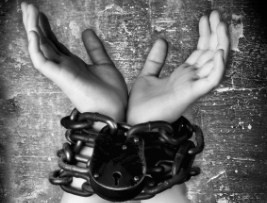
“The red light district in Bombay generates at least $400 million per annum in revenue, with 100000 prostitutes serving 365 days a year, at the average rate of 6 customers per day at $2 each.”[i]

When Robert Friedman, wrote this in 1996, he must not have though that the industry was there to survive and flourish with even more vigour, crime and torture and become the largest in Asia. For ages, the commercial sex trade has been the chief destination for trafficked girls in India.[ii]Sex tourism involving underage girls still remains a highly profitable business, a billion-a-year industry in 2009, with a 30 percent increase from previous years.

India is listed in the Tier II list of the United Nations which includes countries which have failed to combat human trafficking. India continues to be a source, destination and transit country for forced labor and sex trafficking. According to a report by the Ministry for Women and Child Development, India has nearly 2.5 million prostitutes in nearly 300,000 brothels in 1,100 red-light areas across the country. 90% or more estimated as in-country and 5 to 10% to cross-border trafficking, reported mainly from Bangladesh and Nepal. The routes of trafficking do not exclude Europe and specifically to UK and United States.[iii] Around 1.2 million children are involved in prostitution in India.

The trafficking of girls from Nepal into India for forced prostitution is perhaps one of the busiest slave sex trafficking routes anywhere in the world; with estimated 5,000-10,000 Nepali women and girls trafficked to India each year.[iv] An estimated 100,000-200,000 Nepali trafficked persons are in India. [v] In addition to being a destination, India is also a transit country for Nepalese and Bangladeshi women trafficked to Pakistan, Western Asia, and the Middle East and for women trafficked from the Russian Federation to Thailand. [vi] Asia –Pacific therefore, has seen ‘feminization of migration’-with more population movement being that of women. The feminization of migration gives rise to specific problematic forms of migration, such as the commercialized migration of women and girls as domestic workers and caregivers, often resulting in the trafficking of women for labor and sexual exploitation.[vii]

Much of the attention on human trafficking focuses on those who are trafficked across national borders every year, and, in many cases, forced to work as prostitutes or virtual slaves. But those numbers don’t include victims trafficked within India — a country so large and diverse that victims taken hundreds of miles away where a different language is spoken have little chance of finding their way home. There are increasing reports of females from northeastern states and Odisha subjected to servile marriages in states with low female-to-male child sex ratios, including Haryana and Punjab. Maoist armed groups known as the Naxalites forcibly recruited children into their ranks. Establishments of sex trafficking are moving from more traditional locations – such as brothels – to locations that are harder to find, and are also shifting from urban areas to rural areas, where there is less detection.[viii] Not to hide, the rise of HIV/AIDS patients and vulnerable groups. Anyone who has watched ‘Slumdog Millionaire’ the Oscar-winning movie would have seen tiny speck of this dark side of India.

This remains, despite the fact that India has a fairly wide framework of laws enacted by the Parliament as well as some State legislatures, apart from the Constitutional provisions.[ix]Poor implementation along with low conviction rates, and serious corruption adds to the problem. But all is not lost, efforts from social activists, educated citizenry and international support towards combating this modern slavery, has started showing some impact.

(A Birds eye view of the problem and efforts can be seen in the video created by the UNODC Regional Office for South Asia at: http://www.youtube.com/watch?v=9yJWvphsa3A)


[i] Robert I. Friedman, “India’s Shame: Sexual Slavery and Political Corruption leading to an AIDS catastrophe, The Nation, 8th April 1996

[ii] P. M. Nair, Sankar Sen, Trafficking In Women And Children In India( Orient Blackswan) 2005

[iii] India, Trafficking in Persons Report 2008. U.S. Department of State (June 4, 2008)

[iv] Koirala A, Banskota HK, Khadka BR: Cross border interception – A strategy of prevention of trafficking women from Nepal. Int Conf AIDS :15. 2004, Jul 11–16

[v] Mukherji KK, Muherjee S. (2007): Girls and women in prostitution in India Department of Women and Child Development, New Delhi, India

[vi] Joffres, C., Mills, E., Joffres, M., Khanna, T., Walia, H., & Grund, D. (2008). Sexual slavery without borders: trafficking for commercial sexual exploitation in India. International Journal for Equity in Health, 7, Pg.1–11.

[vii] The Female Face of Migration, Background Paper available at http://www.caritas.org/includes/pdf/backgroundmigration.pdf

[viii] Trafficking in Persons Report 2012, at http://www.state.gov/j/tip/rls/tiprpt/2012/index.htm

[ix] Article 23 – Article 39 of the Constitution of India The inherent provisions of these articles has been incorporated under suppression immoral Traffic in Women and Girls Act of 1956(SITA) and Traffic in persons (prevention)Act 1986(PITA)an amendment to (SITA). There are 25 provisions relevant to fight trafficking Indian Penal Code, 1860!