
Ahoy Captain! Universal means UNIVERSAL!

By Ronald Rogo  rogo.ronald@gmail.com


                                                               “The code is the law!”

                                            Captain Teague in Pirates of the Caribbean

The fight against piracy has gained urgency in recent times, especially off the coast of the Somalia waters. Perhaps the most troubled waters in the world, the increased incidents of piracy have not only caused unnecessary deaths but increased the costs of doing business[1].  The international community has therefore been forced to seek for solutions to this vice. The United Nations Security Council, for example, has passed several resolutions on combating piracy off the coast of Somalia[2], most of which give authority to the member states to enter and use force, even within the territorial waters of Somalia, in order to combat piracy. This, in essence, was an echo of the principle of universal jurisdiction which was first enunciated in relation to acts of piracy. The principle of universal jurisdiction, essentially states that any country has the jurisdiction to try certain crimes, irrespective of the fact that there is no clear nexus between the criminal activities and the trial state[3]. The universal jurisdiction of states in relation to acts of piracy is also recognized under the United Nations Convention on the Law of the Sea of 10 December 1982 (UNCLOS). Article 105 gives any signatory state the power to “seize a pirate ship or aircraft, or a ship or aircraft taken by piracy and under the control of pirates, and arrest the persons and seize the property on board” whenever a vessel is on the high seas[4]. The rationale is that since the high seas are essentially “no man’s land” criminal activities that occur here should not go unpunished due to the lack of territorial or national jurisdiction by any state.

The issue of the universal jurisdiction of states was expounded in the Kenyan case of Republic V Chief Magistrates Court, Mombasa Ex-Parte Mohamud Mohamed Hashi & 8 Others[5]. In this case the applicants were arrested on the High Seas of the Gulf of Aden in the Indian Ocean by the German Naval Vessel, the FGS Rhineland – PFALZ, with the help a U.S. helicopter assigned to the USS – Monterey. They were then taken to Mombasa Kenya and placed in the custody of the Kenyan police. They were later charged with the offence of piracy jure gentium for attacking  the sailing vessel named MV Courier while armed with three AK 47 Rifles, one pistol Tokalev, one RPG-7 portable Rocket Launcher, one SAR 80 Rifle and one Carabire rifle and putting the lives of the crew in fear. The accused persons filed a judicial review application in the High Court of Kenya challenging their charges on the basis that the alleged offense took place in the high seas of the Gulf of Eden. The Kenyan courts, they argued, did not therefore have the jurisdiction to try them since “the offence alleged was committed outside the territorial jurisdiction of Kenya and outside the Kenyan waters…neither a Kenyan citizen or Kenya property was involved…the arrest was made by the German Navy taking part in operations in the Gulf of Aden”. The High Court accepted this argument holding inter alia, that “The High Seas are not and cannot be a place in Kenya or within the territorial waters of Kenya. In fact by definition they are strictly deemed to be outside the jurisdiction of all states in the world or on earth unless some law in the state brings it into their local jurisdiction whether Municipal Law or an International Convention etc”. The High court further held that the trial court “had no jurisdiction over the matter when the charges were preferred, and when the proceedings took place. The said court acted without jurisdiction when they took the pleas of the Applicants and heard the case up to the close of the prosecution case. The whole process was therefore null and void, ab initio. A nullity from the word go”[6]. However, the High Court of Kenya ignored the provisions of UNCLOS providing for universal jurisdiction[7]. This decision was later overturned by the Court of Appeal. The Court of Appeal held that the High Court failed “to appreciate the applicability of the doctrine of universal jurisdiction in reference to the case at hand”[8].

That said, it is important to note that Article 105 of UNCLOS provides that “the courts of the State which carried out the seizure may decide upon the penalties to be imposed, and may also determine the action to be taken with regard to the ships, aircraft or property, subject to the rights of third parties acting in good faith” (emphasis mine). In other words the State that seizes any vessel on the high seas ought to be the one that actually tries the suspected pirates[9]. This rule has largely been ignored in current practice where states in the developed world only arrest the pirates and “dump” them in countries in the developing world[10]. A few examples should suffice to illustrate the point. On February 19, 2012, four suspected Somali pirates, captured by the Danish naval troops, were taken to Kenya after being rejected by the government in Seychelles.  In March 2009, seven suspected pirates were arrested in the Gulf of Aden by the US Navy after a tanker, Polaris, sent a distress call that they were being attacked[11]. Eugene Kotnorovich estimates that “universal jurisdiction was used in prosecuting only 0.53% of clearly universally punishable piracy cases between 1998 and 2007, with the figure increasing to 2.5% between 2008 and June 2009, and reporting that Kenya accounts for all but three cases of invoking universal jurisdiction over piracy in the past 12 years, with responsibility for 79% of cases[12] (emphasis mine).

The reasons for this misnomer are varied. However, the most common issue is the question of what to do with the pirates if they are acquitted or once they have served their sentence. Since the principle of non refoulement applies universally as a peremptory norm of international law, the states where the trials are held will be “stuck” with the pirates either on acquittal or upon serving sentence as they often cannot return them to Somalia and the trial state will be obliged to offer them asylum[13].William Langeweshice, quotes an Indian official, for example of stating: “What would happen if India convicted and imprisoned them, but after their release Indonesia refused to recognize or accept them? . . . They would become stateless people . . . Then the problem for India would be where to send them”[14]. But this problem creates greater burdens to poorer countries like Kenya and Seychelles which have an additional cost to the trial process. An already overwhelmed police and prison system is further stretched without significant financial assistance from the international community[15]. I therefore hold the view that the current practice is not sustainable. The country that arrests the suspected pirates ought to be the one that prosecutes. After all, universal jurisdiction means just that…universal!


[1] For more analysis of effects of piracy off the coastal shelf refer to previous posts on this blog on the subject.

[2] United nations Security Council Resolutions No. 1816, 1838, 1846 and 1851 of 2008, 1897 of 2009, 1918 and 1950 of 2010, 1976, 2015 and 2020 of 2011.

[3] The common nexus in relation to criminal jurisdiction relates to criminal activities that occur within the territory of a given state. However, some states also have jurisdiction over some criminal activities committed by their nationals overseas and criminal activities overseas where their nationals are victims.

[4] In Article 86 of UNCLOS, the high seas is taken to mean “all parts of the sea that are not included in the exclusive economic zone, in the territorial sea or in the internal waters of a State, or in the archipelagic waters of an archipelagic State”

[6] Ibid

[8] The full decision of the Court of Appeal can be accessed online at http://piracylaw.files.wordpress.com/2012/10/kenya-hashi-appeal-opinion.pdf. The same position was held in the case of Hassan M. Ahmed V Republic [2009] eKLR. It can be accessed online at http://kenyalaw.org/CaseSearch/view_preview1.php?link=66028601162227766885163

[9] Admittedly, the provision is a drafted in permissive rather than in a rigid way. However, it is my view that it represents the rule-of-the-thumb arrangement, only to be departed from in exceptional cases.

[10] For analysis of the number of piracy related trials held by various countries go to http://www.cbrne-terrorism-newsletter.com/resources/2011%20-%20Prosecuting%20Pirates_Challenges%20for%20the%20Prisons.pdf

[12] Eugene Kontorovich & Steven Art, An Empirical Examination of Universal Jurisdiction for Piracy (Northwestern Public Law Research Paper No. 09-26, 2010); 104 AM. J. INT‘L. L. 8-9 (forthcoming 2010), available at http://ssrn.com/abstract=1519518

[13] The principle of non refoulment is also expounded in CAT Article 3(1), ICCPR Article 7, and ECHR Article 3, which all protect individuals from being returned to a country where they are at risk of torture, inhuman or degrading treatment, or punishment.

[14] William Langewiesche, The Outlaw Sea: Chaos And Crime On The World‘S Oceans 75 (2004)
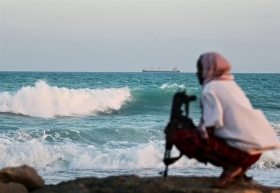
A Sea Free From Piracy – When Mare Will be Really Liberum?

Written by Lina Laurinaviciute

pirates

A spot of a small boat approaching a merchant vessel crossing the Red sea or a cruise ship riding to the sunny Seychelles can be a sign of a great danger and a terrible misfortune if not noticed in time. Hugo Grotius, the Dutch philosopher, more than 400 years ago in his book “Mare Liberum” (The Free Sea) declared that it was not possible to own sea.[1] However, soon it was realized that its treasures were not without a master. In the same 17th century Sir Edward Coke, an English jurist and Member of Parliament, expressed concern about the criminals – the pirates, who were characterized as the hostis humani generis (enemy of all mankind). The recent situation, especially in Somalia, reveals, that this problem still has an alarming tendency even in the 21st century.

Indeed, nowadays, the character of a pirate is far from the one romanticized by Capt. Jack Sparrow. Usually, they are local seamen looking for a quick score, highly-trained guerrillas, rouge military units, or former seafarers recruited by crime organizations. Armed with knives, machetes, assault rifles and grenade launchers, they steal out in speedboats and fishing boats in search of supertankers, cargo ships, passenger ferries, cruise ships, and yachts, attacking them at port, on the open seas, in international waters.[2] Also, the “Jolly Roger” – a famous flag of pirates, is not used by pirates themselves, but indicates a great danger in the various maps of maritime risk intelligence.

The first international efforts to define piracy were made by signing the United Nations (hereinafter – UN) Geneva Convention on the High Seas in 1958 and the following UN Convention on the Law of the Sea, signed in 1982, which stated that piracy consists of any of these acts:

(a) any illegal acts of violence or detention, or any act of depredation, committed for private ends by the crew or the passengers of a private ship or a private aircraft, and directed:

(i) on the high seas, against another ship or aircraft, or against persons or property on board such ship or aircraft;

(ii) against a ship, aircraft, persons or property in a place outside the jurisdiction of any State;

(b) any act of voluntary participation in the operation of a ship or of an aircraft with knowledge of facts making it a pirate ship or aircraft;

(c) any act of inciting or of intentionally facilitating an act described in subparagraph (a) or (b).[3]

The estimated figures of the International Maritime Bureau’s (IMB) Piracy Reporting Centre show, that worldwide in 2012, pirates have committed 278 attacks, hijacked 27 vessels, took more than 400 hostages, from which 147 are still held by Somali pirates.[4] In addition, 58 attempted attacks were reported.[5] Indeed, the drop in Somali piracy has brought global figures for piracy and armed robbery at sea down compared with 2011, when 439 worldwide piracy attacks were reported. Nonetheless, there can be no room for complacency till entire ships are hijacked and cargo crews simply vanish.[6] Mariners are warned to be cautious and to take necessary precautionary measures, especially when transiting through the coasts of Somalia, Nigeria, Benin, South East Asia and Indonesia.[7]

As mentioned before, in Somalia attacks have dropped significantly, mostly due to the increased military action on suspected skiffs, military anti-piracy operations and increase in armed guards onboard ships. However, Somali pirates still remain the greatest global threat, as the majority of the worldwide piracy attacks are attributed to them. Usually, the tactics of the Somali pirates is to attack ships in the northern, eastern and southern coast of Somalia. According to the IMB’s report of 2011, these pirates have also attacked vessels much farther off the Somali coast. They have moved deeper into the Indian Ocean, off Seychelles and the Maldives, and further south along the East African coast, off Kenya, Madagascar, and Mozambique.[8] To proceed with attacks very far out to sea, pirates normally use “mother vessels”, which are able to launch smaller boats to attack and hijack unsuspecting passing vessels.[9]

In the case of Nigeria all waters are considered to be risky. Pirates attack, hijack and rob vessels, kidnap crews along the coast, rivers, anchorages, ports and surrounding waters.[10] Piracy in the Gulf of Guinea has been over shadowed by Somali piracy in recent years and is becoming increasingly dangerous (34 incidents from January to September 2012, up from 30 last year) and has pushed westward from Benin to Togo, Ivory Coast and Ghana.[11] The recent attacks indicate a worrying development of a dangerous business in the region. Attacks in Indonesia remain a concern as well. These attacks, which are normally launched during the night, have largely taken place in the Malacca Strait, through which 30 percent of the world’s trade and half of the world’s oil shipments pass.[12]

As reported by the IMB, pirates’ attacks are often violent, planned and aimed at stealing oil, gas or other products which can be easily sold on the open market. To cover their tracks once the vessel is hijacked, they damage the communication equipment and at times even the navigation equipment. A ransom demanded for the release of the vessel and crew is also a prospective criminal deal of piracy.[13] An estimated global cost of piracy for 2010 was in the range of $7 to $12 billion, while for 2011 $7 billion were estimated only as Somali piracy’s impact on the global economy.[14] Piracy and armed robbery have great economic consequences, as they are disrupting the delivery of humanitarian aid, especially to Somalia, threatening vital sea lines of communication, economic interests and security of countries at risk, as well as international maritime security and commerce.

As a result of these challenges, many ships have begun to hire armed guards. While this tactic can be quite effective, however, there is not yet a process for regulating these guards, creating potential legal complications. The killings of pirates by security companies, as the one of 2010 when the private security contractors shot dead a Somali pirate, raises questions over who has jurisdiction over a growing army of armed guards on merchant ships flying flags from many nations.[15] A piracy expert Roger Middleton, from the British think tank Chatham House, cautions, that : ”there’s currently no regulation of private security on board ships, no guidelines about who is responsible in case of an attack, and no industrywide standards”. Therefore, the shipping industry and national governments should better coordinate their response to the threat of piracy.

The international community has taken a number of steps to tackle piracy when it emerged as a threat to international maritime security several years ago. In 2008, the UN Security Council passed a series of measures targeting Somali piracy, including Resolution 1816, which authorized states to undertake enforcement actions against piracy and armed robbery in Somalia. Following this and other UN resolutions, NATO, European Union, and United States started naval patrols operations in the Gulf of Aden.[16] This has improved security in that narrow body of water and pushed pirate activity into the broader Indian Ocean, making attacks more costly and risky for pirates, but also making it more difficult to counter attacks across such a vast area.[17]

Similarly, in 2011, Indonesia and Malaysia deployed two warships to the strait as part of a joint patrol targeting pirate attacks. The countries have also developed an “Eye in the Sky” operation with Singapore and Thailand, by which they jointly carry out air patrols.[18] However, not all navies, especially in the Gulf of Guinea have the resources to fight piracy far out at sea, so criminal gangs shift to other areas.[19]

Nonetheless, despite these efforts, it is realized that piracy cannot be solved by military means alone. The amount of ocean to patrol is too vast to protect every ship and, as risk analysis shows, pirates have responded to the increased naval presence by moving attacks farther out to sea. Piracy is most often just one symptom of the general collapse of law and order in the failed state. As a result, the attacks on shipping will continue as long as there is no central government capable of taking on the well-armed and well-paid pirate gangs.[20] Thus, tackling the root causes of piracy, supporting local communities and improving prosecution have a key importance for the rescue of the seas from pirates.

The UN Convention on the Law of the Sea makes piracy a universal crime, and subjects pirates to arrest and prosecution by any nation.[21] Taking the example of Somali’s piracy, the root of problem here has been the lack of an effective central government tied with limited economic opportunities throughout the country, where piracy became a mean of survival. In addition, Somalia is composed of a large number of clan groups, and the law is largely implemented at the local level. For many of these groups, piracy provides an economic lifeline, and so they are not willing to prosecute pirates.[22]

Indeed, pirates usually operate as a part of an organized crime network, such as JakartaGlobe in Indonesia. The warlords have intervened sending a good deal: traffickers living in Dubai or Yemen and fisherman are hired by gangs of pirates to execute criminal business. Foreign warships patrolling the area are creating some difficulties but the business is too lucrative to stop the traffickers.[23] Thus, it is clear that, if convictions of pirates in courts will not be successful, with many pirates walking away free, the threat of going to prison will not be a credible deterrent from piracy.

Furthermore, to combat piracy effectively means not only focusing on the pirates operating at sea but also changing the risk-reward equation for the ringleaders, clans providing support to pirates and agents providing intelligence from African ports. Further, it means reducing the freedom of movement pirates currently enjoy despite the private, national and international efforts. Piracy cannot also be defeated without the active cooperation of all the actors involved, including the regional governments.[24]

Pirates are well organised and resourced criminals. They rapidly adjust their tactics and manage to avoid naval patrols by operating farther offshore. Therefore, the holistic approach and the measures including military sea and land based anti-piracy action, preventive techniques used by the merchant vessels, strengthening law enforcement for the affective arrest and prosecution of pirates in the coastal countries, increasing cooperation between all counter-piracy actors and optimizing their efforts should be the priority to tackle evolving pirate trends and tactics. Equally, more significant impact should be made to eradicate the roots of piracy by building-up the capacity of the states and accelerating social and economic development. These measures in long term perspective can mitigate new developments in piracy, reduce its recent effect and contribute to the final defeat, enabling to declare that mare is liberum once more.


[1] United Nations Interregional Crime and Justice Research Institute, Freedom from Fear 3, Pirates of the XXI Century on the Treasure Hunt, April 2009, p. 31.

[2] Ibid., p 48.

[3] United Nations Convention on the Law of the Sea, 10 December 1982, Article 101.

[4] International Chamber of Commerce, Piracy & Armed Robbery News & Figures,3 December 2012,available at: http://www.icc-ccs.org/piracy-reporting-centre/piracynewsafigures, [accessed 19 December 2012].

[5] International Chamber of Commerce, IMB Reports Drop in Somali Piracy, but Warns Against Complacency, available at: http://www.icc-ccs.org/news/811-imb-reports-drop-in-somali-piracy-but-warns-against-complacency,[accessed 19 December 2012].

[6] Ibid.

[7] International Chamber of Commerce, Piracy & Armed Robbery Prone Areas and Warnings, available at: http://www.icc-ccs.org/piracy-reporting-centre/prone-areas-and-warnings, [accessed 18 December 2012].

[8] International Maritime Bureau, Global Piracy Report 2011, available at: http://www.ibm.com/investor/pdf/2011_ibm_annual.pdf, [accessed 19 December 2012].

[9] Supra note 8.

[10] Ibid.

[11] Supra note 5.

[12] Council on Foreign Relations, Combating Maritime Piracy, available at: http://www.cfr.org/france/combating-maritime-piracy/p18376,[accessed 18 December 2012].

[13] Supra note 5.

[14] One Earth Future, The Economic Cost of Maritime Piracy, Working Paper, December 2010, available at: http://www.cfr.org/france/combating-maritime-piracy/p18376, [accessed 18 December 2012].

[15] World, Private Guards Kill Somali Pirate For First Time, 24 March 2010, available at: http://www.huffingtonpost.com/2010/03/24/private-guards-kill-somal_n_511143.html, [accessed 19 December 2012].

[16] Supra note 14.

[17] Council on Foreign Relations, Smarter Measures in Fight Against Piracy, 10 December 2010, available at: http://www.cfr.org/somalia/smarter-measures-fight-against-piracy/p23611, [accessed 19 December 2012].

[18] Supra note 14.

[19] Supra note 5.

[20] Supra note 15.

[21] Supra note 14.

[22] Ibid.

[23] Supra note 1, p. 13.

[24] Supra note 17.

* Photo of Mohamed Dahir / AFP – Getty Images