
Written by Garima Tiwari
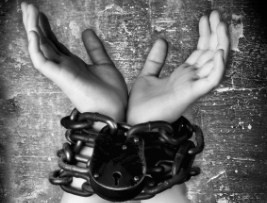
“The red light district in Bombay generates at least $400 million per annum in revenue, with 100000 prostitutes serving 365 days a year, at the average rate of 6 customers per day at $2 each.”[i]
When Robert Friedman, wrote this in 1996, he must not have though that the industry was there to survive and flourish with even more vigour, crime and torture and become the largest in Asia. For ages, the commercial sex trade has been the chief destination for trafficked girls in India.[ii]Sex tourism involving underage girls still remains a highly profitable business, a billion-a-year industry in 2009, with a 30 percent increase from previous years.
India is listed in the Tier II list of the United Nations which includes countries which have failed to combat human trafficking. India continues to be a source, destination and transit country for forced labor and sex trafficking. According to a report by the Ministry for Women and Child Development, India has nearly 2.5 million prostitutes in nearly 300,000 brothels in 1,100 red-light areas across the country. 90% or more estimated as in-country and 5 to 10% to cross-border trafficking, reported mainly from Bangladesh and Nepal. The routes of trafficking do not exclude Europe and specifically to UK and United States.[iii] Around 1.2 million children are involved in prostitution in India.
The trafficking of girls from Nepal into India for forced prostitution is perhaps one of the busiest slave sex trafficking routes anywhere in the world; with estimated 5,000-10,000 Nepali women and girls trafficked to India each year.[iv] An estimated 100,000-200,000 Nepali trafficked persons are in India. [v] In addition to being a destination, India is also a transit country for Nepalese and Bangladeshi women trafficked to Pakistan, Western Asia, and the Middle East and for women trafficked from the Russian Federation to Thailand. [vi] Asia –Pacific therefore, has seen ‘feminization of migration’-with more population movement being that of women. The feminization of migration gives rise to specific problematic forms of migration, such as the commercialized migration of women and girls as domestic workers and caregivers, often resulting in the trafficking of women for labor and sexual exploitation.[vii]
Much of the attention on human trafficking focuses on those who are trafficked across national borders every year, and, in many cases, forced to work as prostitutes or virtual slaves. But those numbers don’t include victims trafficked within India — a country so large and diverse that victims taken hundreds of miles away where a different language is spoken have little chance of finding their way home. There are increasing reports of females from northeastern states and Odisha subjected to servile marriages in states with low female-to-male child sex ratios, including Haryana and Punjab. Maoist armed groups known as the Naxalites forcibly recruited children into their ranks. Establishments of sex trafficking are moving from more traditional locations – such as brothels – to locations that are harder to find, and are also shifting from urban areas to rural areas, where there is less detection.[viii] Not to hide, the rise of HIV/AIDS patients and vulnerable groups. Anyone who has watched ‘Slumdog Millionaire’ the Oscar-winning movie would have seen tiny speck of this dark side of India.
This remains, despite the fact that India has a fairly wide framework of laws enacted by the Parliament as well as some State legislatures, apart from the Constitutional provisions.[ix]Poor implementation along with low conviction rates, and serious corruption adds to the problem. But all is not lost, efforts from social activists, educated citizenry and international support towards combating this modern slavery, has started showing some impact.
(A Birds eye view of the problem and efforts can be seen in the video created by the UNODC Regional Office for South Asia at: http://www.youtube.com/watch?v=9yJWvphsa3A)
[i] Robert I. Friedman, “India’s Shame: Sexual Slavery and Political Corruption leading to an AIDS catastrophe, The Nation, 8th April 1996
[ii] P. M. Nair, Sankar Sen, Trafficking In Women And Children In India( Orient Blackswan) 2005
[iii] India, Trafficking in Persons Report 2008. U.S. Department of State (June 4, 2008)
[iv] Koirala A, Banskota HK, Khadka BR: Cross border interception – A strategy of prevention of trafficking women from Nepal. Int Conf AIDS :15. 2004, Jul 11–16
[v] Mukherji KK, Muherjee S. (2007): Girls and women in prostitution in India Department of Women and Child Development, New Delhi, India
[vi] Joffres, C., Mills, E., Joffres, M., Khanna, T., Walia, H., & Grund, D. (2008). Sexual slavery without borders: trafficking for commercial sexual exploitation in India. International Journal for Equity in Health, 7, Pg.1–11.
[vii] The Female Face of Migration, Background Paper available at http://www.caritas.org/includes/pdf/backgroundmigration.pdf
[viii] Trafficking in Persons Report 2012, at http://www.state.gov/j/tip/rls/tiprpt/2012/index.htm
[ix] Article 23 – Article 39 of the Constitution of India The inherent provisions of these articles has been incorporated under suppression immoral Traffic in Women and Girls Act of 1956(SITA) and Traffic in persons (prevention)Act 1986(PITA)an amendment to (SITA). There are 25 provisions relevant to fight trafficking Indian Penal Code, 1860!


